




Australia is home to some of the world’s longest domestic flights, and the journey between Adelaide and Perth is one of the country’s most significant transcontinental routes. Covering approximately 2,100 kilometres across the vast Australian continent, the flight typically takes just over three hours and provides a fascinating transition from South Australia’s wine country and coastline to the expansive landscapes of Western Australia.
While Qantas and Virgin Australia continue to compete for premium travellers on the route, Jetstar has carved out a strong niche by offering low-cost fares with optional extras that allow passengers to tailor their experience. One of those upgrades is the airline’s Flex Plus bundle, Jetstar’s most comprehensive fare option, which combines flexibility with a range of practical inclusions such as checked baggage, seat selection and an onboard food voucher.
Having arrived in Adelaide only a couple of days earlier on another Jetstar Airbus A321neo operating the unusual Bali–Perth–Adelaide service, this return journey presented an excellent opportunity to experience Jetstar’s newest domestic aircraft once again, this time on a standard domestic service back to my home city of Perth. It also provided the perfect chance to see whether paying extra for the Flex Plus bundle genuinely improves the overall experience or whether a standard fare represents better value.
Booking the Jetstar Flex Plus Bundle
For this flight, I chose to purchase Jetstar’s Flex Plus bundle rather than a standard economy fare. While it comes at a higher price, the bundle includes several valuable benefits that can make a noticeable difference, particularly on longer domestic flights.
My total fare came to $268, which included a 20-kilogram checked baggage allowance, complimentary seat selection—including premium seats such as exit rows where available—a $15 onboard food and beverage voucher, Qantas Frequent Flyer points and Status Credits, along with perhaps the bundle’s biggest selling point: excellent flexibility. Unlike Jetstar’s basic fares, Flex Plus allows passengers to change flights without paying a change fee or even cancel their booking for a travel credit if plans change unexpectedly.
For travellers who frequently encounter changing schedules or simply appreciate the reassurance of additional flexibility, these inclusions significantly improve the overall value proposition. Rather than feeling like a budget fare with numerous add-ons, Flex Plus transforms Jetstar into a far more competitive product that rivals some full-service economy offerings while generally remaining more affordable.
Arriving at Adelaide Airport
My morning began in Adelaide’s CBD on what was shaping up to be a beautiful South Australian summer day. Rather than driving or taking a rideshare, I opted for public transport, which proved to be both economical and remarkably convenient. The journey to Adelaide Airport took around twenty minutes and cost only a few dollars, making it an excellent option for travellers staying in the city centre.
Adelaide Airport itself continues to impress as one of Australia’s most user-friendly airports. Although it ranks as the nation’s fifth busiest airport, handling over nine million passengers annually, the terminal rarely feels overwhelming. Unlike airports where domestic and international operations are separated into completely different buildings, Adelaide operates from a single integrated terminal, creating a seamless experience regardless of destination.
This integrated design makes navigating the airport refreshingly straightforward. Whether passengers are flying domestically or internationally, distances between check-in, security and departure gates remain relatively short compared with Australia’s larger airports.
Jetstar Check-in Experience
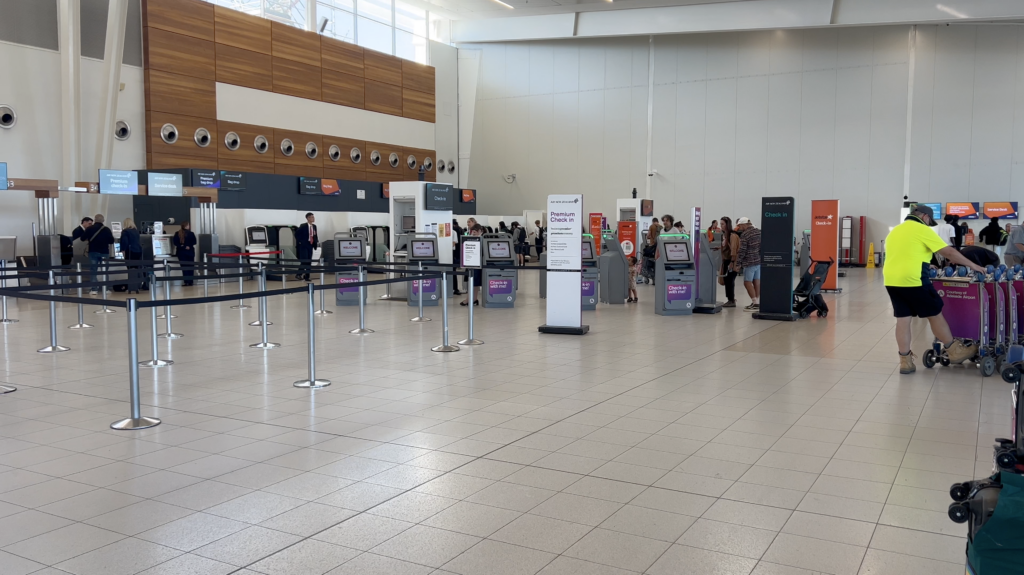
Jetstar’s check-in facilities are located towards the far-right side of Adelaide Airport’s departure hall. One aspect that immediately stood out was how modern and efficient the process has become.
Instead of relying heavily on traditional staffed counters, Jetstar has embraced a largely self-service model. Shared kiosks allow passengers to print boarding passes and baggage tags before proceeding directly to automated bag drop machines. Interestingly, these same kiosks are also shared with several international airlines, including Air New Zealand and Singapore Airlines, highlighting the versatility of Adelaide Airport’s technology infrastructure.
The entire process took only a matter of minutes.
Despite travelling during the busy summer holiday period, there were very few queues, and the automated systems worked exactly as intended without requiring staff assistance. In an era where many airports continue to struggle with lengthy check-in times, Adelaide demonstrated how efficient self-service technology can be when implemented properly.
For travellers familiar with Jetstar’s operations at larger airports such as Melbourne or Sydney, Adelaide arguably offers one of the smoothest check-in experiences in the airline’s Australian network.
Security Screening
Following check-in, I made my way to the central security screening area.
Security was moderately busy, but the queue moved consistently throughout the morning. From joining the line until entering the departures area took somewhere between five and ten minutes, which was perfectly reasonable considering the number of departing flights.
One feature that continues to improve the passenger experience is Adelaide Airport’s use of modern CT scanners. Unlike traditional X-ray machines that require laptops and liquids to be removed from hand luggage, these scanners allow passengers to leave most items inside their bags, significantly speeding up the screening process while reducing the stress often associated with airport security.
On this occasion, I wasn’t selected for any secondary screening, allowing me to proceed through security quickly and efficiently.
It’s also worth noting that Adelaide’s integrated terminal means international passengers first pass through domestic security before proceeding to passport control and a second screening area that meets international requirements. This arrangement keeps passenger flows logical while maintaining appropriate security standards for overseas departures.
A Visit to the Qantas Club
One unexpected bonus before departure was the opportunity to visit the Qantas Club using a complimentary lounge pass.
Recent changes to Qantas’ lounge access policy mean complimentary passes are now much harder to transfer outside an immediate travelling party, making opportunities like this increasingly uncommon. As someone who doesn’t regularly hold Qantas Gold status, lounge visits have become a relatively rare treat, making this stop particularly enjoyable.
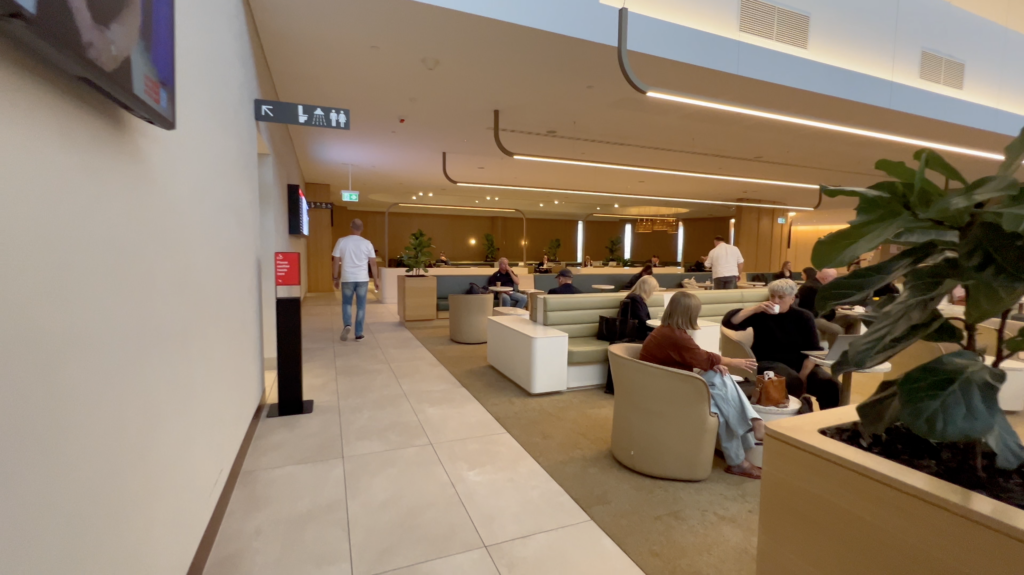
The Adelaide Qantas Club is, in my opinion, one of the better domestic lounges in Australia.
It feels noticeably more spacious than many comparable Qantas Clubs and offers a more premium atmosphere than expected. Much of this likely stems from the fact that, until recently, Adelaide did not have a dedicated Qantas Business Lounge. Consequently, the Qantas Club needed to accommodate both regular lounge members and business class passengers, resulting in higher overall presentation standards.
Inside, there was an excellent variety of seating suitable for both relaxation and work. While apron views are somewhat limited compared with lounges overlooking active taxiways, there was still plenty to watch outside as aircraft arrived and departed throughout the morning.
Breakfast offerings were also perfectly respectable. The buffet included a mixture of continental options alongside several hot breakfast items. I decided to keep things fairly simple, helping myself to freshly made pancakes, a glass of orange juice and a barista-made flat white before heading towards my departure gate. Although the lounge’s popular bar wouldn’t open until midday, the beverage selection available later in the day appeared extensive for those travelling on afternoon services.
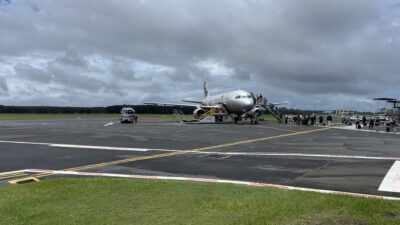
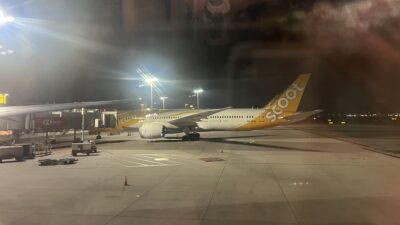
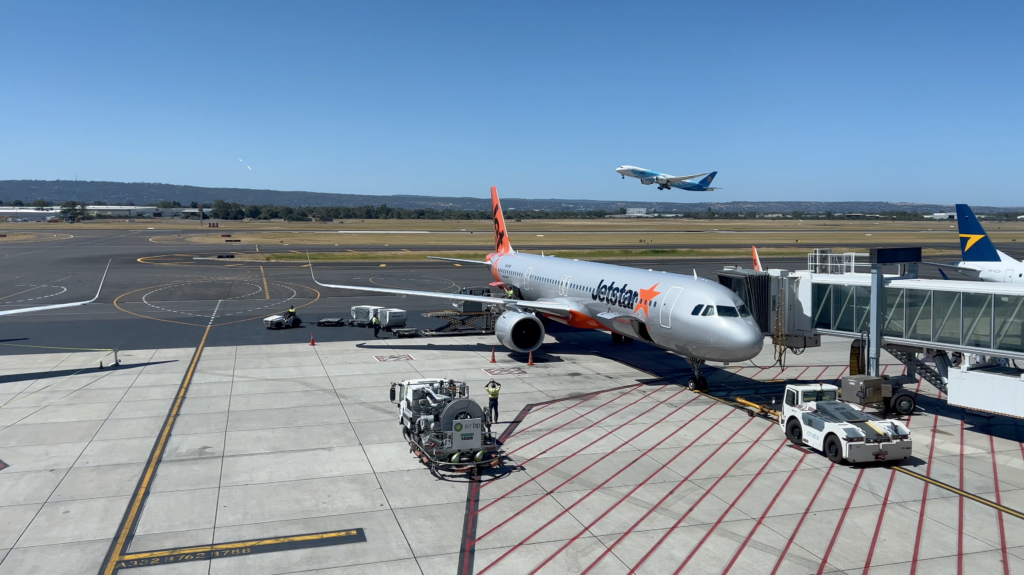
Before boarding, I also spent some time aircraft spotting from the terminal windows. Adelaide’s growing international network meant there was no shortage of interesting movements, including a United Airlines Boeing 787-9 that had recently arrived nonstop from San Francisco and a China Southern Boeing 787 preparing for its return flight to Guangzhou. These relatively new international services highlight Adelaide’s continuing growth as an aviation gateway and provided an enjoyable way to pass the remaining time before boarding my Jetstar Airbus A321neo bound for Perth.
Boarding the Jetstar Airbus A321neo
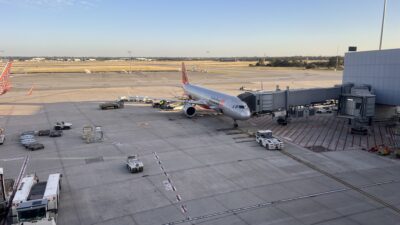
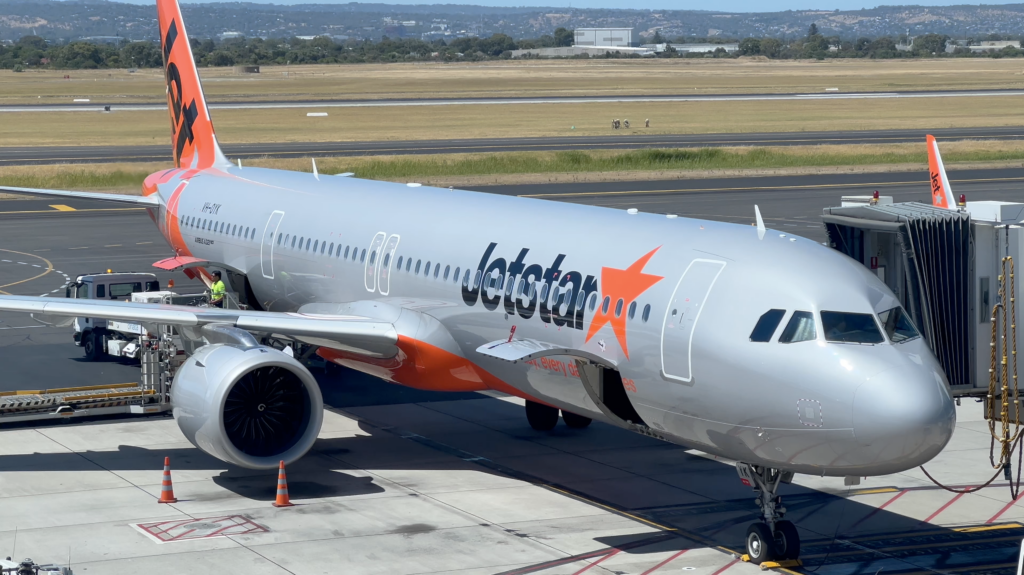
After spending a relaxing morning in the Qantas Club, it was time to make the short walk to the departure gate where my Jetstar Airbus A321neo LR was waiting for the journey west across Australia. The aircraft operating today’s flight had been delivered new to Jetstar in May 2024, making it less than two years old at the time of my flight. As one of the airline’s growing fleet of Airbus A321neo LRs, it represents the future of Jetstar’s domestic operations, gradually replacing the ageing Airbus A320s that have formed the backbone of the carrier for many years.
From the terminal windows, the aircraft looked immaculate. The A321neo is undoubtedly a more modern and attractive aircraft than its predecessor, with its larger engines, distinctive sharklets and sleek proportions giving it a noticeably more contemporary appearance. Beyond aesthetics, however, the aircraft also promises improved fuel efficiency, greater range and a quieter cabin, all of which are significant advantages for both passengers and the airline.
Unfortunately, the positive mood at the gate began to change as departure time approached.
Boarding did not commence at the advertised time and, more frustratingly, there appeared to be very little communication regarding the reason for the delay. Approximately thirty minutes passed before passengers were finally invited to board, by which point our scheduled departure time had already come and gone. Delays are, of course, an inevitable part of aviation, but what often distinguishes a good customer experience from a poor one is communication. In this case, clearer updates from gate staff would have helped manage expectations and reduced some of the uncertainty among waiting passengers.
One welcome surprise, however, was boarding via an aerobridge. While this is common at many airports, Jetstar passengers frequently find themselves boarding via stairs and buses, particularly at larger bases such as Melbourne. Walking directly from the terminal onto the aircraft certainly made the experience feel a little more premium than is often associated with Australia’s largest low-cost carrier.
First Impressions of the Airbus A321neo Cabin
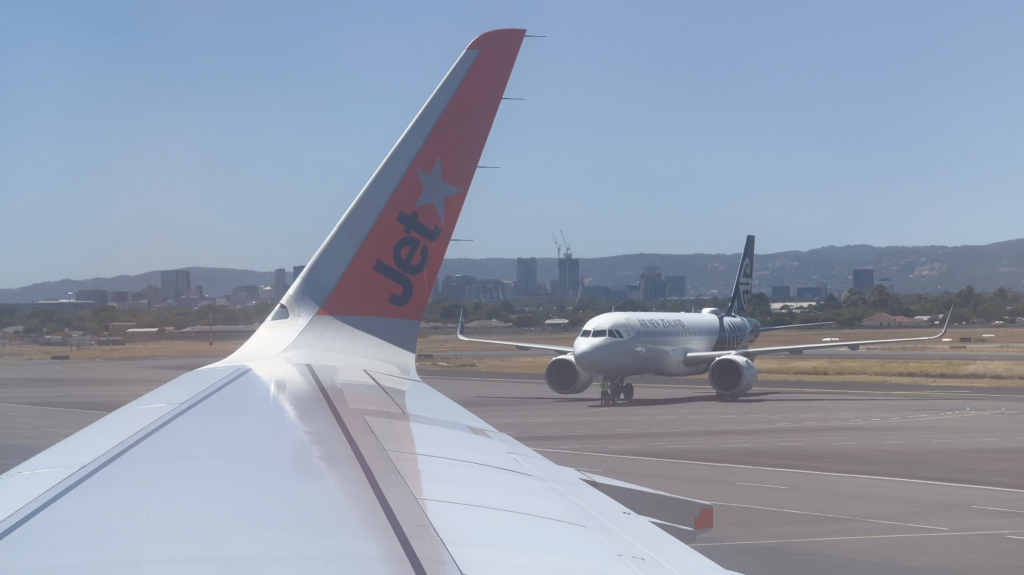
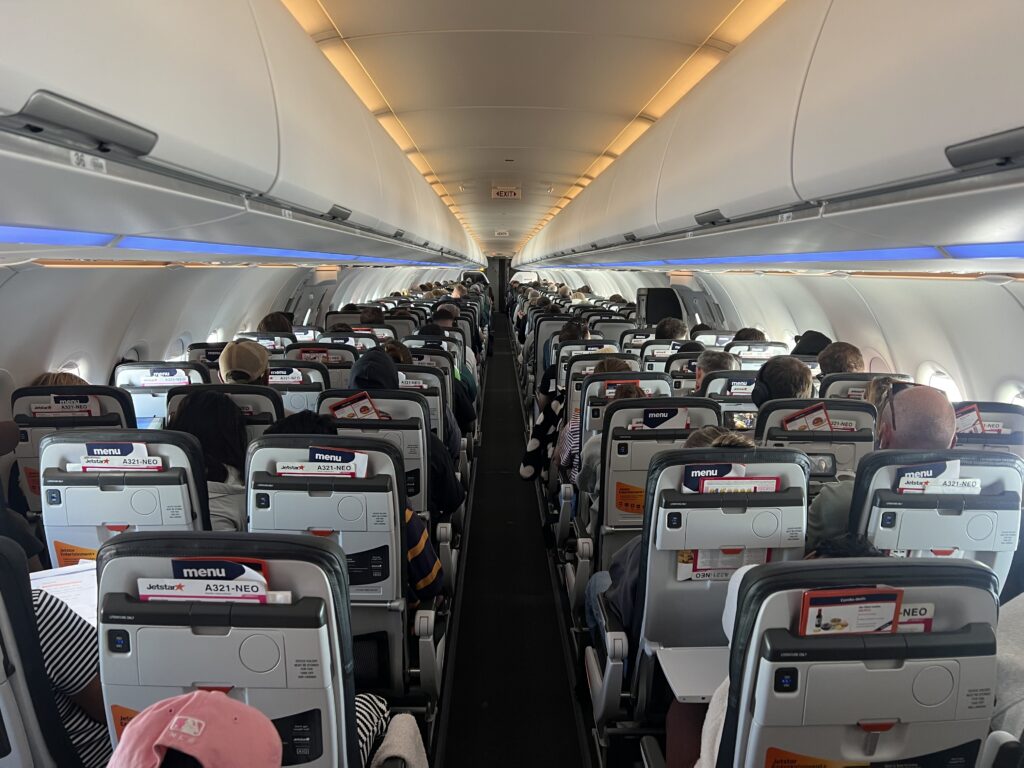
Stepping onboard, the aircraft immediately felt bright, clean and modern. Although Jetstar has configured its Airbus A321neo LR fleet with an impressive 232 economy seats, the cabin never felt cramped at first glance thanks to the contemporary lighting, slimline seating and Airbus’ naturally spacious cabin design.
Like every Jetstar A321neo LR, today’s aircraft featured a single-class all-economy layout. Standard seats offer a pitch of 29 inches, two inches of recline and a width of approximately 17.7 inches. While these dimensions are typical for the low-cost market, they do reinforce that Jetstar’s priority is carrying as many passengers as possible rather than providing generous personal space.
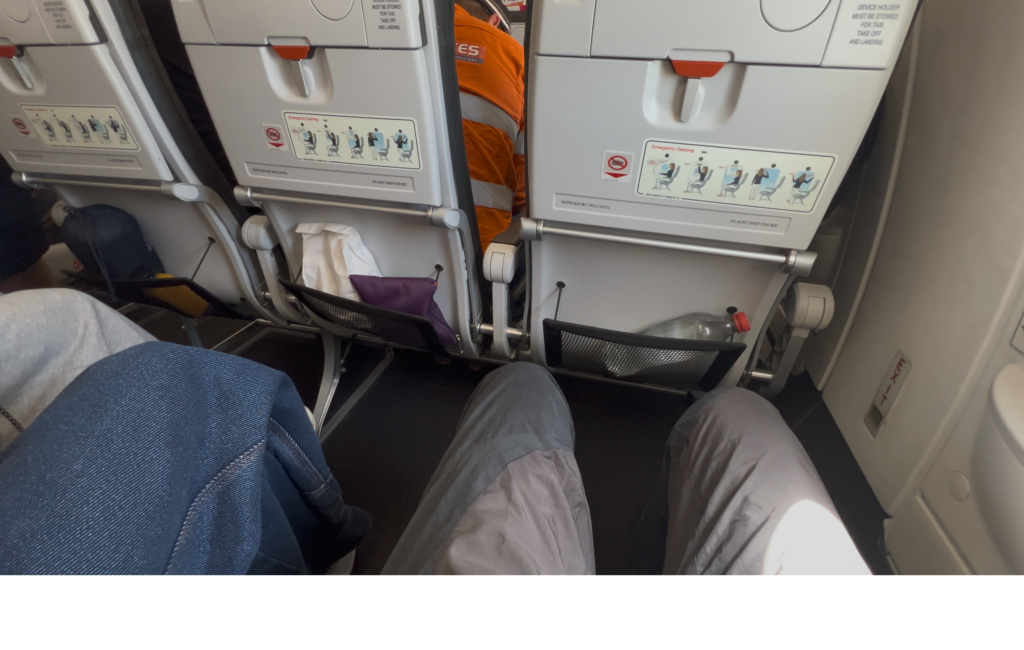
Fortunately, my Flex Plus bundle allowed me to pre-select an exit row seat at no additional cost. On a flight exceeding three hours, this is arguably one of the most valuable inclusions of the bundle. The additional legroom transforms what could otherwise be a fairly confined experience into one that feels considerably more comfortable.
The seats themselves are manufactured by Recaro and feature a slimline ergonomic design upholstered in black leather. They certainly look modern and maximise available legroom by using thinner seat backs, but comfort is a more mixed story. While perfectly adequate for shorter sectors, the cushioning is relatively firm and lacks the plushness found on many full-service airlines. After several hours in the seat, the firmness becomes more noticeable, although the generous exit row legroom certainly helped offset this during today’s flight.
Modern Features Improve the Experience
One area where Jetstar deserves genuine credit is the inclusion of modern passenger amenities throughout the A321neo cabin.
Each seat features USB charging, allowing passengers to keep their phones, tablets or other electronic devices powered throughout the flight. In today’s travel environment, this has become an increasingly important feature, particularly as many travellers rely on their own devices for entertainment.
Another thoughtful addition is the integrated device holder built into each seatback. Rather than balancing a phone on the tray table or awkwardly holding it throughout the flight, passengers can securely mount their device at eye level. It’s a small design feature but one that noticeably improves usability, especially when watching movies or following the moving map.
The seat pocket also contains the standard collection of inflight materials, including Jetstar’s menu, safety card and inflight magazine, although like many airlines, the emphasis has shifted increasingly towards digital services accessed through passengers’ own devices.
These seemingly minor additions collectively make the A321neo feel like a much more contemporary aircraft than the older Airbus A320 fleet. While passengers aren’t paying for luxury, they are benefiting from thoughtful upgrades that enhance convenience without significantly increasing costs.
An Extended Delay Before Departure
Once boarding had been completed, it quickly became apparent that our departure would be delayed even further.
Unlike the limited communication provided in the terminal, the flight crew were refreshingly transparent once onboard. The captain explained that engineers had been required to rectify a fault affecting the aircraft’s public address system shortly after arrival. As those repairs were being completed, ground staff also identified several scratches on the rear section of the aircraft which required further inspection before engineers could authorise departure. Safety, understandably, remained the absolute priority.
While no passenger enjoys sitting at the gate waiting for engineering inspections, this was a situation where the crew handled communication extremely well. Frequent updates were provided, passengers were informed about what was happening, and the captain openly acknowledged the inconvenience while emphasising that every inspection was necessary before the aircraft could safely depart.
Ultimately, what had initially appeared to be a relatively minor delay developed into an overall delay of approximately one hour. Although frustrating, I would much rather experience a delayed departure than have any engineering concern overlooked simply to maintain punctuality. Aviation remains one of the safest forms of transport precisely because airlines adopt this cautious approach whenever potential defects are identified.
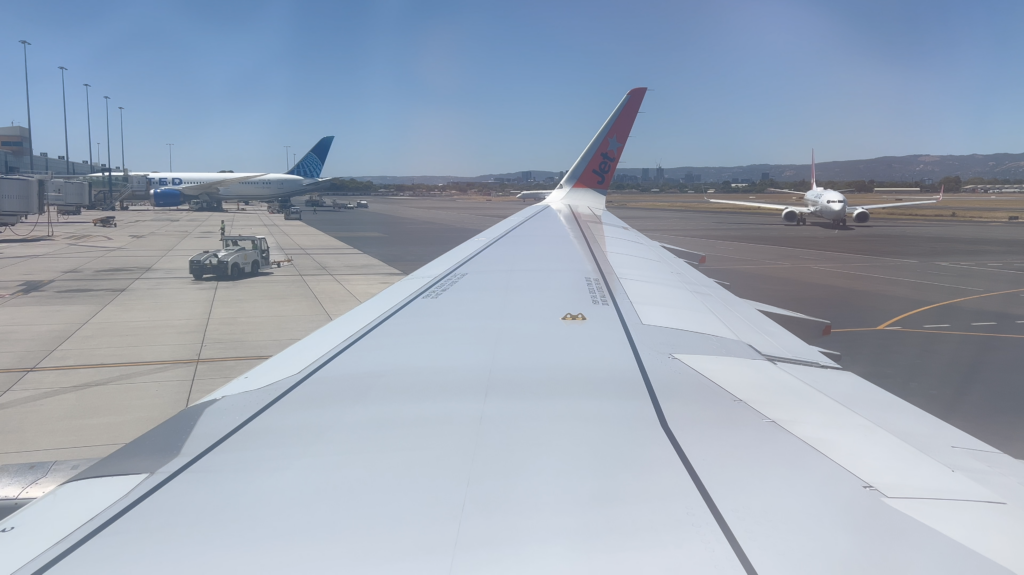
Eventually, after engineers completed their inspections and the aircraft received clearance, pushback finally commenced. The sense of relief throughout the cabin was obvious as we began taxiing for departure, with everyone looking forward to finally beginning the journey across the Nullarbor.
A Spectacular Departure from Adelaide
The delay was quickly forgotten once the aircraft accelerated down Adelaide Airport’s runway.
Our summer morning departure offered magnificent panoramic views across Adelaide and the surrounding coastline. The city’s compact layout, framed by the Mount Lofty Ranges to the east and Gulf St Vincent to the west, makes it one of Australia’s most picturesque cities to depart from, particularly in clear weather such as today’s.
As the aircraft climbed away from South Australia, the Airbus A321neo once again demonstrated one of its greatest strengths: its remarkably quiet cabin. Compared with previous-generation narrow-body aircraft, engine noise is noticeably reduced thanks to the new Pratt & Whitney geared turbofan engines. Conversations remain easy, cabin announcements are clearer, and the overall atmosphere feels calmer than many older aircraft.
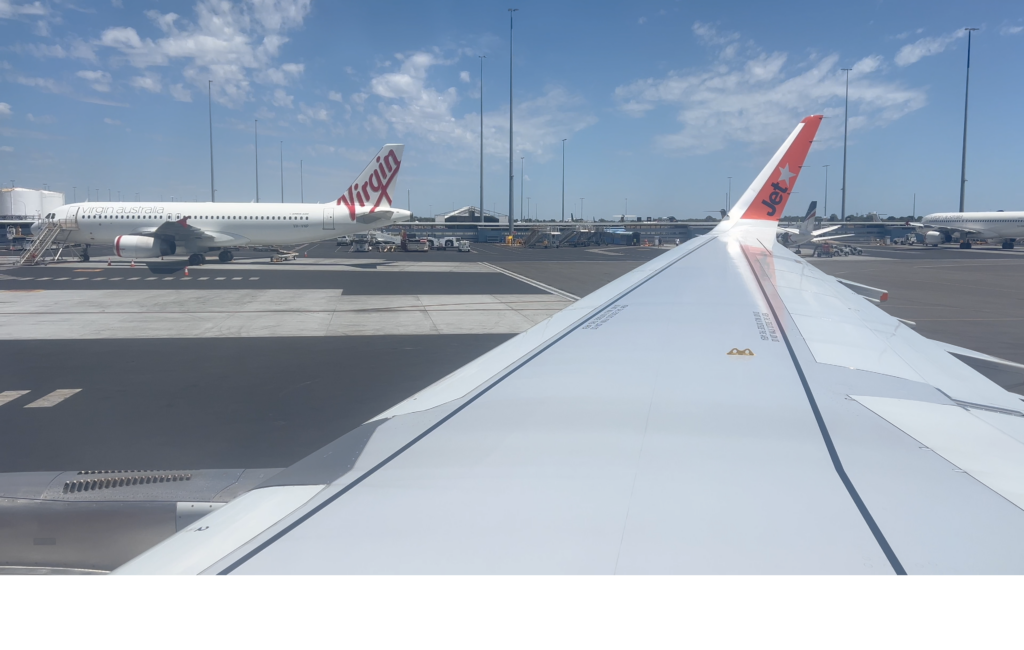
The climb itself was smooth, and before long we had reached our cruising altitude, turning westward towards the vast expanse of the Great Australian Bight. With over three hours of flying ahead, it was the perfect opportunity to explore the onboard experience in greater detail.
Jetstar Entertainment Plus
Unlike full-service airlines that provide seatback entertainment screens, Jetstar uses a wireless streaming platform known as Entertainment Plus.
The concept is straightforward. Passengers connect their own smartphone or tablet to the aircraft’s onboard network and stream entertainment directly to their personal device. This eliminates the weight and maintenance costs associated with individual seatback screens while still providing access to a respectable range of inflight content.
The library includes movies, television shows, children’s programming and games. An all-access entertainment pass costs $7 for the duration of the flight, while a cheaper children’s package is also available. Importantly, passengers are able to browse the available catalogue before deciding whether to purchase access, allowing them to judge whether the selection is worthwhile.
Even if you choose not to purchase the entertainment package, Jetstar still provides several complimentary features. These include a live moving map tracking the aircraft’s progress across Australia along with a small selection of free games and content.
Personally, I chose not to purchase the entertainment package. Instead, I watched aviation documentaries that I had downloaded before departure. Nevertheless, I think Jetstar has struck a sensible balance. Seven dollars is a reasonable price for several hours of entertainment, and those who prefer not to pay still receive enough complimentary content to remain engaged throughout the journey. Compared with many other low-cost airlines around the world, the system feels modern, intuitive and fairly priced rather than overly restrictive.
Food and Beverage Service
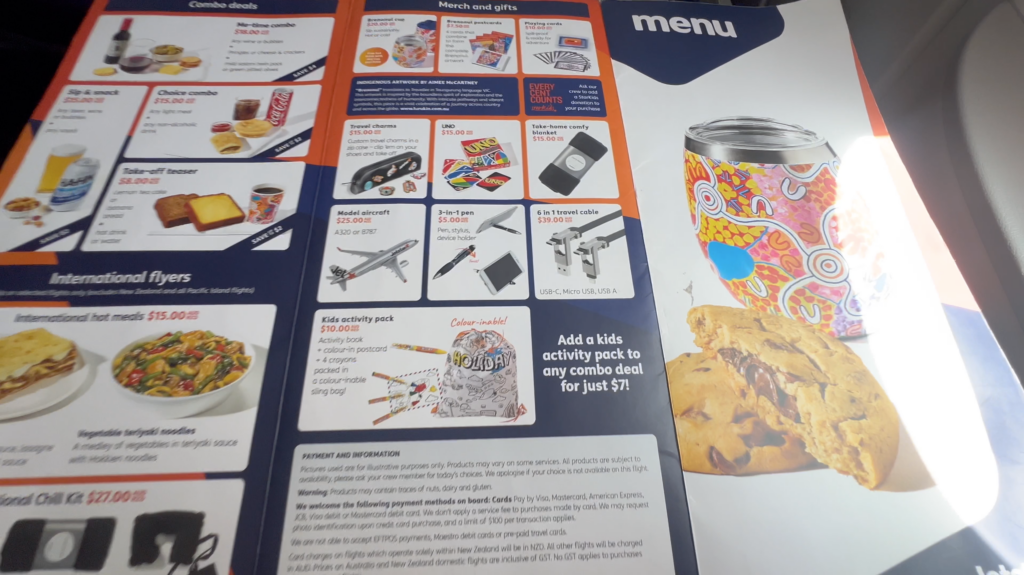
No Jetstar review would be complete without taking a closer look at the airline’s buy-on-board service. As Australia’s largest low-cost carrier, Jetstar operates on the principle that passengers should only pay for the extras they actually want, allowing those travelling on the cheapest fares to avoid subsidising services they may never use.
The onboard menu offers a surprisingly comprehensive selection of food and beverages for a domestic flight. Passengers can choose from snacks, sandwiches, toasties, pastries and combo meals, alongside a range of soft drinks, hot beverages, beer, wine and spirits. On selected international services, the menu expands further with a number of hot meal options, while inflight merchandise is also available for aviation enthusiasts or those wanting a souvenir from their journey.
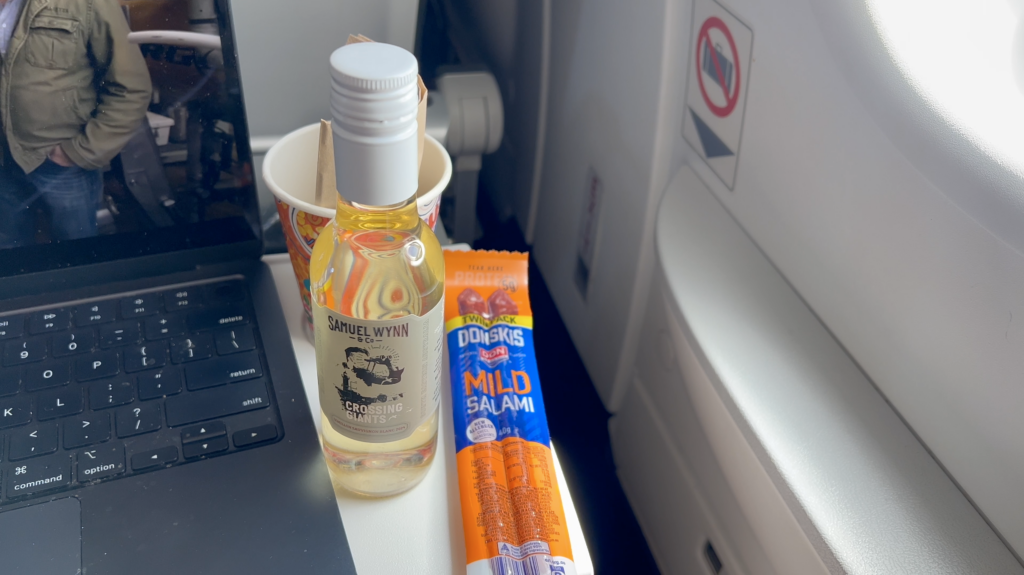
Having purchased the Flex Plus bundle, I received a $15 onboard food and beverage voucher, meaning I didn’t need to reach for my wallet when the cabin crew commenced the service. Instead, I redeemed the voucher for a bottle of white wine accompanied by two packs of mild salami sticks. While perhaps not the most conventional airline meal, it proved to be an enjoyable and satisfying option for a mid-afternoon flight across Australia. The Sauvignon Blanc was crisp and refreshing, while the salami sticks made for an ideal light snack without feeling overly heavy.
For travellers considering whether the Flex Plus bundle offers value, this onboard voucher should not be overlooked. It effectively reduces the additional cost of upgrading while allowing passengers to enjoy refreshments without incurring further expense during the flight. Rather than treating the voucher as a gimmick, it felt like a genuinely useful inclusion that enhanced the overall journey.
Cruising Across Australia
Once the meal service concluded, there was little left to do other than settle back and enjoy one of Australia’s great transcontinental flights.
Flying between Adelaide and Perth provides a unique perspective on the sheer scale of the Australian continent. Shortly after leaving South Australia behind, the landscape gradually gives way to the immense coastline of the Great Australian Bight before transitioning into the remote interior of Western Australia. Although much of the journey passes over sparsely populated terrain, there is something undeniably fascinating about watching Australia’s diverse geography unfold beneath the aircraft.
The flight itself proved exceptionally smooth. Despite the captain advising passengers that some turbulence was possible later in the journey, conditions remained comfortable for the overwhelming majority of the flight. Any minor bumps were brief and did little to interrupt what was otherwise a very pleasant cruise.
One aspect that particularly impressed me was how effectively the crew managed to recover some of the delay. Despite departing Adelaide approximately one hour behind schedule, favourable winds and efficient flight planning allowed us to gradually claw back valuable time throughout the crossing.
As someone who prefers using my own entertainment rather than relying entirely on airline systems, I spent much of the cruise watching pre-downloaded aviation documentaries on my tablet. Thanks to the USB charging available at every seat, battery life was never a concern, further highlighting one of the Airbus A321neo’s practical advantages over many older aircraft still flying around Australia.
Arrival into Perth
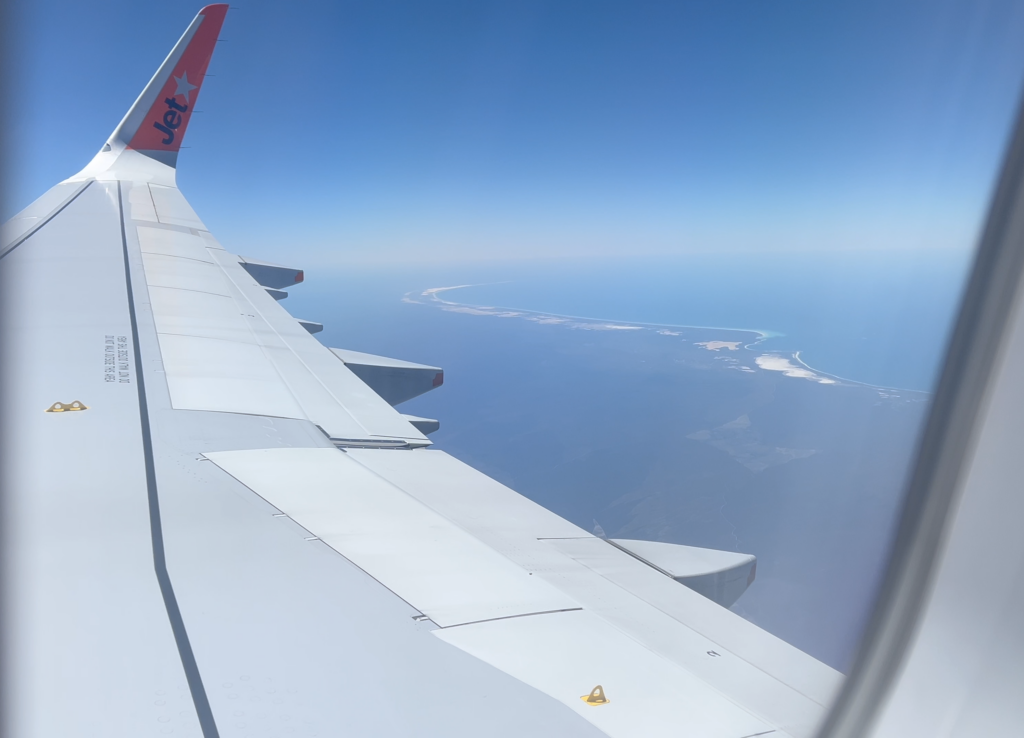
Approximately ninety minutes after crossing the Great Australian Bight, Western Australia’s coastline finally appeared beneath us near Esperance. Even after countless flights into Perth over the years, there is always something satisfying about seeing the familiar landscape emerge after several hours crossing one of the world’s most isolated regions.
As we continued our descent towards Perth, the captain advised that temperatures on the ground had reached a scorching 41 degrees Celsius, a reminder that Western Australia’s summer climate can be dramatically different from conditions experienced elsewhere in the country. While some light turbulence was encountered during the descent, the approach remained stable, and before long we touched down safely back in my home city.
Considering the lengthy engineering delay before departure, arriving only around twenty-five minutes behind schedule represented an excellent recovery by both the flight crew and operational teams. It’s a reminder that scheduled block times often contain a degree of flexibility, allowing airlines to recover delays without compromising safety or passenger comfort.
Overall Review of the Jetstar Experience
Looking back over the journey as a whole, this was a flight that delivered exactly what Jetstar promises: a reliable, affordable travel experience with the option to customise the product according to individual needs.
The day began extremely well. Adelaide Airport continues to impress with its efficient layout, quick self-service check-in facilities and modern security screening technology, all of which contributed to a stress-free start to the journey. The opportunity to relax in the excellent Qantas Club beforehand further enhanced the overall airport experience.
Unfortunately, the weakest aspect of the experience occurred during boarding. The lack of communication while passengers waited at the departure gate was disappointing, particularly given that the delay eventually became quite substantial. Better updates from ground staff would have gone a long way towards improving passenger confidence and reducing frustration.
Once onboard, however, the experience improved considerably. The cabin crew were consistently friendly, approachable and professional throughout the flight. Importantly, the flight deck kept passengers well informed about the engineering inspections and subsequent delays, demonstrating exactly the type of transparent communication that had been missing inside the terminal.
The Airbus A321neo itself represents a significant step forward for Jetstar’s domestic fleet. Although the seats remain relatively firm, the aircraft feels noticeably more modern than the Airbus A320, thanks to quieter engines, USB charging, device holders and an overall fresher cabin environment. Travellers fortunate enough to secure an exit row will enjoy a considerably more comfortable journey, particularly on flights exceeding three hours.
Likewise, Jetstar’s Entertainment Plus platform strikes a sensible balance between affordability and functionality. While I personally didn’t purchase the paid package, the availability of complimentary games and a moving map, combined with reasonably priced premium content, makes it one of the better inflight entertainment offerings among low-cost airlines.
Is Jetstar Flex Plus Worth It?
After experiencing the full Flex Plus product, my answer is a resounding yes—provided you value flexibility and intend to take advantage of its inclusions.
For $268, my fare included checked baggage, complimentary exit row seating, a $15 food and beverage voucher, Qantas Frequent Flyer benefits and, perhaps most importantly, the ability to change or cancel my booking without paying change fees. In today’s travel environment, where plans can change unexpectedly, that flexibility alone adds considerable value.
When each of those extras is priced individually, the bundle becomes increasingly attractive. Rather than paying separately for baggage, seat selection and onboard food, the Flex Plus fare combines everything into a single, straightforward package while retaining the lower operating costs that make Jetstar such a competitive airline.
For leisure travellers, families and anyone booking well in advance, Flex Plus offers an excellent balance between affordability and peace of mind.
Final Verdict
Jetstar has always positioned itself as an airline that delivers value rather than luxury, and this flight demonstrated exactly why it continues to be one of Australia’s most popular domestic carriers.
Yes, there were shortcomings. The communication surrounding the initial boarding delay could certainly have been handled better, and the firm Recaro seats may not appeal to everyone on longer sectors. However, these negatives were outweighed by numerous positives, including a modern Airbus A321neo, friendly cabin crew, efficient airport experience, useful onboard technology and outstanding value through the Flex Plus bundle.
Most importantly, the engineering delay highlighted an important principle within aviation: safety always comes before punctuality. While nobody welcomes an hour-long delay, Jetstar’s willingness to thoroughly inspect the aircraft before departure ultimately reinforced confidence in the airline’s safety culture.
For travellers seeking the best balance between price and inclusions, Jetstar continues to offer one of the strongest value propositions in Australian domestic aviation. If you’re willing to spend a little extra on the Flex Plus bundle, you’ll enjoy a significantly enhanced experience that narrows the gap between low-cost and full-service travel while often remaining substantially cheaper.
After this journey from Adelaide to Perth, I came away with exactly the same conclusion I’ve reached on many previous Jetstar flights: you generally receive exactly what you pay for—and when you choose the right fare bundle, that value can be exceptionally difficult to beat.
Overall Ratings
| Category | Rating |
|---|---|
| Booking & Value | 9.5/10 |
| Adelaide Airport Experience | 9/10 |
| Check-in Process | 9.5/10 |
| Boarding | 6.5/10 |
| Cabin Comfort | 8/10 |
| Seat (Exit Row) | 9/10 |
| Food & Beverage | 8.5/10 |
| Entertainment | 8/10 |
| Cabin Crew | 9/10 |
| Punctuality | 6.5/10 |
| Value for Money | 9.5/10 |
Overall Rating: 8.7/10
Frequently Asked Questions
Is the Jetstar Airbus A321neo comfortable?
The Airbus A321neo is a noticeable improvement over Jetstar’s older A320 fleet, offering a quieter cabin, USB charging at every seat and convenient device holders. While the seats remain firm, passengers who choose an exit row will enjoy significantly greater comfort on longer domestic flights.
Is Jetstar Flex Plus worth the extra money?
If you require checked baggage, want to select your seat, intend to purchase food onboard or value flexible booking conditions, Flex Plus represents excellent value and can often work out cheaper than purchasing those extras separately.
Does Jetstar offer inflight entertainment?
Yes. Jetstar’s Entertainment Plus system streams movies, television shows and games directly to your own device. Paid access is inexpensive, while all passengers receive complimentary access to a moving flight map and a small selection of free content.
Would I fly Jetstar on this route again?
Absolutely. Despite the departure delay, the overall experience reinforced why Jetstar remains one of Australia’s strongest value-for-money airlines. With a modern Airbus A321neo fleet and the excellent Flex Plus bundle, the airline offers a compelling option for travellers flying between Adelaide and Perth.
Disclaimer: This article has been repurposed from the original transcript of my own flight review on the Aussie JetSetter Youtube channel with the assistance of AI technologies. Please be advised whilst I have taken the utmost care to review and revise this article where necessary to reflect the upmost of accuracy at time of publication please be advised my reviews whether written or in video form are for entertainment and general information purposes only. They reflect the objective views in good faith of the person only whom is presenting them unless otherwise noted. Any decisions you make resulting from consuming my content must take into consideration your own circumstances, research and responsibility as I can not be hold responsible for any inaccuracies or future changes effecting the relativity of such reviews. All Rights Reserved by Aussie JetSetter from 2022 >