




Route: Ballina Byron Gateway Airport (BNK) to Melbourne Tullamarine (MEL)
Airline: Jetstar Airways
Aircraft: Airbus A320-200
Flight Number: JQ465
Flight Time: 2 Hours 5 Minutes
Class: Economy (Flex Plus Bundle)
Ticket Price: AUD $247
Flying Jetstar From Byron Bay to Melbourne
Australia’s east coast is home to some of the busiest and most competitive domestic air routes in the Southern Hemisphere. With massive distances separating the country’s major cities and holiday destinations, flying has become the default mode of transport for millions of Australians every year. Among the airlines competing for those passengers, Jetstar has firmly established itself as the country’s dominant low-cost carrier, connecting everything from major capitals to regional tourism hotspots at often extremely competitive prices.
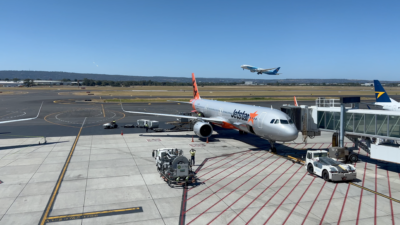
For this journey, I flew Jetstar’s direct service from Ballina Byron Gateway Airport to Melbourne aboard one of the airline’s ageing Airbus A320 aircraft. The route links the relaxed beach culture of Byron Bay with the sporting and cultural powerhouse of Melbourne, making it particularly popular during the Australian summer holiday season.
After spending several fantastic days exploring Byron Bay and the spectacular Northern Rivers region of New South Wales, it was time to head south to Melbourne for the Australian Open. Expectations for the flight itself were fairly moderate. Jetstar has long maintained a somewhat polarising reputation within Australian aviation circles. While the airline offers affordable fares and an extensive domestic network, it is also known for tight seating, ancillary charges, and an experience that can vary significantly depending on operational conditions.
Thankfully, this particular flight turned out to be a genuinely pleasant surprise.
From the efficiency of Ballina Byron Gateway Airport to the professionalism of the onboard crew and an early arrival into Melbourne, this ended up being one of the better domestic low-cost flights I have taken in Australia in recent years.
A Rainy Departure From Byron Bay
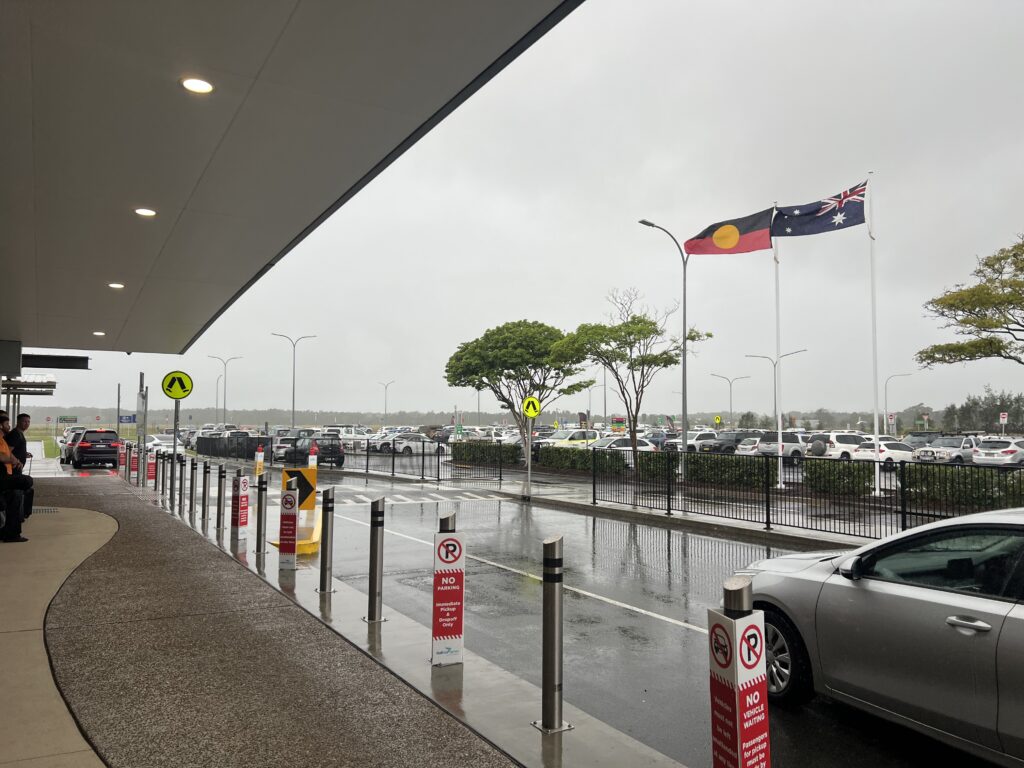
The journey began on a wet, humid, and thoroughly tropical summer morning in Byron Bay. Heavy rain swept across the Northern Rivers region as I made my way toward Ballina Airport, located approximately 35 kilometres south of Byron Bay itself.
Byron Bay remains one of Australia’s most iconic coastal towns. Famous for its beaches, surf culture, wellness scene, cafés, and laid-back atmosphere, the town attracts a huge mix of domestic and international visitors year-round. Cape Byron Lighthouse, perched dramatically above the coastline, marks the easternmost point of mainland Australia and remains one of the region’s defining landmarks.
Despite Byron Bay’s immense popularity, the town itself does not have a commercial airport. Instead, most visitors arrive through Ballina Byron Gateway Airport, which serves as the principal aviation hub for the wider Northern Rivers region, including Ballina, Byron Bay, and Lismore.
Public transport options between Byron Bay and Ballina Airport are somewhat limited, particularly outside peak daytime hours, so I opted to pre-book an Uber for the approximately 30-minute drive south. Interestingly, the rideshare vehicle turned out to be a Tesla Model Y, marking my first experience travelling in a Tesla. The smooth and quiet drive through the rain-soaked countryside certainly added a touch of unexpected luxury to an otherwise budget-focused travel day.
Ballina Byron Gateway Airport Impresses
One of the most surprising aspects of the entire trip was just how good Ballina Byron Gateway Airport turned out to be.
Regional airports can often feel outdated or underdeveloped compared with Australia’s larger domestic terminals, but Ballina genuinely exceeded expectations. Despite handling more than 650,000 passengers annually, the airport still retains a relaxed and stress-free atmosphere that larger airports simply cannot replicate.
Even more surprising was the presence of modern self-service check-in kiosks for Jetstar passengers. Many larger Australian airports still rely heavily on traditional check-in desks for budget carriers, so seeing fully functional kiosks at a regional airport was impressive.
The check-in process itself was remarkably quick. After entering my booking details, the kiosk printed both boarding passes and baggage tags within moments. Bag drop was equally efficient, with friendly and professional staff assisting passengers despite the poor weather outside.
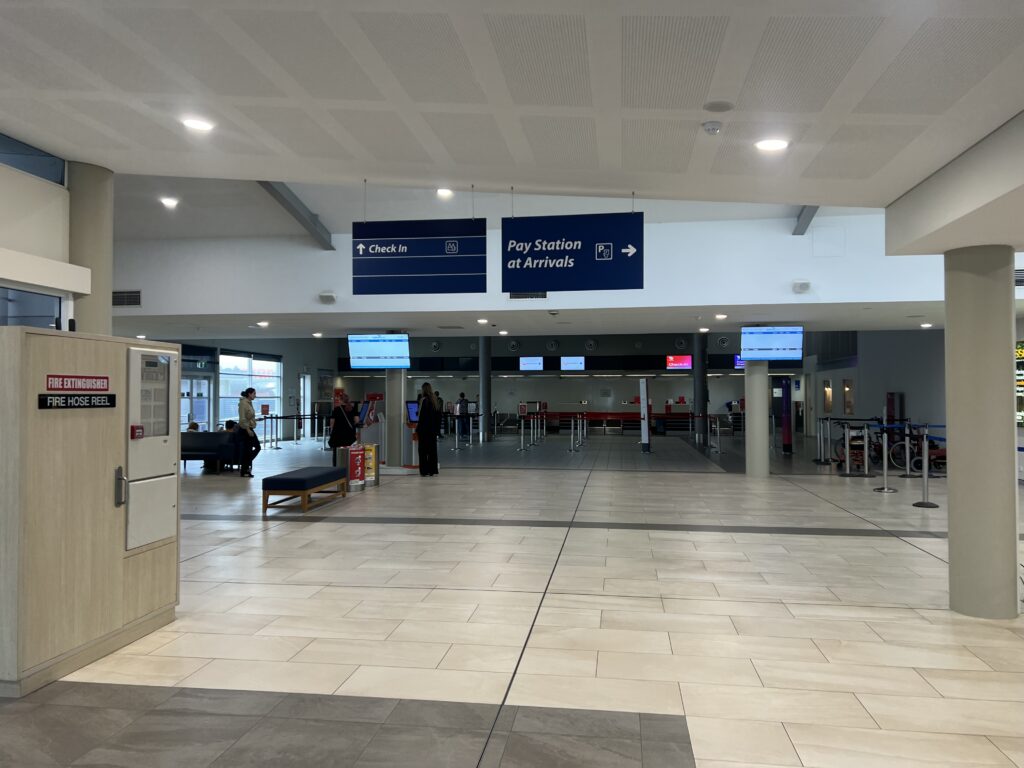
Security screening was another area where Ballina Airport excelled. Modern CT scanners meant electronics and liquids could remain inside carry-on bags, dramatically speeding up the process. Within just a few minutes of entering the terminal, I was already airside.
The terminal itself feels modern, spacious, and surprisingly well-equipped for a regional facility. There are decent food and beverage options, comfortable seating areas, and large windows overlooking the apron. Unfortunately, the torrential rain made plane spotting nearly impossible during this visit, but under better weather conditions it would likely be an excellent airport for aviation enthusiasts.
Overall, Ballina Byron Gateway Airport delivered one of the smoothest regional airport experiences I have had anywhere in Australia.
Boarding the Airbus A320
Boarding for Jetstar flight JQ465 commenced right on time, another positive sign considering the poor weather conditions earlier in the day.
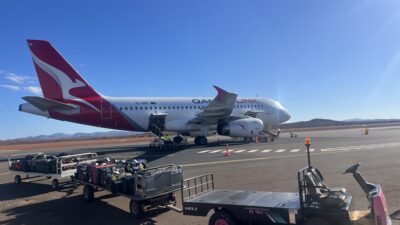
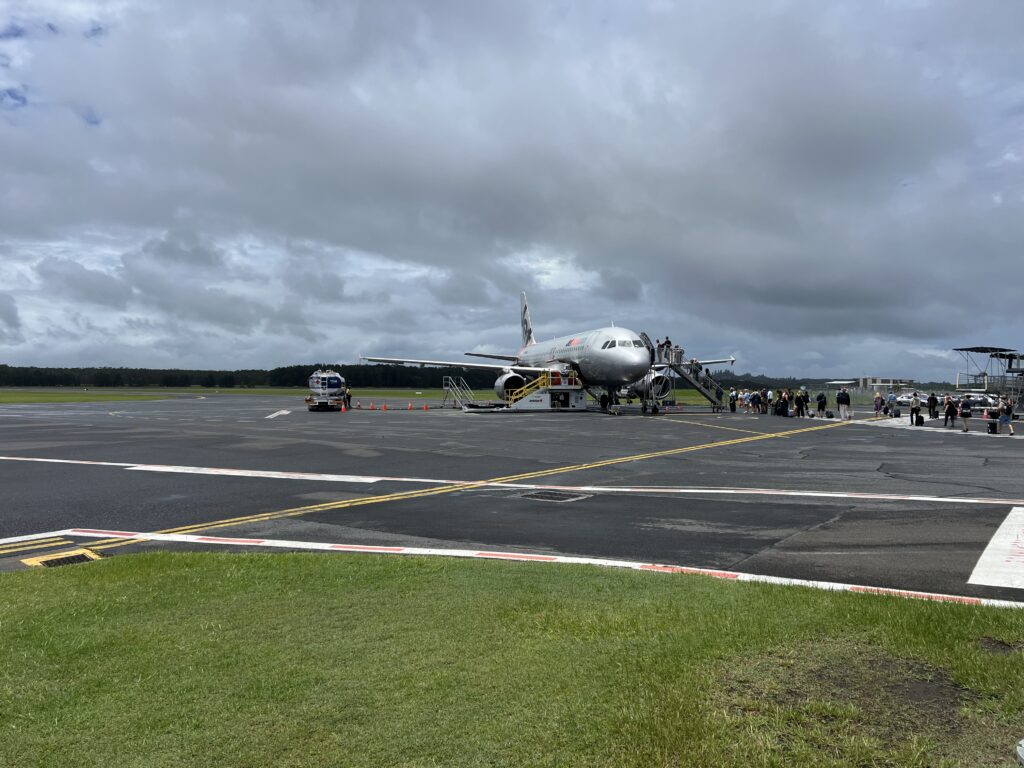
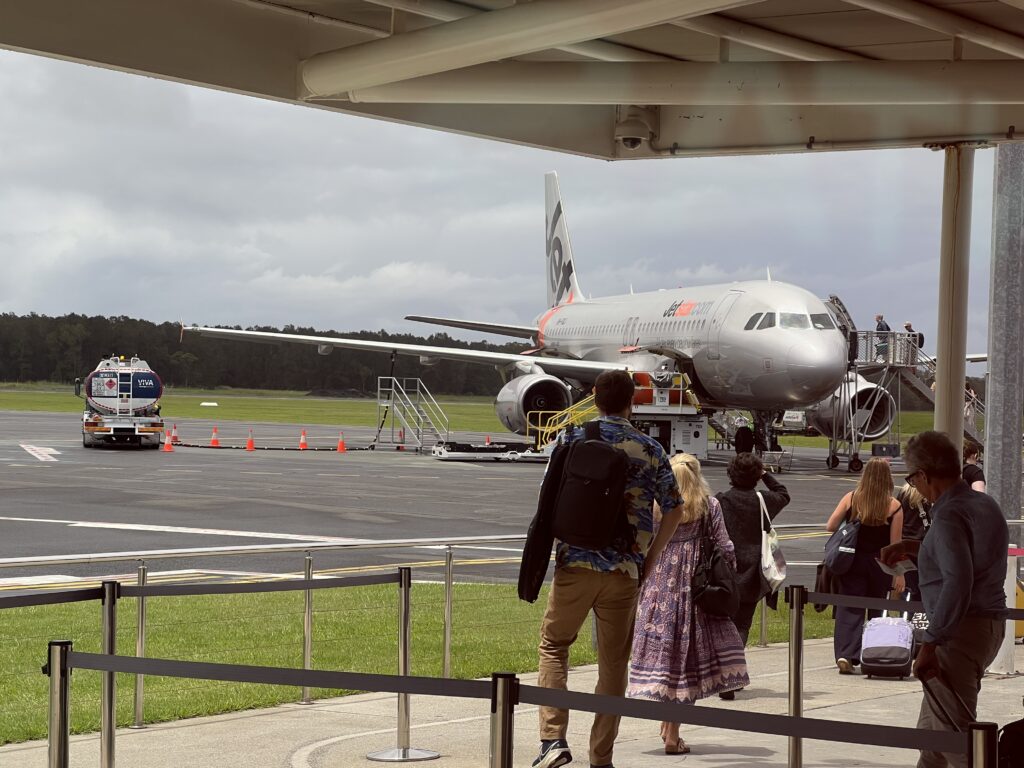
Unlike major city airports where aerobridges dominate, passengers at Ballina board aircraft directly via stairs on the apron. Thankfully, the rain had eased enough by this point to avoid getting completely drenched while walking to the aircraft.
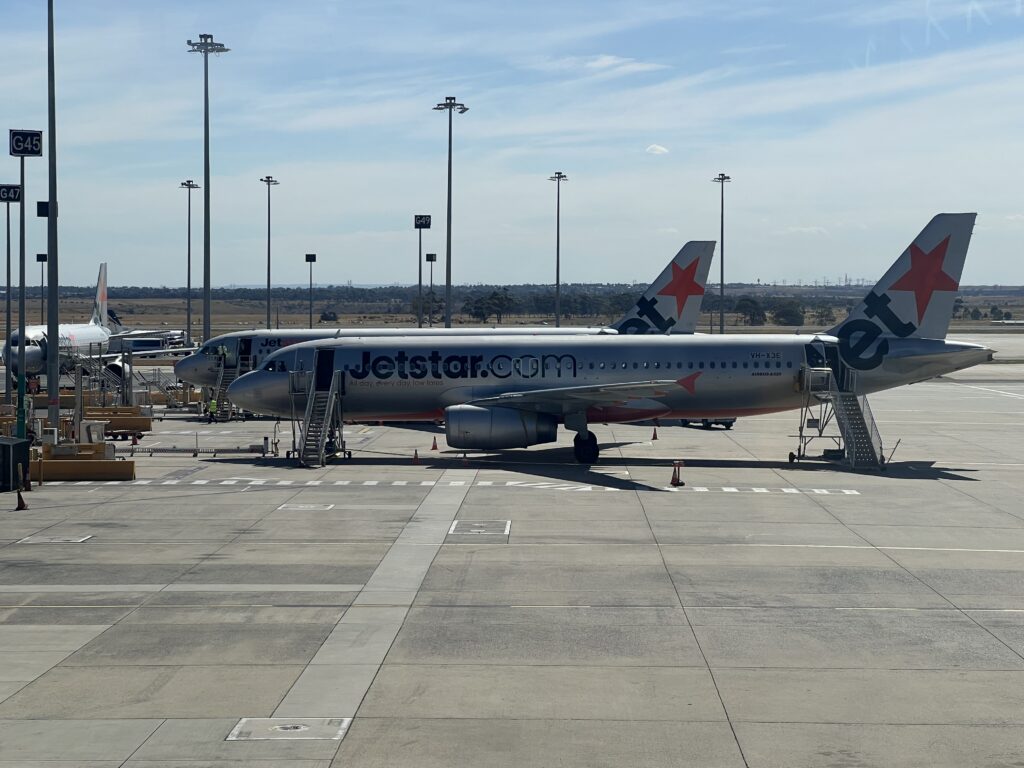
Today’s aircraft was VH-VQJ, a 20-year-old Airbus A320-200 delivered directly to Jetstar back in 2006. While certainly no longer young by aviation standards, the aircraft appeared well maintained externally.
Jetstar operates one of the largest Airbus A320 fleets in Australia, with the type serving as the backbone of the airline’s domestic and short-haul international operations. Depending on configuration, these aircraft seat between 180 and 186 passengers in an all-economy layout designed to maximise efficiency and revenue.
Boarding itself was straightforward and efficient. Passengers settled quickly into their seats, overhead locker space remained adequate, and the cabin crew maintained a friendly and relaxed atmosphere throughout the process.
Seat Comfort and Cabin Experience
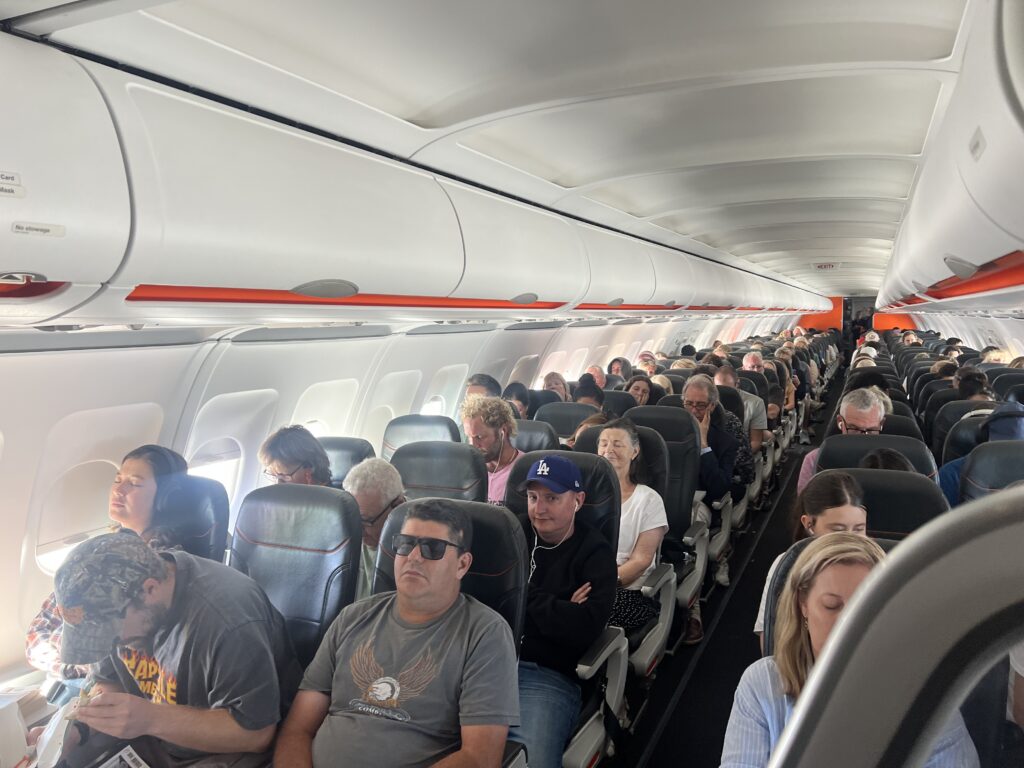
Jetstar’s Airbus A320 cabin is exactly what you would expect from a modern low-cost airline. Seating is configured in a dense 3-3 layout using slimline black leather Recaro seats designed primarily for efficiency rather than comfort.
Standard seat pitch on Jetstar’s A320 fleet sits around 28 to 29 inches, which is undeniably tight, especially for taller travellers. Recline is minimal, and the seats themselves are relatively thinly padded.
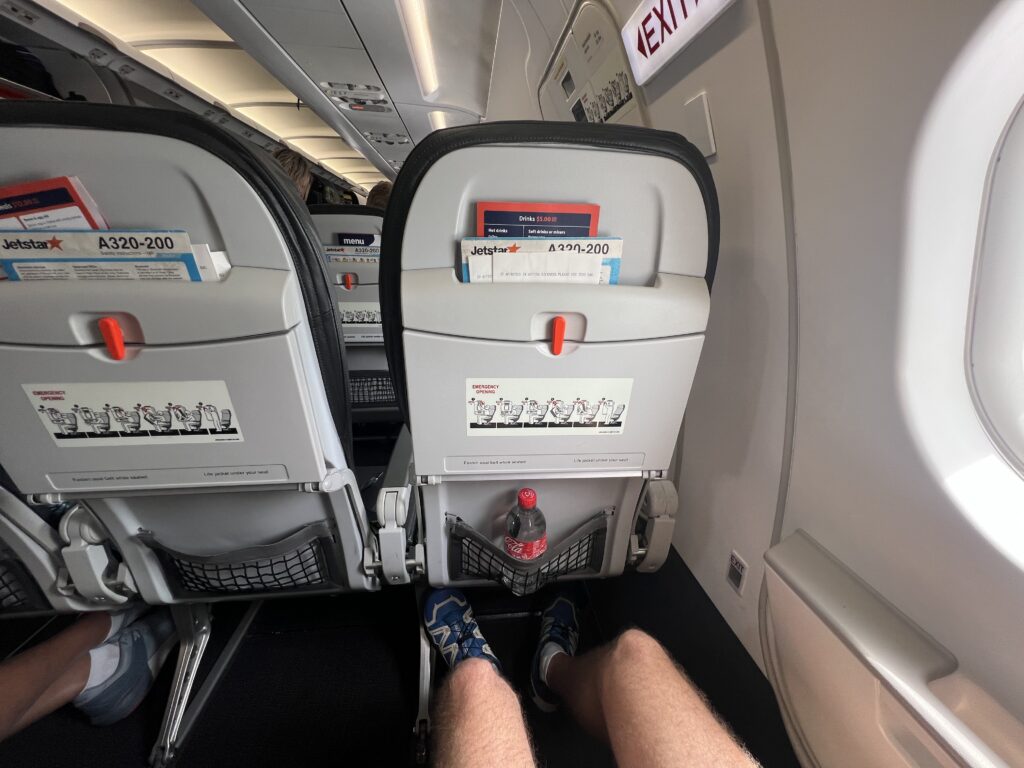
Fortunately, this flight was booked with the Flex Plus bundle, which included seat selection. I was able to secure an exit row seat, and that extra legroom dramatically improved the onboard experience. The difference between a standard economy row and an exit row on Jetstar is substantial. With approximately 34 to 35 inches of pitch available, there was plenty of room to stretch out during the two-hour flight down to Melbourne.
The cabin itself felt clean and reasonably modern despite the aircraft’s age. Seat pockets contained the standard safety card, buy-on-board menu, sickness bag, and additional exit row briefing card.
No one would mistake Jetstar’s cabin for a premium product, but within the context of a low-cost airline, everything felt perfectly acceptable.
Friendly Crew and Smooth Operations
One of the strongest aspects of this flight was undoubtedly the cabin crew.
From boarding through to arrival in Melbourne, the crew remained friendly, approachable, and professional. Announcements were delivered clearly and with personality, helping create a relaxed atmosphere onboard.
This is one area where airlines can make a significant difference regardless of whether they are low-cost or full-service carriers. Friendly staff can elevate even the most basic flight experience, and Jetstar’s crew on this particular service absolutely succeeded in doing that.
Pushback occurred on time, and shortly afterwards the Airbus A320 accelerated down Ballina’s runway before climbing into the cloudy subtropical skies above northern New South Wales.
The departure itself was beautiful despite the weather. The lush green landscapes of the Northern Rivers region looked spectacular from the air, particularly as the aircraft climbed through scattered cloud layers and turned south toward Melbourne.
Buy-On-Board Food and Entertainment
As expected with Jetstar, complimentary food and beverages are not included in standard economy fares. Instead, passengers can purchase items from the airline’s buy-on-board menu.
The menu itself was surprisingly solid for a domestic low-cost carrier. A decent range of sandwiches, toasties, pastries, snacks, alcoholic drinks, soft drinks, and coffee options were available throughout the flight.
Because the Flex Plus fare bundle includes a $15 onboard voucher, I decided to use it for a beer and a salami snack combo. Conveniently, the total came to exactly $15, making it a satisfying use of the included credit.
While certainly not gourmet dining, the food quality was perfectly acceptable for a short domestic flight, and the voucher inclusion genuinely added value to the fare package.
Jetstar’s inflight entertainment system is delivered through passengers’ own devices using wireless streaming. Access to the full entertainment library costs $8.99, while children’s access is slightly cheaper.
The platform includes a respectable range of movies, television shows, documentaries, children’s content, and games. Importantly, some content remains free even without purchasing access, including the inflight moving map.
The moving map itself was relatively basic compared with systems found on premium international airlines, but it still provided useful information about the flight’s progress southbound toward Melbourne.
A Calm and Uneventful Flight
In many ways, this was exactly the kind of flight you want from a domestic low-cost carrier.
There were no delays, no operational issues, no disruptive passengers, and no unpleasant surprises. The flight itself remained smooth and uneventful for virtually the entire journey.
As the aircraft travelled deeper into New South Wales and eventually crossed into Victoria, the scenery below gradually transformed from lush subtropical rainforest into the drier agricultural landscapes of southern Australia.
Combined with the comfortable exit row seating, friendly service, and generally relaxed onboard atmosphere, the two-hour journey passed very quickly.
Arriving Into Melbourne
Approaching Melbourne, weather conditions improved dramatically compared with the tropical downpours experienced earlier in Byron Bay.
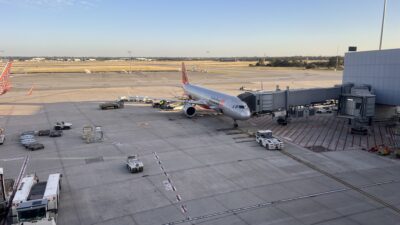
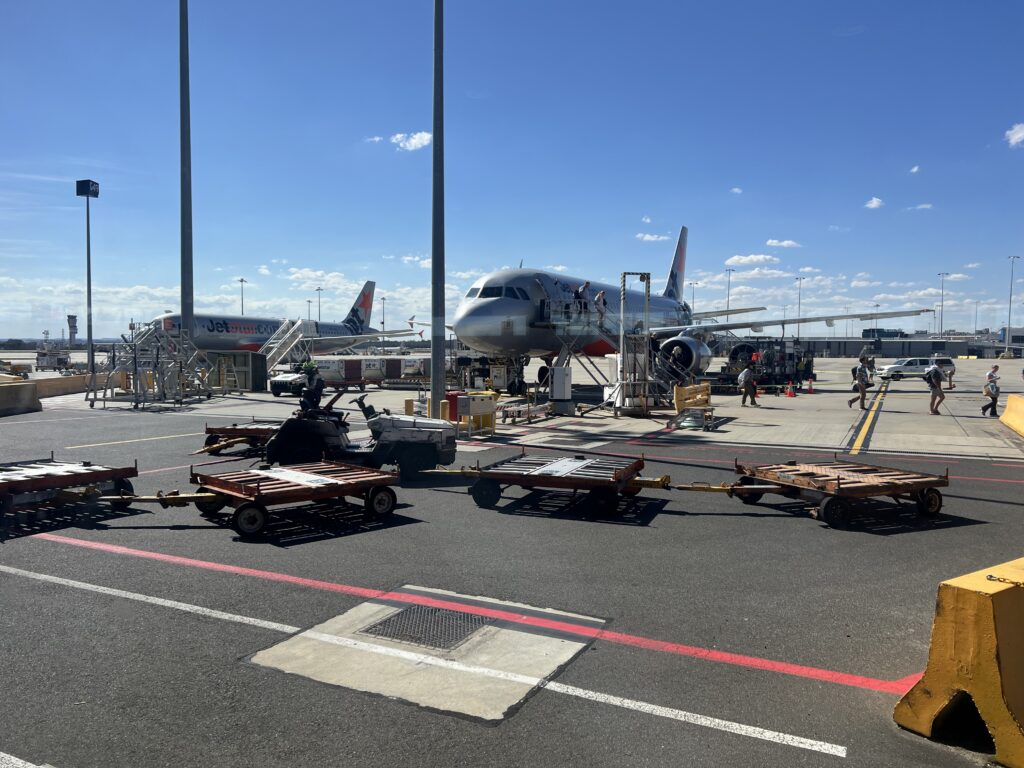
The aircraft landed smoothly at Melbourne Tullamarine Airport approximately five minutes ahead of schedule, an impressive result during Australia’s busy summer travel period.
Arrival announcements from the crew remained warm and professional, thanking passengers for flying Jetstar and reminding everyone to check overhead lockers carefully before disembarking.
Soon afterwards, passengers stepped out into a warm Melbourne afternoon just as the city was gearing up for one of its busiest and most exciting times of the year: the Australian Open tennis tournament.
Was Jetstar Worth It?
The total fare for this journey came to AUD $247 using Jetstar’s Flex Plus bundle.
At first glance, that may not seem particularly cheap for a two-hour domestic flight. However, context is important. This trip took place during peak Australian summer holidays on a popular leisure route into Melbourne during Australian Open season, traditionally one of the busiest travel periods of the year.
When factoring in the inclusions of the Flex Plus fare, the value proposition becomes significantly stronger. The fare included 20 kilograms of checked baggage, seat selection, an exit row seat, a $15 food voucher, flexibility to change flights, cancellation options, and Qantas Frequent Flyer points earning.
Purchased separately, those extras would quickly add up.
For travellers wanting flexibility and comfort without paying full-service airline prices, Jetstar’s Flex Plus bundle arguably represents one of the best-value domestic airfare products currently available in Australia.
Final Verdict
Jetstar often receives criticism online, sometimes deservedly so, but this particular flight demonstrated that the airline is more than capable of delivering a genuinely pleasant domestic travel experience when operations run smoothly.
The highlights of this journey included an excellent regional airport experience at Ballina, efficient check-in and security processing, friendly cabin crew, punctual operations, decent onboard food options, and strong overall value from the Flex Plus fare bundle.
The biggest downside remains the tight seating in standard economy rows, which may become uncomfortable for taller passengers or longer sectors. However, that limitation is hardly unique to Jetstar and is common across much of the modern low-cost airline industry.
Ultimately, this was a straightforward, reliable, and surprisingly enjoyable flight between Byron Bay and Melbourne. There was no luxury, no glamour, and no unnecessary extras — just efficient transportation delivered professionally and at a reasonable price.
For many travellers, that is exactly what matters most.
Jetstar A320 Ballina to Melbourne Review Score
| Category | Rating |
|---|---|
| Check-In Experience | 9/10 |
| Ballina Airport | 9/10 |
| Cabin Cleanliness | 8/10 |
| Seat Comfort | 6.5/10 |
| Exit Row Comfort | 9/10 |
| Crew Service | 8.5/10 |
| Food & Beverage | 7.5/10 |
| Entertainment | 7/10 |
| Punctuality | 9/10 |
| Value for Money | 8.5/10 |
Overall Rating: 8.2/10
Disclaimer: This article has been repurposed from the original transcript of my own flight review on the Aussie JetSetter Youtube channel with the assistance of AI technologies. Please be advised whilst I have taken the utmost care to review and revise this article where necessary to reflect the upmost of accuracy at time of publication please be advised my reviews whether written or in video form are for entertainment and general information purposes only. They reflect the objective views in good faith of the person only whom is presenting them unless otherwise noted. Any decisions you make resulting from consuming my content must take into consideration your own circumstances, research and responsibility as I can not be hold responsible for any inaccuracies or future changes effecting the relativity of such reviews. All Rights Reserved by Aussie JetSetter from 2022 >