




Jetstar’s Airbus A321neo has become an increasingly familiar sight on Australia’s major domestic routes, offering the low-cost carrier a larger, more fuel-efficient aircraft for flights such as Melbourne to Perth. But while the A321neo may be a newer generation of aircraft, does that necessarily translate into a better passenger experience?
I recently flew Jetstar from Melbourne Tullamarine to Perth on flight JQ972, travelling on an Airbus A321neo in an exit-row seat. The flight was particularly interesting because my previous Jetstar Melbourne–Perth journey had been subject to a last-minute aircraft change from an A321neo to an older A321ceo, which also disrupted my carefully selected seat.
This time, however, the A321neo remained firmly scheduled, and that meant I could experience the aircraft — and its extra-legroom seating — as planned.
The journey would take me across Australia from Melbourne to my home base of Perth, with a scheduled flight time of around four hours and ten minutes. In practice, the flight was considerably quicker, with our actual flying time coming in at around three hours and 37 minutes.
Here’s how the experience unfolded.
An Early Start at Melbourne Airport
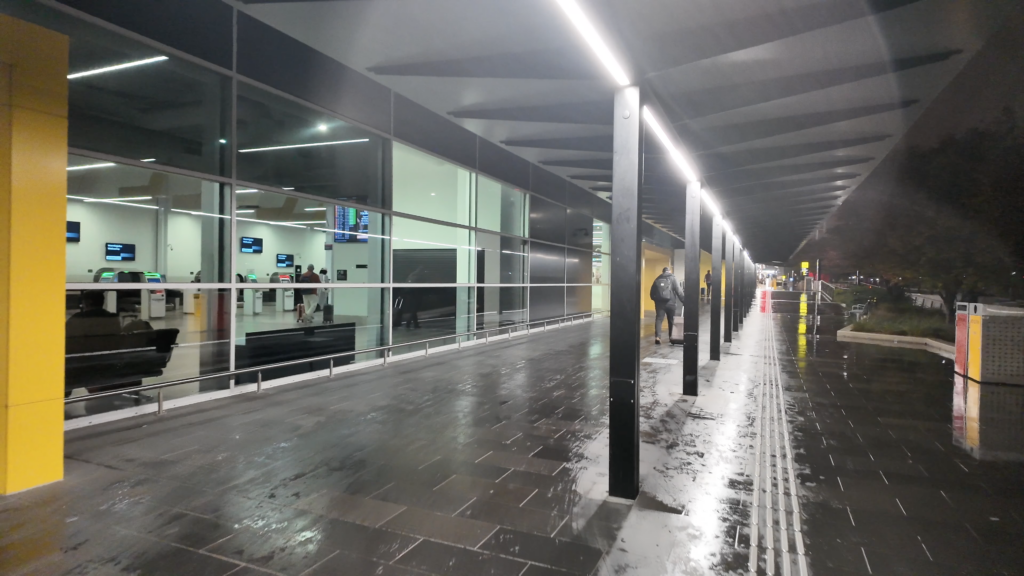
My journey began at Melbourne Tullamarine Airport shortly after 5am on a cold, wet and foggy Melbourne morning.
While Melbourne Airport can offer some excellent views across the surrounding area from the upper levels of Terminal 4, the weather on this particular morning was hardly conducive to aviation photography. The combination of darkness, fog and rain meant that visibility was extremely limited.
Jetstar operates from Terminal 4 at Melbourne Airport, alongside other airlines including Rex and Link Airways. The terminal is designed around a largely self-service model, and for passengers travelling with Jetstar, the check-in and baggage-drop process is primarily automated.
In theory, this should make the start of the journey quick and straightforward.
Unfortunately, that wasn’t quite my experience.
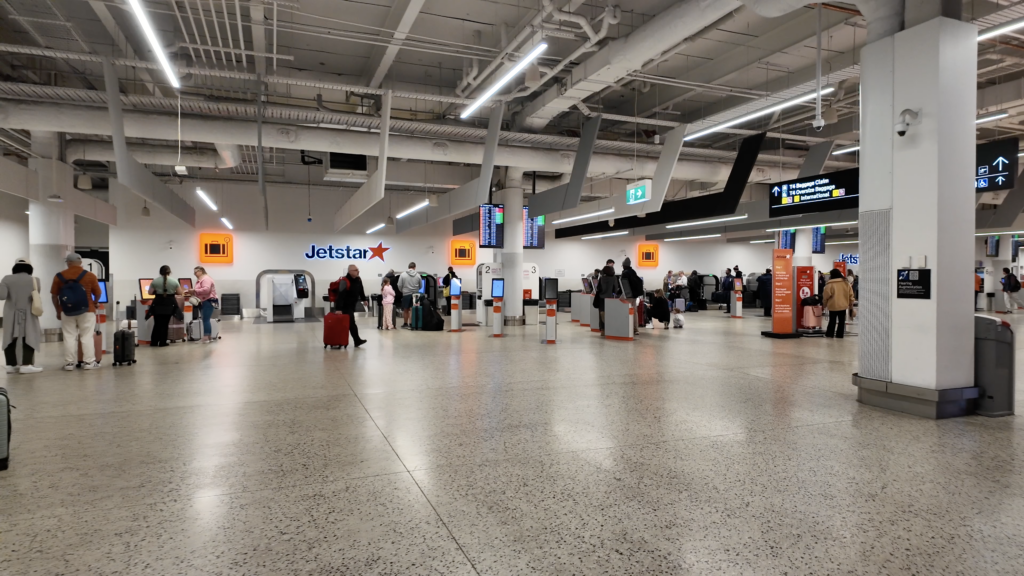
Although the self-service baggage facilities were available, a number of the baggage-drop kiosks were not operating when I arrived. It took approximately 15 minutes before the system began accepting bags properly, which was frustrating given that this was an early-morning departure and time was already relatively tight.
Once the baggage-drop system finally started working, the process itself was simple. After scanning the boarding pass and following the prompts, my checked bag disappeared onto the conveyor belt and I was free to continue towards security.
The biggest issue was that I wasn’t the only passenger experiencing delays. Some travellers were also attempting to check bags that appeared to exceed Jetstar’s permitted baggage allowance, adding further congestion to the process.
Security Was Busy but Efficient
The security checkpoint was the next challenge.
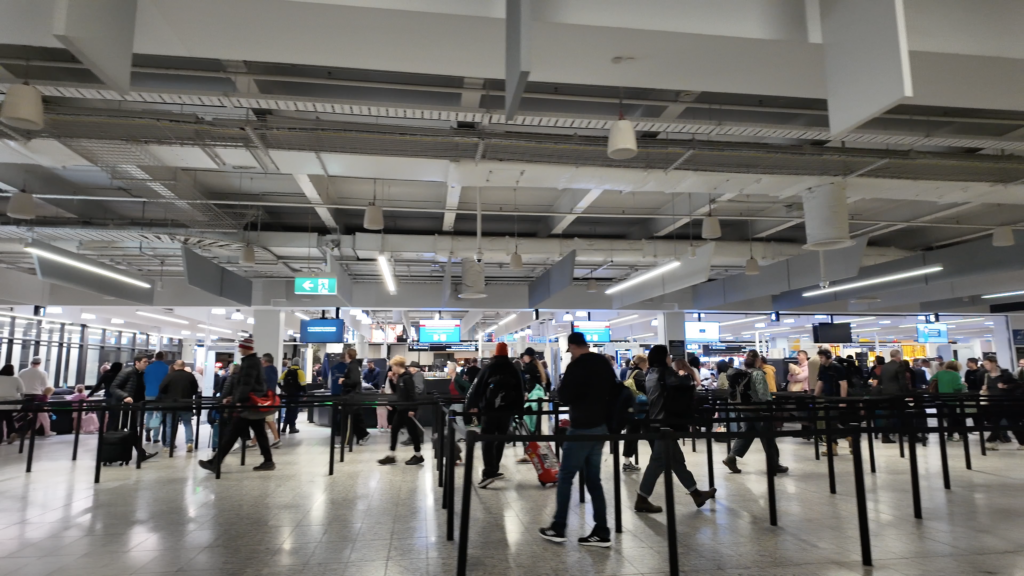
Being a Monday morning, Terminal 4 was extremely busy. There was a substantial queue stretching through the terminal, and this was certainly not the kind of airport experience I particularly enjoy at such an early hour.
That said, despite the volume of passengers, the security operation itself was relatively efficient.
I spent approximately ten minutes in the queue before making it through screening, which I considered quite reasonable given how busy the terminal was.
One thing worth knowing when travelling through Melbourne Airport is that the security arrangements for Terminals 3 and 4 have been consolidated. Rather than having completely separate security screening areas for each terminal, passengers now use the combined facility.
Once through security, however, there was still a decent walk ahead.
Allow Extra Time for Jetstar’s Gates
One of the less convenient aspects of flying Jetstar from Melbourne is the location of its departure gates.
Jetstar’s gates are towards the far end of Terminal 4, meaning passengers can face a relatively lengthy walk after passing through security. I would recommend allowing at least another ten to fifteen minutes to comfortably reach the gate, particularly if travelling with children, elderly passengers or a lot of carry-on luggage.
There isn’t an enormous amount to see or do once you reach the far end of the terminal either.
For that reason, I’d recommend taking advantage of the facilities, shops and food outlets around the central area before making the walk towards the gates.
On this particular morning, however, I had little time for sightseeing or breakfast.
My A321neo was waiting.
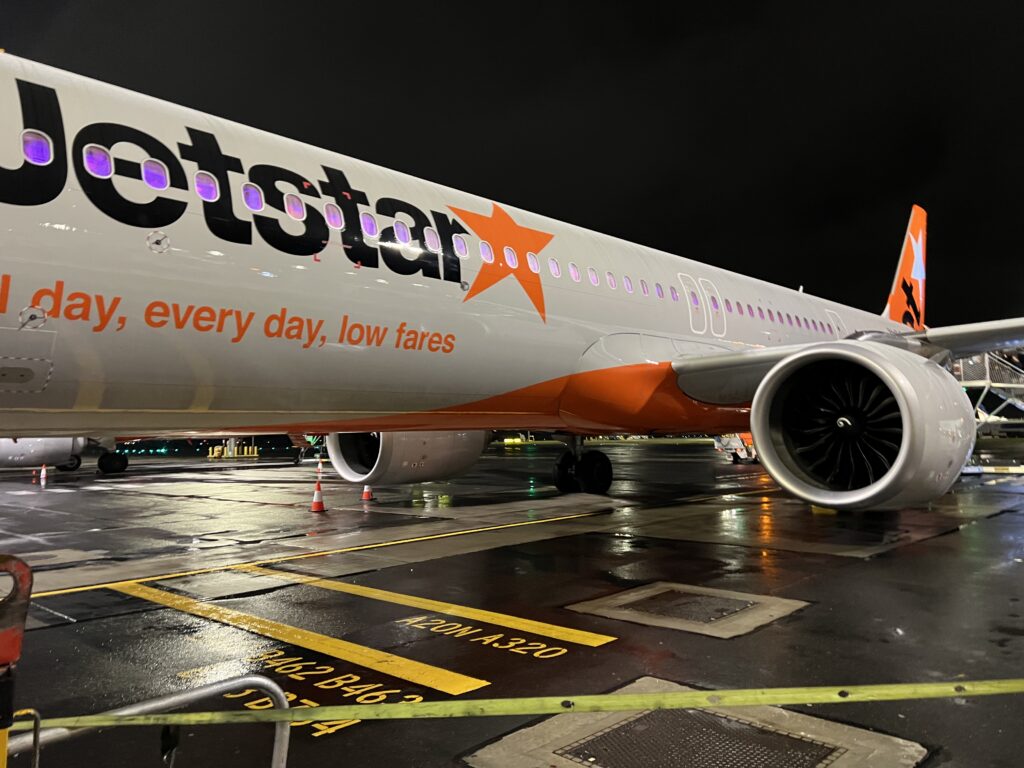
Jetstar Airbus A321neo
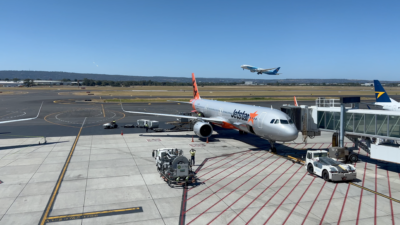
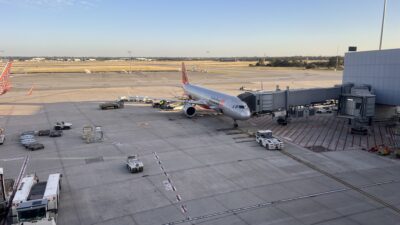
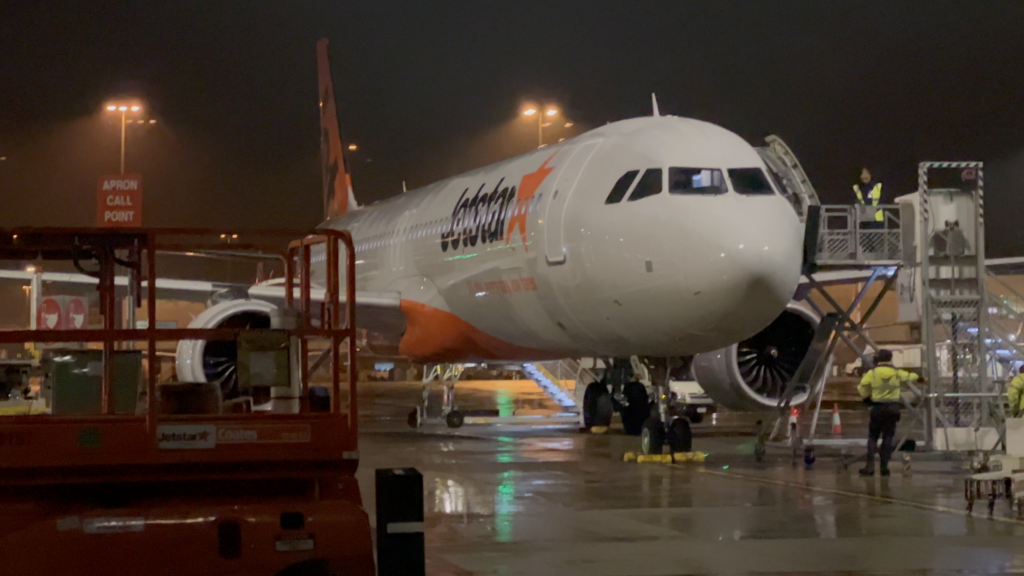
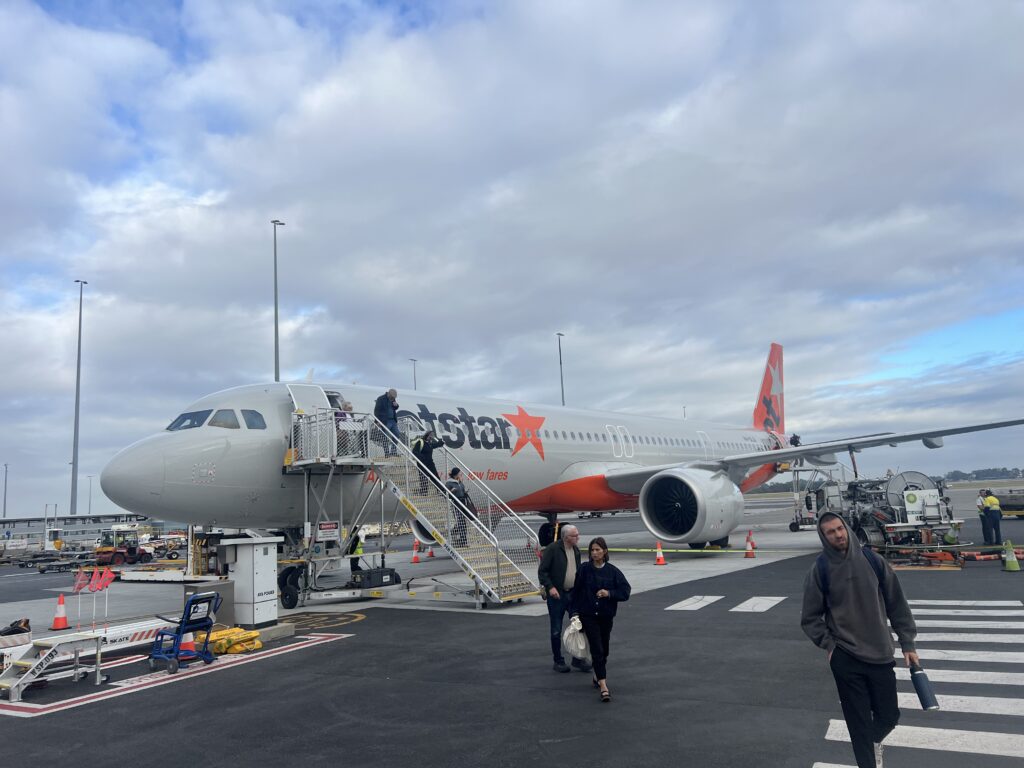
Waiting on the stand in the pre-dawn darkness was the aircraft assigned to operate JQ972 to Perth.
The aircraft was identified as VH-CUB, and unlike many of the older aircraft you’ll find in Jetstar’s fleet, this particular A321neo was almost brand new.
It had been delivered directly to Jetstar Australia in January 2026, making it only a few months old at the time of my journey.
That immediately made this flight more interesting.
The Airbus A321neo represents a significant evolution over the older A321ceo aircraft, with new-generation engines, improved fuel efficiency and a more modern cabin.
Jetstar’s particular configuration is designed to maximise capacity, with 236 seats arranged in an all-Economy 3–3 layout.
There is no Business Class cabin, premium economy section or other differentiated cabin product.
For Jetstar, the philosophy is simple: provide an affordable way to move a large number of passengers around Australia while keeping the aircraft utilisation high.
But that doesn’t necessarily mean the experience has to be uncomfortable.
Boarding the A321neo
Boarding commenced at Gate 53, where the scene was considerably busier than I would have preferred at six o’clock in the morning.
There were a large number of passengers waiting for several Jetstar departures, including plenty of passengers heading back to Perth.
Once boarding began, however, the process moved along relatively efficiently.
Stepping onboard the A321neo immediately provided the impression of a modern aircraft. The cabin was clean, bright and noticeably newer than some of Jetstar’s older aircraft.
The aircraft’s 236-seat configuration means that there is plenty of seating packed into the cabin, but this is hardly surprising given Jetstar’s low-cost operating model.
The standard economy seats are slimline Recaro designs, and the standard seat pitch is approximately 29 inches.
That isn’t particularly generous for a flight of almost four hours.
Fortunately, I had specifically selected an exit-row seat.
And this made a substantial difference.
The Exit-Row Seat
One of the major advantages of travelling with Jetstar’s Flex Plus bundle is the ability to select an extra-legroom seat.
For a long domestic flight such as Melbourne to Perth, I consider this one of the more worthwhile extras.
The standard 29-inch pitch isn’t necessarily problematic on a short flight, but when you’re sitting in the same seat for three and a half to four hours, additional legroom becomes considerably more valuable.
The exit-row seat provided significantly more space to stretch out, and for this particular flight it was arguably the highlight of the onboard experience.
The seat itself, however, was less impressive.
The slimline Recaro design is practical and functional, but I wouldn’t describe it as especially comfortable. Jetstar has clearly prioritised weight reduction, durability and efficient use of cabin space rather than creating a luxurious seating experience.
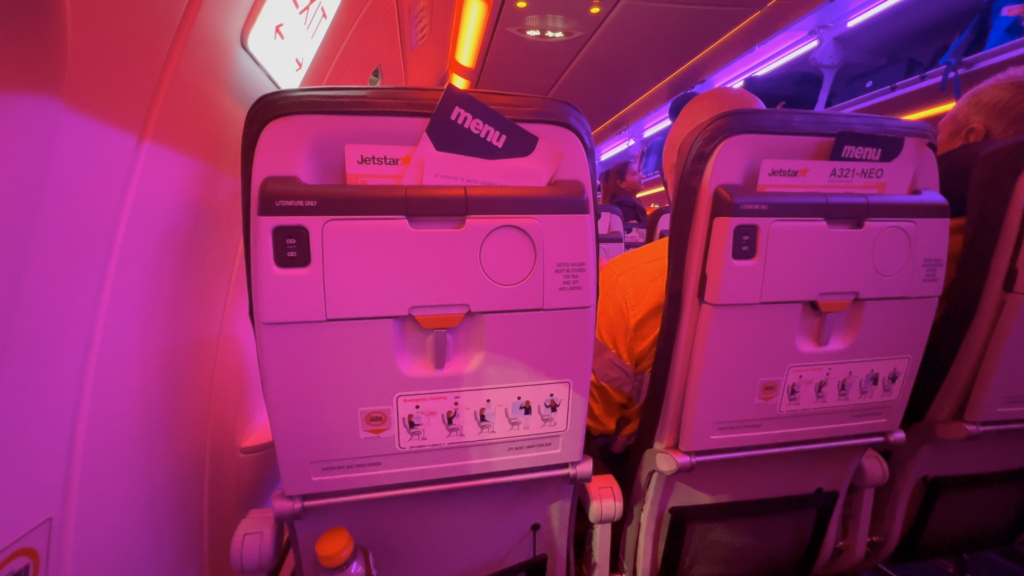
At the seat there was a fold-down tray table, inflight literature and a device holder, along with charging facilities.
For a low-cost airline, that’s a sensible combination.
The important thing is that Jetstar has recognised how passengers increasingly use their own phones and tablets for entertainment, rather than expecting the airline to install expensive seatback screens.
Departing Melbourne for Perth
With everyone onboard, we eventually pushed back and began our departure from Melbourne.
The flight was slightly delayed by air traffic control congestion, rather than an issue caused by Jetstar itself.
That distinction is worth making because airlines are sometimes criticised for delays that are largely outside their control.
Once airborne, the aircraft quickly climbed above the cloud layer.
The miserable conditions at Melbourne were replaced by much better weather at altitude, and the journey west began in earnest.
With a flight distance of approximately 2,700 kilometres, Melbourne–Perth is one of Australia’s longest domestic routes.
For much of the journey, however, there isn’t an enormous amount to report from a passenger perspective.
And that’s not necessarily a criticism.
A Very Basic Inflight Experience
Jetstar operates on a fundamentally different model from Virgin Australia or Qantas.
There is no complimentary meal service in Economy Class, and food and beverages are purchased separately.
Jetstar’s inflight menu offers a reasonable selection of snacks, sweet and savoury treats, sandwiches, toasties, pastries and drinks.
There are also hot beverages, soft drinks and alcoholic options available for purchase.
On this particular flight, though, I didn’t order anything.
There were two reasons for that.
Firstly, it was an extremely early morning departure and I was more interested in catching up on sleep than eating breakfast.
Secondly, I had work to do later that day, so maximising my rest during the flight was my priority.
That means I can’t really judge Jetstar’s food quality based on this particular journey.
However, the range available on the menu looked reasonably comprehensive for a low-cost carrier, and passengers can review the available options before deciding whether to purchase something.
Interestingly, my Flex Plus bundle did provide me with a $15 inflight credit.
Rather than using it for a meal, I used it to purchase some snacks for later.
That was a useful benefit of the bundle and helped offset some of the additional cost.
Jetstar’s Inflight Entertainment
Another area where Jetstar has evolved is inflight entertainment.
Rather than installing seatback entertainment screens, Jetstar uses a streaming-to-your-own-device system.
Passengers can connect their smartphone, tablet or other compatible device to the onboard entertainment platform.
There is a catch, however.
Much of the entertainment content is available on a paid basis.
At the time of my flight, an all-access pass was priced at $8.99, while a kids-only pass cost $6.99.
For a low-cost airline, I don’t think this is particularly unreasonable.
The important thing is that Jetstar doesn’t pretend the service is entirely free.
There was a reasonably broad selection of movies and television programs available, along with children’s content.
There was also a smaller amount of free content that passengers could access without purchasing the full package.
One thing I noticed on this particular flight was that the free games I had encountered on some previous Jetstar services didn’t appear to be available.
A moving map was also available, which is always useful on a long flight.
Overall, I think Jetstar’s entertainment offering is appropriately priced for its business model.
The ability to preview the available content before purchasing the package is particularly useful because you can decide whether there is anything you actually want to watch.
The Lavatory
At some point during the flight, I also took the opportunity to inspect one of the aircraft’s three lavatories.
There is one at the front and two towards the rear of the aircraft.
As expected, this was a fairly standard narrow-body aircraft lavatory.
There was nothing particularly remarkable about it, but it was clean and reasonably well maintained at this early point in the flight.
The lavatory also included a baby-changing table and the usual facilities you’d expect onboard a modern Airbus aircraft.
In other words, perfectly functional without being luxurious.
And that’s probably the best way to describe much of this Jetstar experience.
A Smooth Flight Across Australia
For the remainder of the journey, there wasn’t an enormous amount to report.
The flight was smooth, and the A321neo quietly did what it was designed to do: carry a large number of passengers across Australia efficiently.
There is something quite impressive about flying several thousand kilometres domestically in a narrow-body aircraft, particularly when the journey can be completed in well under four hours.
For me, the biggest factor affecting comfort wasn’t the aircraft itself but the seat.
Had I been sitting in a standard 29-inch seat for the entire journey, I suspect the experience would have been considerably less comfortable.
The additional space provided by the exit row made the flight much easier.
That reinforces my view that, on a Jetstar flight of this length, paying for additional legroom can be worthwhile.
Arrival Into Perth
As we approached Western Australia, the aircraft began its descent towards Perth.
After departing Melbourne in darkness and poor weather, it was a welcome change to arrive into significantly better conditions.
The journey had gone relatively smoothly, and we ultimately arrived in Perth approximately eight minutes ahead of schedule.
After the cabin crew completed the usual arrival procedures, we were reminded to hold onto the handrail while descending the aircraft stairs and to take care when opening the overhead lockers.
And just like that, I was back home in Perth.
So, How Good Was Jetstar?
The question is whether this was a good Jetstar experience.
My answer is: yes, but with some important qualifications.
The airport experience at Melbourne wasn’t particularly impressive.
The malfunctioning baggage-drop kiosks caused an unnecessary 15-minute delay, while the security queue was also substantial.
The long walk to the Jetstar gates is another factor passengers should account for.
None of these issues ruined the journey, but together they meant the trip didn’t exactly get off to a flying start.
Once onboard, however, things improved.
The aircraft was extremely new, clean and modern.
The A321neo is an excellent aircraft for a route such as Melbourne–Perth, providing Jetstar with the capacity and efficiency it needs while giving passengers a relatively modern cabin.
The crew were also friendly and reasonably hospitable throughout the flight.
There was nothing spectacular about the service, but nor should passengers necessarily expect spectacular service from a low-cost airline.
It was efficient, polite and perfectly adequate.
Is Jetstar’s A321neo Comfortable?
This is where expectations are important.
If you’re expecting the A321neo to provide a premium experience simply because it is a new aircraft, you’ll probably be disappointed.
The cabin is configured with 236 seats, and the standard economy seat pitch is only around 29 inches.
The seats themselves are slimline and functional rather than luxurious.
For a short flight, that’s probably fine.
For Melbourne to Perth, however, I would strongly consider paying for extra legroom.
My exit-row seat made a noticeable difference and was easily the best part of the flight from a comfort perspective.
If you’re travelling on a tight budget, however, the standard seat remains perfectly usable.
You simply need to accept that you’re buying transportation rather than a premium travel experience.
Was the Flex Plus Bundle Worth It?
The Flex Plus bundle also deserves consideration.
For this particular trip, one of its more useful benefits was the ability to select an extra-legroom seat.
The $15 inflight credit was another benefit, which I used to purchase snacks.
Whether Flex Plus represents good value will depend heavily on the fare and which benefits you actually use.
In my case, the additional legroom was particularly valuable because of the length of the Melbourne–Perth flight.
It’s much easier to justify paying for a bundle when you’re actually going to use the included benefits.
What About the $457 Fare?
The total cost of my flight was $457.
At first glance, that’s certainly not what most people would describe as an ultra-cheap Jetstar fare.
However, context is everything.
This journey was booked at very short notice during the peak Australian football season.
Alternative flights on Virgin Australia and Qantas were costing more than $1,000 each way at the time.
Against that backdrop, the $457 Jetstar fare suddenly looked considerably more reasonable.
This is an important point when assessing low-cost airlines.
Jetstar isn’t always going to be the cheapest airline on every individual flight.
But when the alternatives are significantly more expensive, its low-cost model can provide an extremely useful alternative.
For me, that was exactly what happened on this journey.
Final Verdict
Ultimately, this was a very standard Jetstar experience.
There was nothing particularly spectacular about the flight, but equally, there wasn’t anything particularly bad about it either.
And perhaps that’s the most important conclusion.
The new Airbus A321neo provided a modern aircraft, the flight was smooth, the crew were friendly, the inflight entertainment was perfectly adequate for a fee, and the exit-row seat provided considerably more comfort than the standard economy seats.
The airport experience at Melbourne was less impressive, particularly the baggage-drop delays and the long walk to the departure gates.
But once onboard, Jetstar delivered exactly what I expected from a low-cost airline.
It got me from Melbourne to Perth efficiently, safely and without unnecessary complications.
At $457 booked at relatively short notice during a busy travel period, and with competing fares above $1,000, it also represented reasonable value in the circumstances.
Would I choose Jetstar over a full-service airline if the prices were similar?
Probably not.
Would I choose Jetstar when the alternative costs more than twice as much?
Absolutely.
And for a long domestic journey such as Melbourne to Perth, my biggest recommendation would be simple: if the price difference is manageable, consider paying for an exit-row or extra-legroom seat.
The additional space can make a surprisingly large difference over four hours.
The Airbus A321neo itself is a very capable aircraft, but the experience remains unmistakably Jetstar: modern, functional, no-frills and focused on getting passengers where they need to go without spending more than necessary.
For this particular journey, that was more than enough.
Disclaimer: This article has been repurposed from the original transcript of my own flight review on the Aussie JetSetter Youtube channel with the assistance of AI technologies. Please be advised whilst I have taken the utmost care to review and revise this article where necessary to reflect the upmost of accuracy at time of publication please be advised my reviews whether written or in video form are for entertainment and general information purposes only. They reflect the objective views in good faith of the person only whom is presenting them unless otherwise noted. Any decisions you make resulting from consuming my content must take into consideration your own circumstances, research and responsibility as I can not be hold responsible for any inaccuracies or future changes effecting the relativity of such reviews. All Rights Reserved by Aussie JetSetter from 2022 >