




Introduction
When people think of Australia’s busiest air routes, they usually picture the well-trodden corridors linking Sydney, Melbourne, Brisbane and Perth. Yet hidden far from the country’s major population centres is a route that quietly carries thousands of passengers every month while remaining largely unknown to the average traveller.
The flight from Perth to Paraburdoo is one such route.
At first glance, Paraburdoo hardly sounds like the sort of destination that would support multiple daily flights. Located deep within Western Australia’s Pilbara region and home to a population of only around 1,000 people, the small mining town sits nearly 1,000 kilometres north of Perth amid some of the most rugged and remote landscapes in Australia.
Yet appearances can be deceiving.
Thanks to the enormous fly-in fly-out workforce that supports Western Australia’s mining industry, Paraburdoo Airport handles a remarkable number of aircraft movements every day. In fact, this remote airport has become something of a curiosity among aviation enthusiasts, particularly after gaining attention online for its surprisingly busy schedule despite serving such a small community.
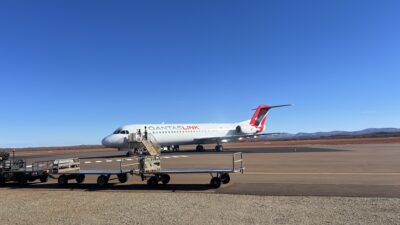
Curious to experience the route for myself, I booked a seat on QantasLink flight QF1630 from Perth to Paraburdoo. Operated by an Airbus A319, the journey promised not only a fascinating glimpse into one of Australia’s most important mining regions but also the opportunity to review an aircraft type that has become increasingly important to QantasLink’s Western Australian operations.
What followed was an enjoyable morning flight featuring friendly service, spectacular outback scenery and a reminder that some of Australia’s most interesting aviation experiences can be found far away from the country’s major cities.
Why the Perth to Paraburdoo Route Is So Unique
The Perth to Paraburdoo route occupies a unique position within Australia’s domestic aviation network.
Unlike most domestic services, which primarily connect population centres, this route exists largely because of the Pilbara’s mining industry. The region contains some of the world’s largest iron ore deposits and supports massive operations run by companies including Rio Tinto, BHP and Fortescue.
Every week, thousands of workers travel between Perth and various Pilbara communities on fly-in fly-out rosters. These workers spend days or weeks at remote mining sites before returning home to Perth for scheduled leave.
As a result, airports such as Paraburdoo, despite serving relatively small permanent populations, experience levels of aviation activity that would surprise many travellers.
The route itself covers a distance of approximately 987 kilometres, linking Australia’s sunniest capital city with one of the country’s most economically significant regions. Scheduled flight times generally sit around one hour and fifty minutes, although favourable conditions can sometimes reduce the journey considerably.
For aviation enthusiasts, routes such as this offer something quite different from the standard domestic flying experience. Instead of crossing densely populated coastal regions, passengers spend much of the flight traversing vast stretches of sparsely populated wilderness before arriving at airports that exist primarily to support resource extraction rather than tourism.
That alone makes the journey worthwhile.
Early Morning Departure from Perth Airport
My journey began shortly after six o’clock on a cold Perth winter morning.
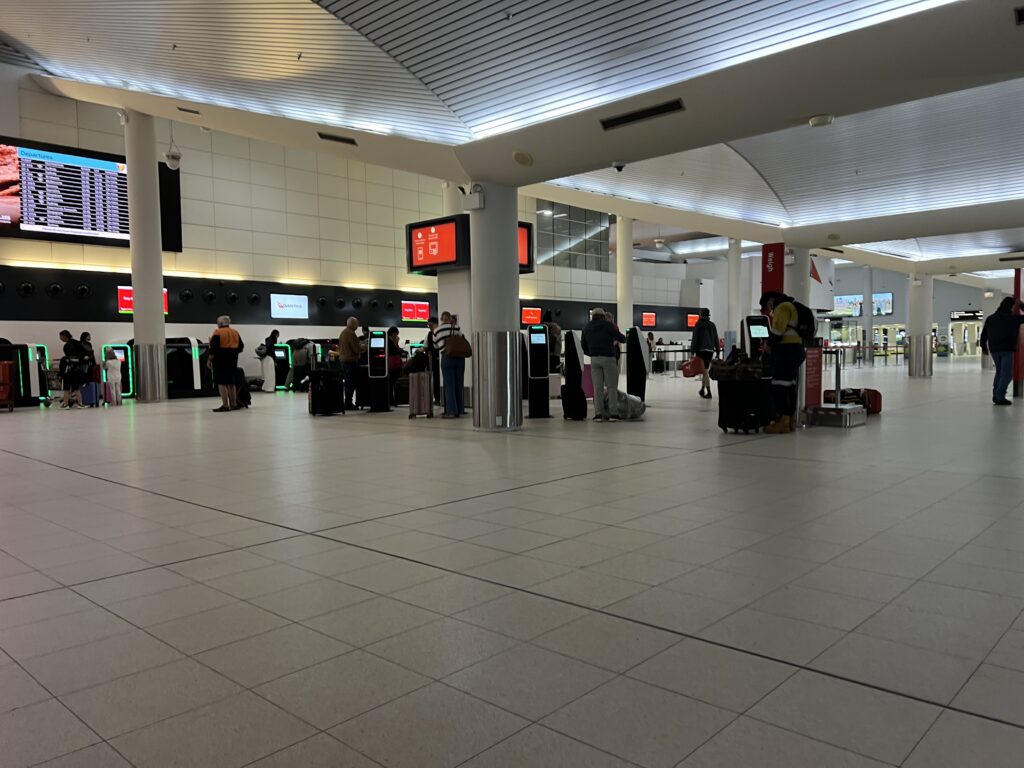
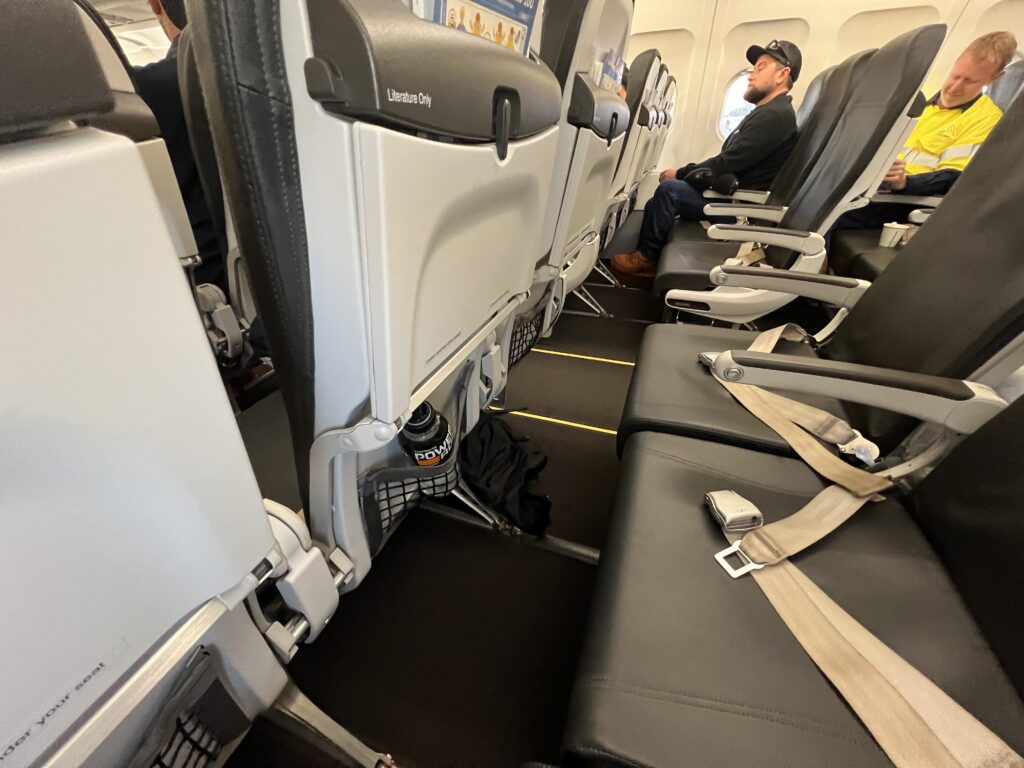
The city was only just beginning to wake as I arrived at Perth Airport’s Terminal 4 precinct, the primary home of Qantas and QantasLink domestic operations in Western Australia. Despite the early hour, the terminal was already alive with activity.
FIFO workers carrying high-visibility gear mingled with business travellers and holidaymakers as departure boards filled with flights bound for destinations across the state. Looking around the terminal, it was immediately apparent how important regional aviation is to Western Australia.
Unlike the eastern states, where most passenger traffic is concentrated between major cities, Western Australia relies heavily on air services to connect remote communities separated by enormous distances. For many towns across the Pilbara, Kimberley and Goldfields regions, air travel is not a luxury but a necessity.
That reality is reflected in Perth Airport’s impressive passenger numbers.
Recent statistics have shown Perth Airport handling close to 18 million passengers annually, making it Australia’s fourth-busiest airport. What is particularly interesting is the significant contribution made by regional Western Australian travel. Passenger numbers travelling within the state actually rival interstate traffic, highlighting the unique nature of aviation in Western Australia.
The airport itself is currently undergoing a period of significant transformation. Billions of dollars are being invested into future infrastructure projects, including terminal consolidation, expanded facilities and a third runway. By the end of the decade, Perth Airport is expected to operate from a much more centralised precinct designed to accommodate future growth.
For now, however, Qantas operations remain based at the familiar Terminal 3 and Terminal 4 complex.
Checking In at Perth Airport Terminal 4
Check-in proved straightforward and efficient, although not without one small frustration.
Like many airlines around the world, Qantas has increasingly embraced digital-first processes. Rather than simply printing a boarding pass at a traditional kiosk, passengers are encouraged to check in using their smartphones before scanning their digital boarding pass to generate baggage tags.
From an operational perspective, the system works well.
Within minutes, I had printed my baggage tag, attached it to my suitcase and deposited my luggage at the self-service bag drop. The entire process took only a few minutes and required very little staff intervention.
Nevertheless, I remain somewhat nostalgic for physical boarding passes.
Perhaps it is the aviation enthusiast in me, but there is something satisfying about receiving a printed boarding pass before a flight. Not only does it serve as a practical backup in the event of technical issues, but it also makes a nice souvenir from memorable journeys.
Minor personal preferences aside, there is no denying that the process was quick and efficient.
Once my bag had disappeared into the airport’s baggage system, it was time to proceed through security screening.
Security Screening and Departure Lounge Experience
Security screening at Terminal 4 was remarkably painless.
Located on the western side of the terminal, the checkpoint was operating smoothly with very little congestion. Recent upgrades to Perth Airport’s screening technology have significantly improved the passenger experience, and today’s journey provided another example of that progress.
The introduction of advanced CT scanners means travellers are increasingly able to leave laptops, tablets and other electronics inside their bags. This not only speeds up processing but also reduces the stress often associated with airport security.
Within moments, I was airside.
Unfortunately, there was little time to consider visiting a lounge before boarding. Even if I had access to the Qantas Club that morning, the boarding process was due to begin in roughly fifteen minutes.
Instead, I made my way directly towards Gate 10.
Today’s flight would depart from one of Terminal 4’s remote stands, requiring passengers to board away from the main terminal building. While remote stand operations can sometimes be less convenient, they often provide aviation enthusiasts with opportunities for aircraft photography and apron views that are impossible when using aerobridges.
As it turned out, the morning’s clear weather would provide exactly that.
Boarding the QantasLink Airbus A319
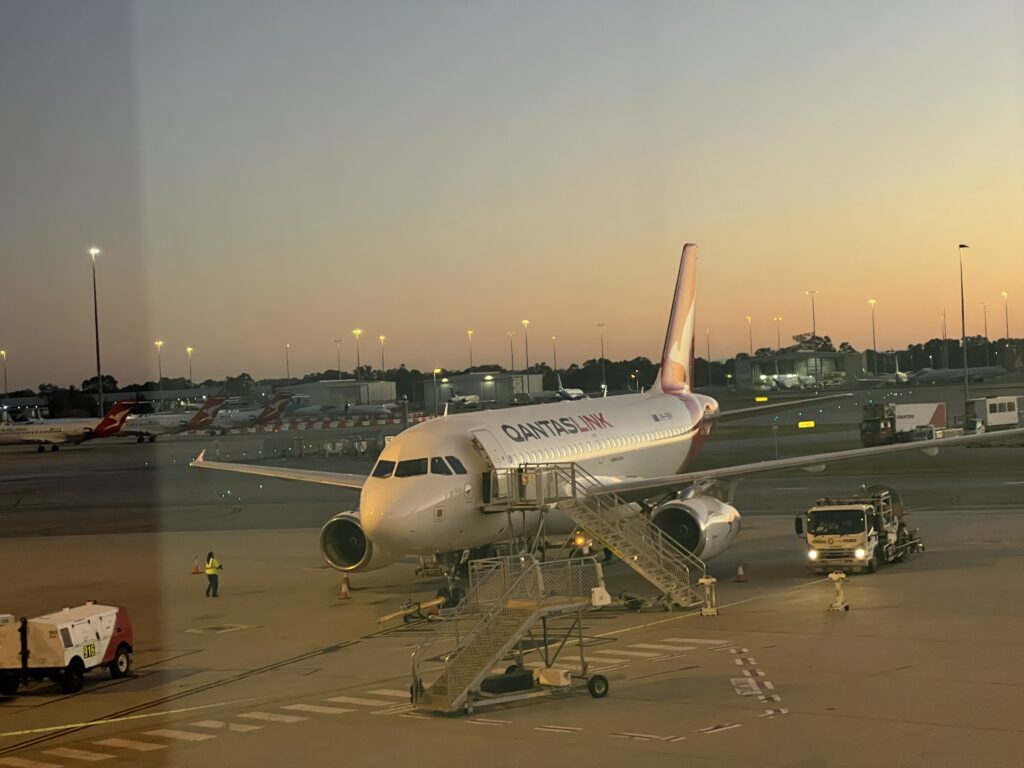
From the remote gate area, our aircraft slowly came into view.
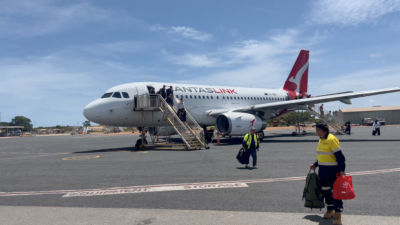
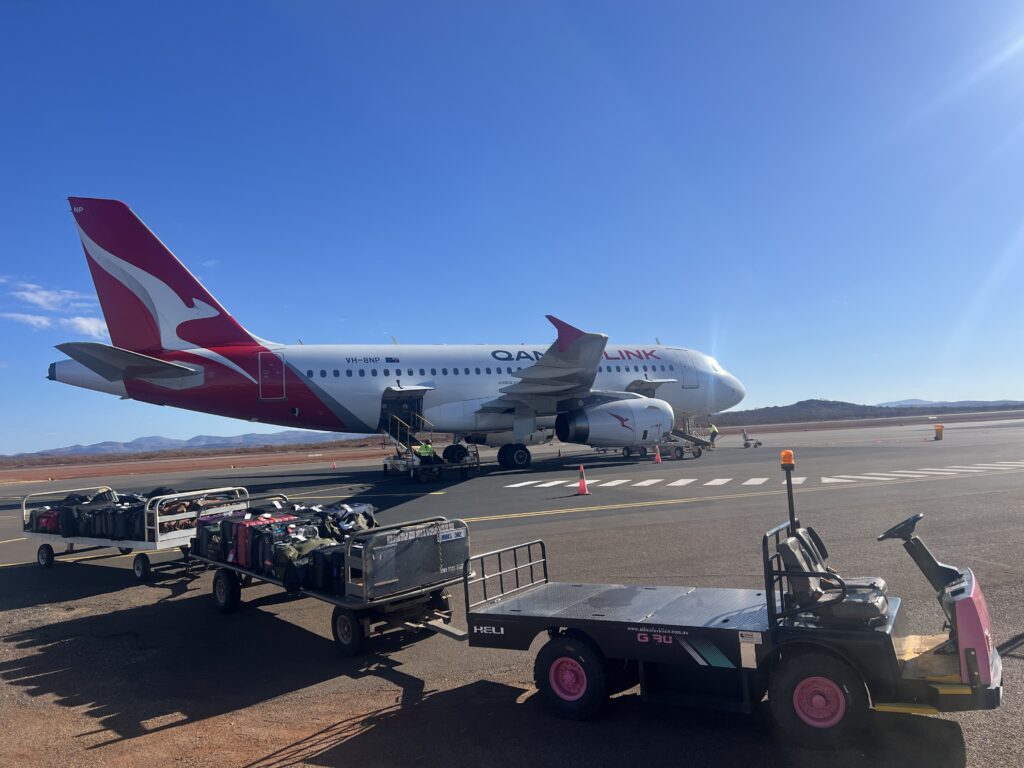
Waiting in the distance was a QantasLink Airbus A319-100, one of just nine examples of the type currently operating within the airline’s Western Australian fleet. Among aviation enthusiasts, the aircraft is often affectionately referred to as the “Baby Bus”, occupying the smaller end of Airbus’s popular A320 family.
The aircraft assigned to today’s service had an interesting history.
Originally delivered to Spirit Airlines in the United States during 2005, it spent nearly two decades operating across North America before joining QantasLink in early 2024. Like the rest of the airline’s A319 fleet, the aircraft was acquired to support regional operations throughout Western Australia, where its capacity and performance characteristics make it particularly useful.
Boarding commenced precisely on schedule.
As passengers walked across the apron beneath Perth’s crisp winter sunshine, the aircraft looked every bit the hardworking regional workhorse it has become. While it may not possess the glamour of a long-haul widebody jet, there is something undeniably appealing about these aircraft and the vital role they play in connecting remote Australia.
Inside the Cabin: Seats and Comfort on the QantasLink Airbus A319
Stepping onboard, it quickly became apparent that the Airbus A319 is very much designed for practicality rather than luxury.
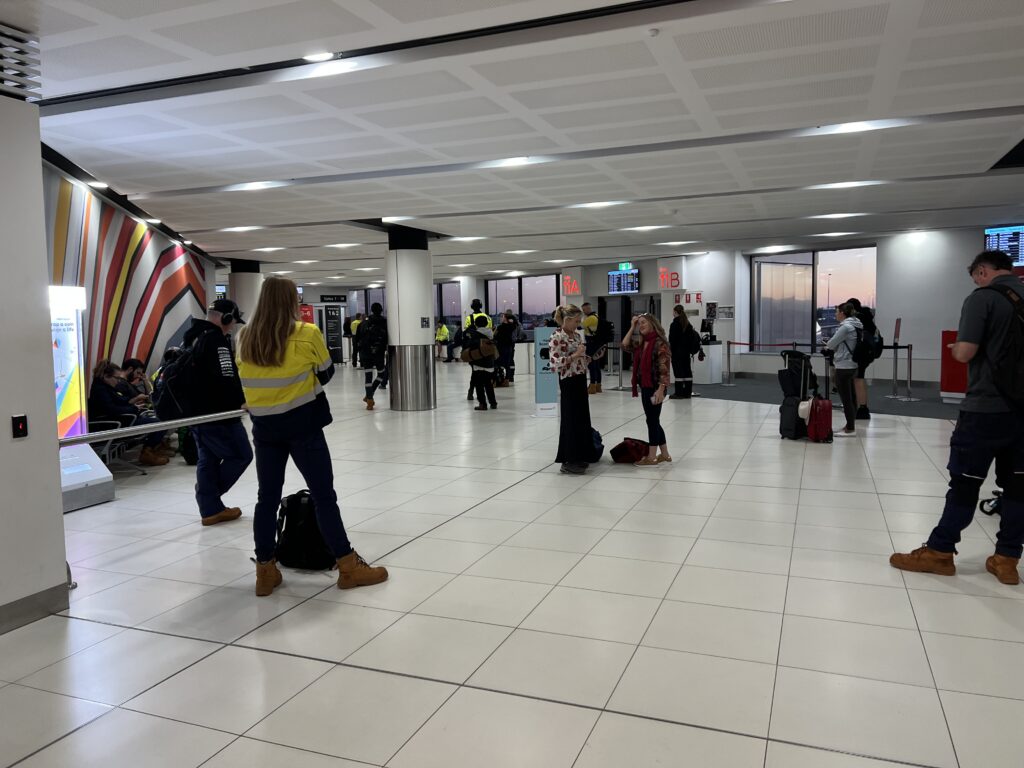
QantasLink operates its Western Australian Airbus fleet primarily on regional and mining-focused routes, and the cabin reflects that mission. The aircraft is configured with 150 seats arranged in a standard all-economy layout, with three seats on either side of a single aisle.
My seat for today’s flight was 20A, a window seat located towards the rear half of the aircraft.
Initial impressions were mixed. While the cabin itself appeared clean and well maintained, the seats felt noticeably more basic than what many travellers might associate with the Qantas brand. In fact, anyone who has flown on Jetstar’s Airbus A320 fleet would likely find the seating arrangement strikingly familiar.
The slimline Recaro seats offer approximately 29 to 30 inches of pitch, which is adequate for shorter flights but unlikely to impress taller passengers. Cushioning was acceptable, though certainly not generous, and recline was limited.
This is perhaps where the Airbus A319 reveals its biggest weakness.
Considering the often high fares charged on regional Western Australian routes, the seating can feel somewhat underwhelming. The hard product is functional rather than premium, and while perfectly manageable for a journey of less than two hours, it lacks some of the comfort travellers might expect from a full-service airline.
That said, everything was clean, tidy and in good working order.
The seat featured a fold-down tray table, literature pocket, safety card, inflight magazine and the usual assortment of onboard information. There were no power outlets or seatback entertainment screens, but given the aircraft’s role on shorter regional services, their absence was hardly surprising.
As boarding continued, the cabin filled steadily with a mixture of FIFO workers, local residents and a handful of leisure travellers. Before long, the doors were closed and preparations for departure were underway.
A Spectacular Winter Sunrise Departure from Perth
One of the joys of early morning flights is the opportunity to witness sunrise from above, and today’s departure certainly did not disappoint.
Pushback occurred right on schedule and, after a short taxi, we lined up for departure under clear winter skies. Perth’s crisp morning air offered excellent visibility, promising spectacular views as we climbed away from the city.
As the engines spooled up and the Airbus accelerated down the runway, the first rays of sunlight began illuminating the landscape beyond the airport.
Within moments we were airborne.
The urban sprawl of Perth gradually receded beneath us as the aircraft climbed towards cruising altitude. Looking out the window, the city appeared bathed in a soft golden glow, while the Indian Ocean shimmered in the distance.
Winter mornings in Western Australia often provide ideal flying conditions, and today was no exception. Visibility stretched for hundreds of kilometres, allowing uninterrupted views of the landscape below.
As we continued our climb, suburban Perth gave way to agricultural land, which in turn gradually transitioned into increasingly rugged terrain. Before long, the aircraft was tracking northeast towards the vast interior of Western Australia.
Our flight plan would see us cruise at approximately 37,000 feet, covering nearly 1,000 kilometres across some of the most sparsely populated regions in the country.
It was shaping up to be a memorable journey.
Entertainment and Connectivity on the Airbus A319
Once we reached cruising altitude, it was time to explore the inflight entertainment options.
Unlike Qantas’ Boeing 737 fleet, the Airbus A319 does not currently offer onboard Wi-Fi connectivity. This means passengers cannot access the internet during the flight, something that may disappoint travellers accustomed to staying connected in the air.
Instead, QantasLink provides a wireless streaming entertainment platform.
Passengers can connect their smartphones, tablets or laptops to the aircraft’s internal network and access a selection of entertainment content through a dedicated portal.
The system itself worked smoothly throughout the flight.
Content included a variety of recent and classic films, television series, children’s programming and audio content. There was also a moving map function allowing passengers to track the aircraft’s progress across Western Australia.
The inclusion of programming from providers such as HBO and Paramount Plus added some welcome variety to the entertainment library.
That said, frequent travellers may find the content selection somewhat limited. As someone who flies regularly, I often discover that I’ve already watched many of the available titles.
Fortunately, I had arrived prepared with pre-downloaded content on my laptop, a habit that has become increasingly useful on aircraft lacking Wi-Fi.
Still, for most passengers on a relatively short regional flight, the entertainment offering is more than adequate.
The moving map in particular proved fascinating on this route.
Watching the aircraft icon progress across Western Australia’s immense interior provided a constant reminder of just how vast the state really is.
Breakfast Service Above Western Australia
Not long after reaching cruising altitude, the cabin crew began the inflight service.
For a morning flight lasting less than two hours, expectations were understandably modest. Nevertheless, QantasLink delivered a service that was simple, efficient and entirely appropriate for the route.
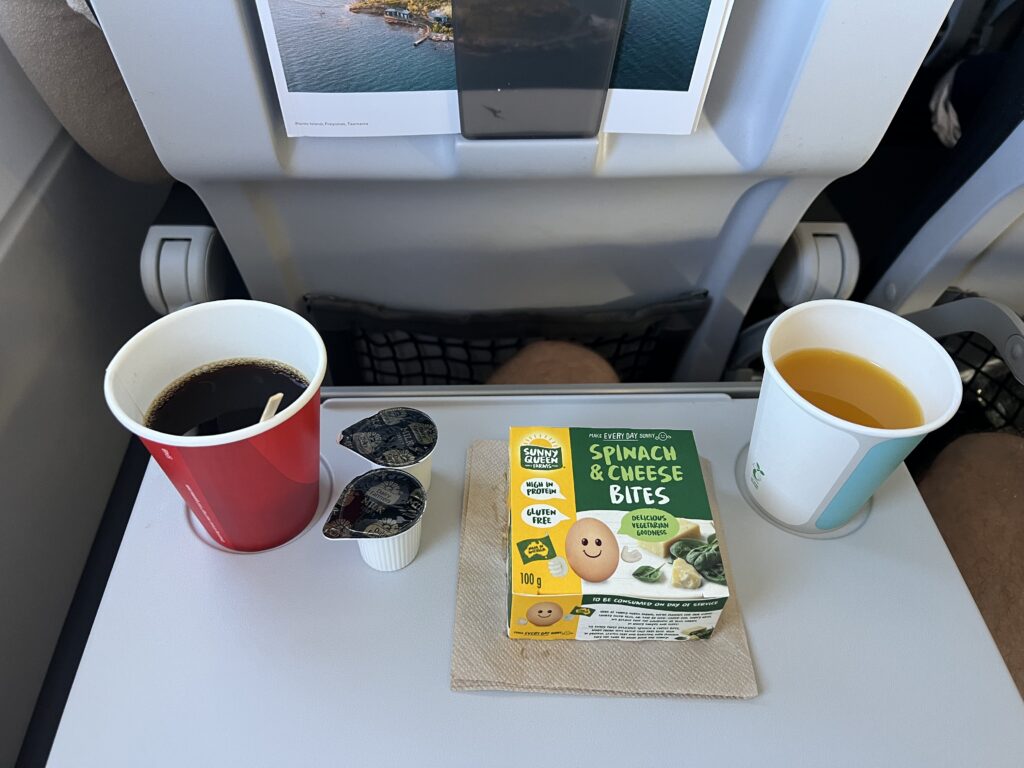
Passengers were offered a selection of beverages including tea, coffee and orange juice.
I happily accepted both coffee and orange juice, which helped make the early start considerably more enjoyable.
Accompanying the drinks was a small snack consisting of spinach and cheese bites.
While the serving size was hardly substantial enough to replace breakfast, the snack itself was surprisingly tasty. The pastry was fresh, the filling was flavourful and it represented a pleasant change from some of the less inspiring snacks occasionally encountered on domestic flights.
What impressed me most, however, was the attitude of the cabin crew.
Throughout the flight they remained warm, friendly and genuinely hospitable. Service felt personal rather than rushed, and there was a noticeable effort to engage positively with passengers.
After the initial distribution of refreshments, crew members returned through the cabin offering additional snacks to anyone who wanted them. Rather than allowing surplus food to go unused, they ensured passengers had the opportunity to enjoy a second serving.
It was a small gesture but one that left a positive impression.
In many ways, the service exemplified what QantasLink often does well in Western Australia. While the aircraft itself may not offer the most luxurious cabin environment, the airline’s staff frequently compensate through excellent customer service.
Flying Across the Vast Pilbara
As enjoyable as the onboard service was, the real highlight of this journey lay beyond the window.
Few domestic flights in Australia offer scenery quite as dramatic as the approach into the Pilbara.
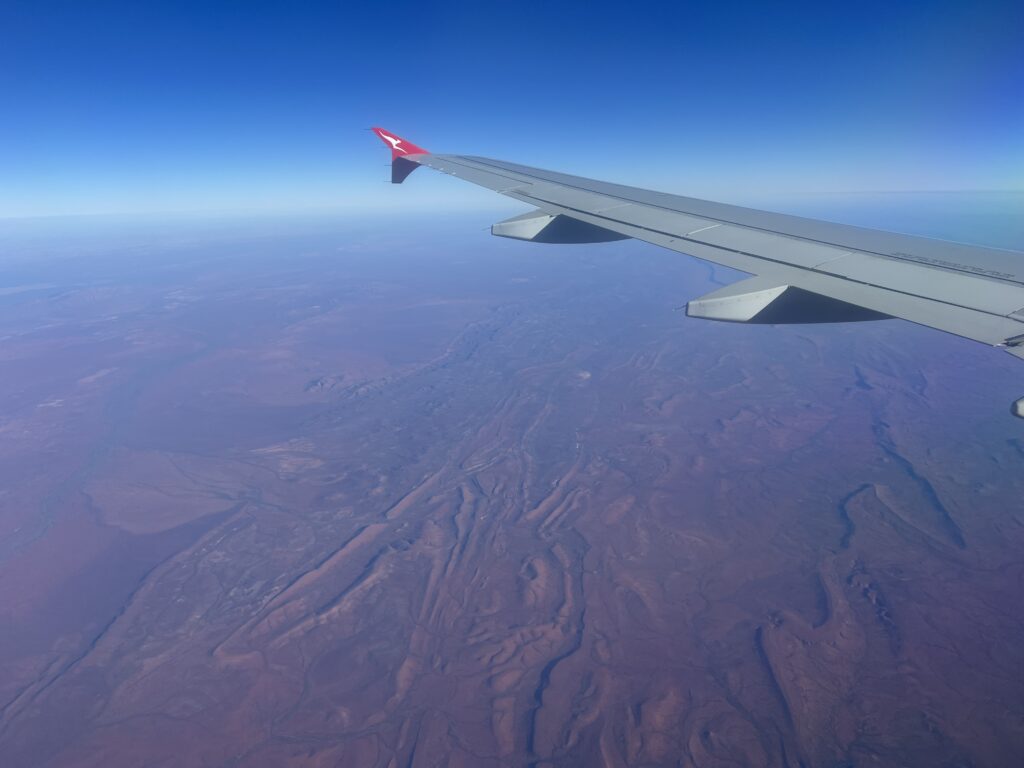
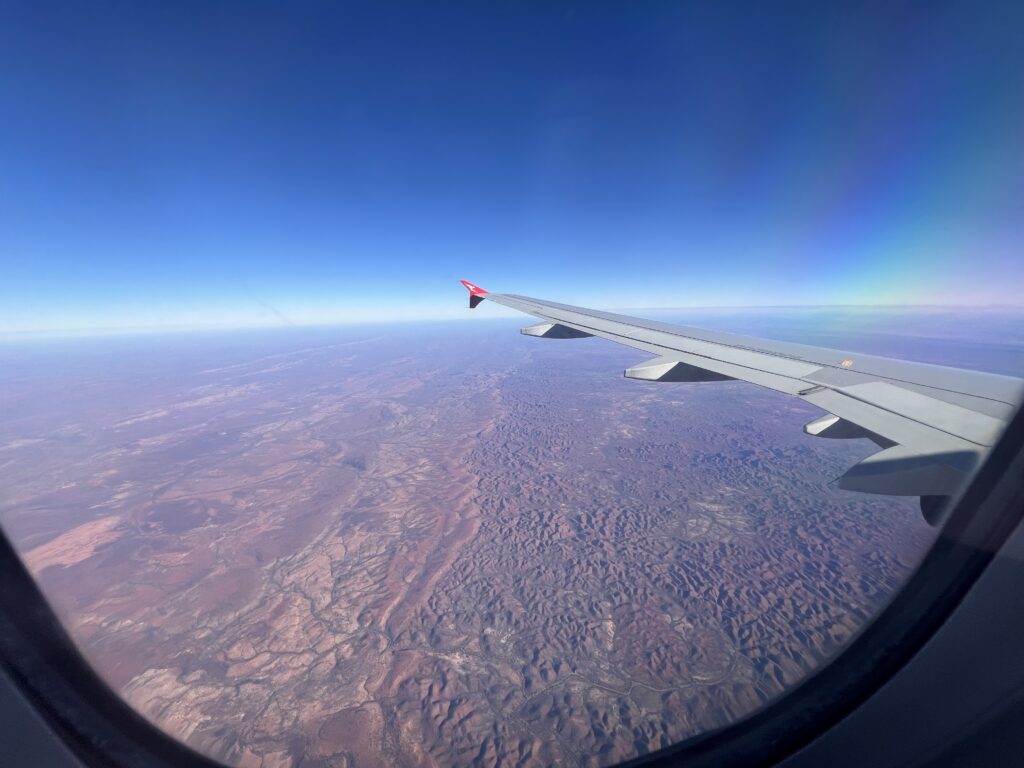
The further north we travelled, the more striking the landscape became. Green agricultural regions gradually disappeared, replaced by an endless expanse of red earth stretching towards the horizon in every direction.
From 37,000 feet, Western Australia reveals itself in spectacular fashion.
Mountain ranges emerged from the landscape like ancient fortresses. Dry riverbeds carved winding paths through the terrain. Dusty roads traced faint lines across vast wilderness areas. Every so often, enormous mining operations appeared below, their scale becoming apparent even from cruising altitude.
The Pilbara is one of the most economically significant regions in Australia, producing enormous quantities of iron ore that are exported around the world. Yet despite its economic importance, relatively few Australians ever visit the area.
Flying over the region provides a unique perspective that cannot be replicated from the ground.
The sheer size of everything is astonishing.
Mine sites that appear enormous on maps become tiny features within a landscape so vast that it almost defies comprehension. Distances that would take hours to drive are covered in mere minutes from the air.
For aviation enthusiasts, geology enthusiasts or simply anyone who appreciates spectacular scenery, this section of the flight alone justifies the journey.
The views outside the window remained captivating for virtually the entire cruise.
Combined with exceptionally clear weather, it created one of the most visually rewarding domestic flights I have experienced in Australia.
A Flight That Passed Surprisingly Quickly
One of the most striking aspects of the journey was how quickly it seemed to pass.
Between the inflight service, the entertainment options and the constantly changing scenery below, there was never a moment when the flight felt long.
In fact, favourable conditions meant we were making excellent progress towards Paraburdoo.
Despite a scheduled flight time of one hour and fifty minutes, we were on track to arrive significantly ahead of schedule. Strong tailwinds and efficient operations were helping shave valuable minutes off the journey.
Having an entire row largely to myself certainly helped improve comfort as well.
Without neighbouring passengers occupying adjacent seats, the cabin felt considerably more spacious than the seat dimensions alone might suggest.
Before long, the captain announced our initial descent into Paraburdoo.
As always, the final phase of the flight promised some of the best views of the entire journey.
Descent into the Pilbara and Arrival at Paraburdoo
Before beginning our descent, I took the opportunity to visit one of the Airbus A319’s two lavatories. As expected, it was a fairly standard narrow-body aircraft facility. While hardly luxurious, it was clean, tidy and stocked with all the basic amenities passengers would expect. The inclusion of a baby change table and the generally well-maintained condition of the space reflected positively on the cabin crew, who had clearly kept everything in good order throughout the flight.
Returning to my seat, it was time for what would ultimately become the highlight of the entire journey.
As the aircraft began descending from cruising altitude, the scenery outside transformed from impressive to truly spectacular. The closer we moved towards Paraburdoo, the more dramatic the landscape became. The Pilbara is one of Australia’s most visually striking regions, characterised by rugged mountain ranges, iron-rich earth and seemingly endless expanses of wilderness. From the air, the region appears almost otherworldly.
The famous red earth of the Pilbara dominated the landscape below, contrasting beautifully against the deep blue winter sky. Ancient rocky formations stretched across the horizon, while dry riverbeds carved intricate patterns through the terrain. Scattered throughout the landscape were visible reminders of the mining industry that drives the regional economy, including access roads, rail infrastructure and massive excavation sites.
This is one of those flights where sitting by the window is absolutely essential.
Unlike many domestic routes where scenery quickly becomes repetitive, the approach into Paraburdoo offers constant visual interest. Every few minutes revealed another breathtaking view, making it difficult to look away from the window for even a moment.
As we descended further, the scale of the mining operations became increasingly apparent. What appeared from cruising altitude as small scars on the landscape gradually revealed themselves as enormous industrial complexes. The sheer size of these operations helps explain why aviation plays such a critical role in connecting this remote part of Australia to Perth and the rest of the country.
Soon enough, the runway came into view.
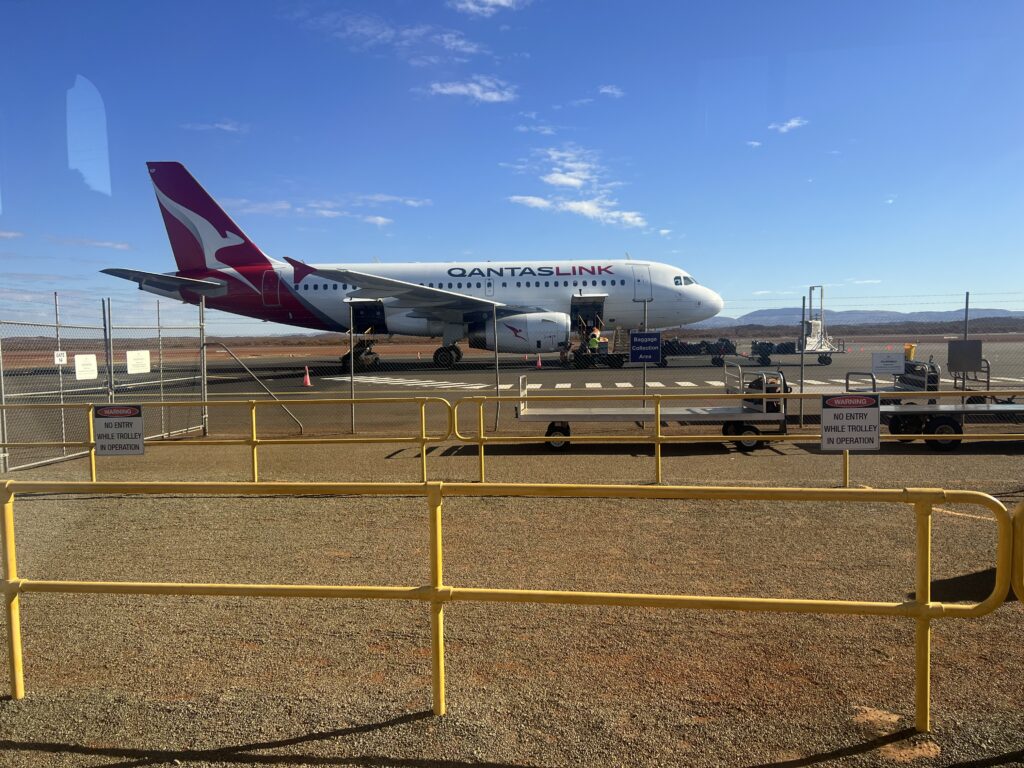
Set against the backdrop of the rugged Pilbara landscape, Paraburdoo Airport appeared isolated yet purposeful. Unlike major city airports surrounded by suburbs and commercial developments, this airport sits firmly within the region it serves. There is little ambiguity about its role. Everything here exists because of the mining industry.
The landing itself was smooth, and within moments we were rolling along the runway under clear blue skies. Another successful regional flight was complete.
Welcome to One of Australia’s Most Unusual Airports
Stepping off the aircraft at Paraburdoo immediately reinforces just how different this airport is compared with most commercial airports across Australia.
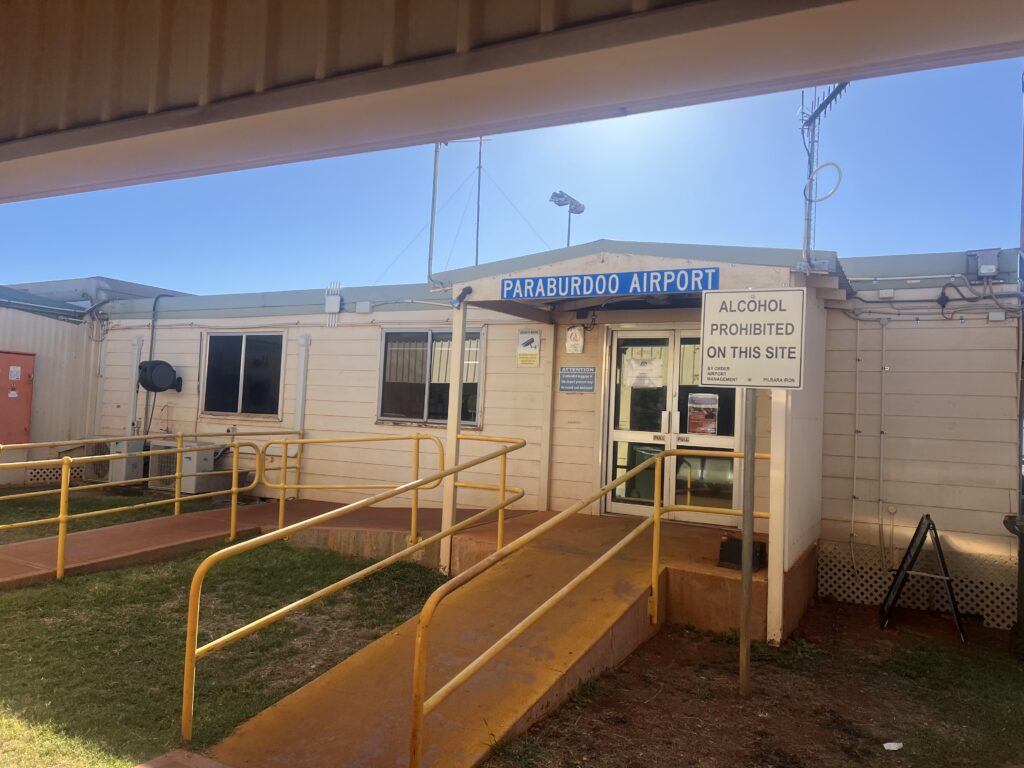
Paraburdoo Airport is privately owned by Rio Tinto, one of the world’s largest mining companies. Unlike conventional airports operated by government authorities or private airport corporations, this facility exists primarily to support mining operations throughout the surrounding region.
As a result, passenger facilities are extremely basic.
To describe the terminal as modest would almost be an understatement. Rather than a large purpose-built terminal building featuring extensive retail outlets, restaurants and lounges, the airport consists largely of practical structures designed to facilitate the movement of workers as efficiently as possible.
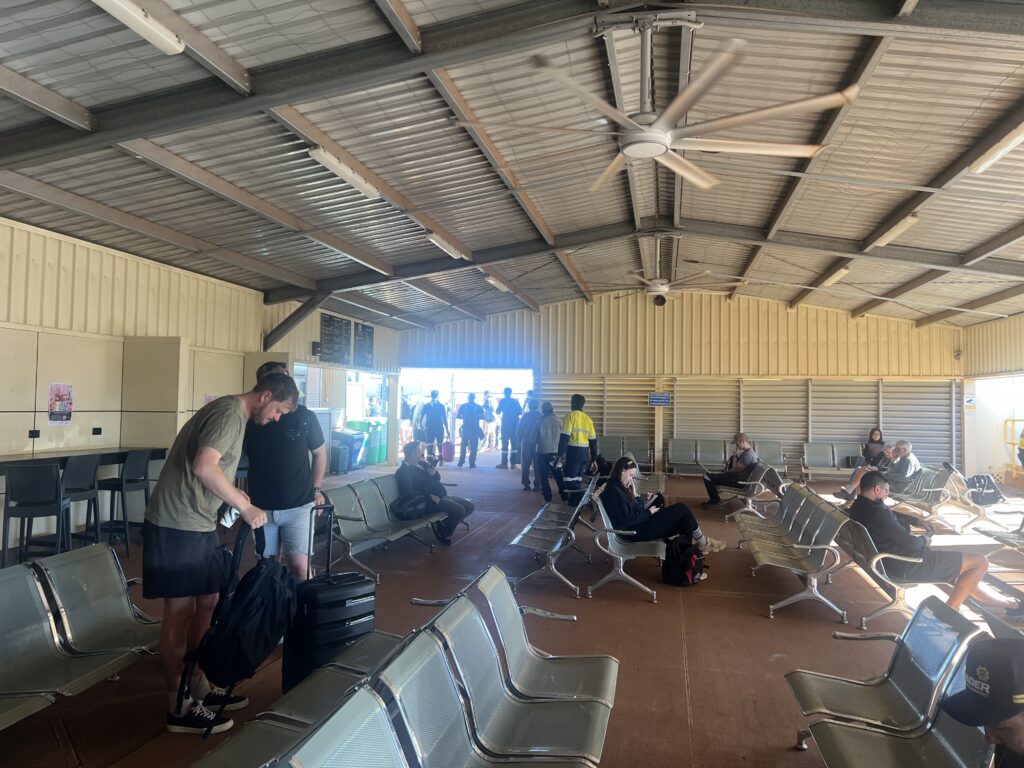
Yet despite its simplicity, the airport functions remarkably well.
Most passengers arriving at Paraburdoo are not tourists. They are mine workers beginning a roster, contractors travelling to industrial sites or employees returning home after completing a shift. For these travellers, efficiency is far more important than luxury.
Consequently, there is little demand for the sorts of amenities commonly found at larger airports.
The airport’s purpose is straightforward: move people from aircraft to their final destination as quickly and efficiently as possible. Judged against that objective, it succeeds admirably.
Baggage Collection: Simplicity at Its Best
Perhaps nowhere is the airport’s practical philosophy more apparent than in its baggage collection process.
At major airports, arriving passengers often face lengthy walks, crowded baggage halls and long waits beside conveyor belts. At Paraburdoo, the process could hardly be more different.
After leaving the terminal area, passengers simply collect their luggage from facilities located directly adjacent to the car park.
That’s it.
No complicated infrastructure.
No endless corridors.
No baggage claim hall.
The entire process takes only a matter of minutes.
For first-time visitors, the simplicity can be almost surprising, but it works exceptionally well. Within moments of arriving, passengers are free to continue their journey.
It is a refreshing reminder that airports do not always need to be large or complex to function effectively.
Exploring the Logistics of Remote Regional Travel
One challenge facing travellers who are not directly connected to the mining industry is arranging onward transportation.
Unlike larger regional centres, Paraburdoo offers relatively limited accommodation and visitor infrastructure. Most travellers arriving here are met by employers, company transport services or rental vehicle providers.
Prior to travelling, one of my biggest concerns had been figuring out how to spend a weekend in the region without hiring a vehicle.
Fortunately, some research uncovered an excellent solution.
A dedicated airport shuttle service operates between Paraburdoo Airport and the nearby town of Tom Price, located approximately 80 kilometres away. Operated by Go West Tours, the service is timed to meet arriving and departing QantasLink flights, making it an invaluable transport option for independent travellers.
The shuttle can be booked online in advance and, at the time of travel, cost approximately $43 one way.
Considering the distance involved, the price represented very reasonable value.
The service proved reliable, comfortable and professionally operated. Importantly, it opened up opportunities for visitors to explore the region without the need for expensive car hire arrangements.
For anyone considering undertaking this journey as an aviation enthusiast or independent traveller, the existence of this shuttle service significantly improves the practicality of visiting the area.
Reviewing the Overall QantasLink Experience
Reflecting on the journey as a whole, the experience was overwhelmingly positive.
From check-in in Perth through to arrival in the Pilbara, the flight operated smoothly and efficiently. Departure occurred on time, arrival was ahead of schedule and every aspect of the operation felt well organised.
The strongest aspect of the experience was undoubtedly the crew.
QantasLink crews in Western Australia have developed a reputation for friendliness and professionalism, and today’s flight reinforced that reputation. Throughout the journey, the cabin crew remained approachable, attentive and genuinely welcoming.
Their willingness to offer additional refreshments and engage positively with passengers added a personal touch that enhanced the overall experience.
The onboard catering, while simple, was perfectly appropriate for the flight duration. The snack was enjoyable, the beverage selection adequate and the service delivered efficiently.
Entertainment options were reasonable given the aircraft type, although the absence of onboard Wi-Fi remains a noticeable disadvantage compared with some other Qantas domestic aircraft.
The most significant weakness of the Airbus A319 product remains the seating.
While perfectly functional for shorter journeys, the seats feel more reminiscent of a low-cost carrier than a premium full-service airline. Legroom is limited, cushioning is basic and overall comfort falls short of what many travellers might expect given the often substantial fares charged on regional Western Australian routes.
Nevertheless, for a journey lasting little more than an hour, these shortcomings were manageable.
Most importantly, the aircraft delivered passengers safely, comfortably and on schedule.
Value for Money: Is the Route Worth Booking?
One area where regional Western Australian aviation often attracts criticism is pricing.
Flights to destinations such as Paraburdoo are rarely cheap. On many dates, one-way fares can comfortably exceed $500, reflecting both the specialised nature of the market and the strong demand generated by the mining industry.
Had I paid a standard cash fare, the value equation would undoubtedly have looked different.
Fortunately, this particular journey was booked using a Qantas Classic Reward during a promotional period. The flight required just 11,000 Qantas Points plus approximately $72 in taxes and fees.
Given that comparable cash fares frequently exceed several hundred dollars, this represented exceptional value.
In fact, it may well be one of the better domestic economy redemptions currently available within Australia.
Final Verdict: A Fascinating Flight into Australia’s Mining Heartland
Flying from Perth to Paraburdoo is not simply a means of reaching a destination. It is an opportunity to experience a side of Australia that most travellers never see.
From the bustling FIFO-focused atmosphere of Perth Airport to the dramatic landscapes of the Pilbara and the unique arrival experience at a privately owned mining airport, every stage of the journey offers something different.
The QantasLink Airbus A319 may not provide the most sophisticated onboard product. The seating is basic, Wi-Fi is absent and the cabin lacks some of the refinements found elsewhere within the Qantas network.
However, these shortcomings are largely offset by excellent crew service, reliable operations and scenery that ranks among the best available on any domestic flight in Australia.
More importantly, the route itself is genuinely fascinating.
It highlights the critical role aviation plays in supporting remote communities and industries across Western Australia. Without flights such as these, the mining operations that contribute billions of dollars to the Australian economy would be far more difficult to sustain.
For aviation enthusiasts, frequent flyers and travellers seeking something beyond the usual domestic routes, Perth to Paraburdoo offers a uniquely rewarding experience.
It is a journey through one of Australia’s most important regions, a flight across some of the country’s most spectacular landscapes and a reminder that some of the most interesting aviation experiences are often found far away from the major cities.
While the Airbus A319’s hard product leaves room for improvement, the overall experience remains highly enjoyable. Combined with stunning scenery, friendly service and the novelty of visiting one of Australia’s most unusual airports, this flight earns a strong recommendation.
For anyone interested in regional aviation, FIFO operations or the remarkable scale of Western Australia, the Perth to Paraburdoo route deserves a place on your aviation bucket list.
Disclaimer: This article has been repurposed from the original transcript of my own flight review on the Aussie JetSetter Youtube channel with the assistance of AI technologies. Please be advised whilst I have taken the utmost care to review and revise this article where necessary to reflect the upmost of accuracy at time of publication please be advised my reviews whether written or in video form are for entertainment and general information purposes only. They reflect the objective views in good faith of the person only whom is presenting them unless otherwise noted. Any decisions you make resulting from consuming my content must take into consideration your own circumstances, research and responsibility as I can not be hold responsible for any inaccuracies or future changes effecting the relativity of such reviews. All Rights Reserved by Aussie JetSetter from 2022 >