




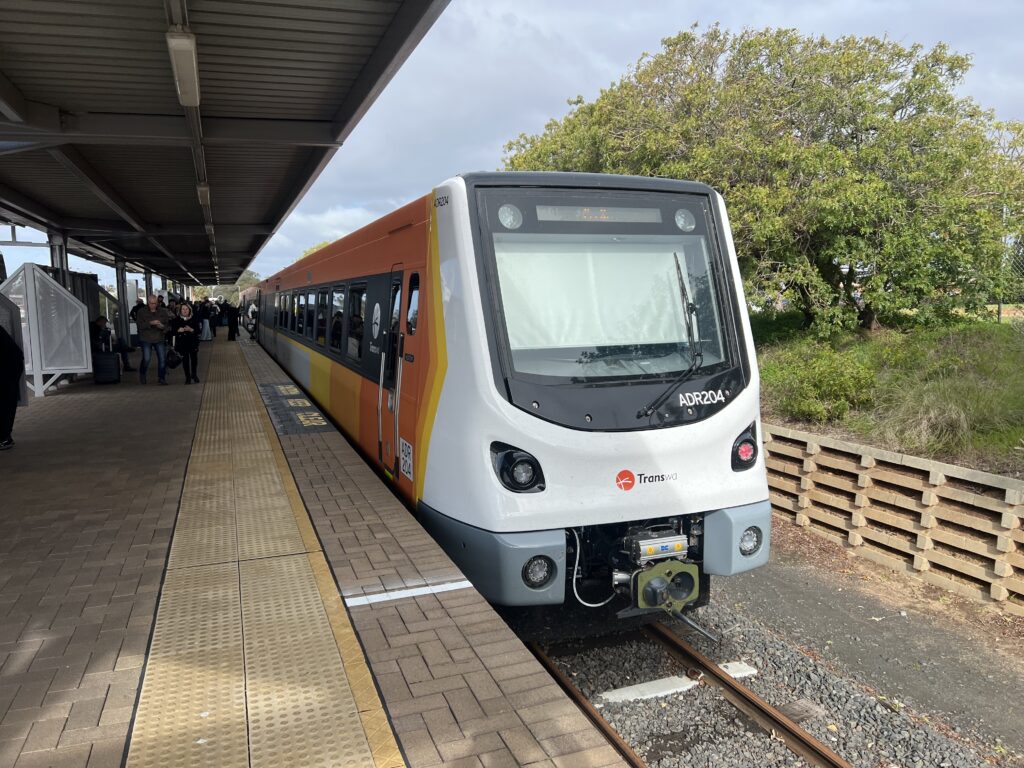
For almost 80 years, the Australind has been one of Western Australia’s most iconic passenger train services. Connecting Bunbury with Perth across approximately 167 kilometres of scenic countryside, it has long provided an important transport link between the state’s capital and the rapidly growing South West region. After several years out of service while major rail infrastructure upgrades were completed, the Australind has finally returned—and this time with an entirely new fleet of modern diesel multiple units.
As someone who has always enjoyed reviewing Australia’s rail network, this was a journey I had been eagerly anticipating. Not only would it be my very first experience aboard the new Australind, but it also represented one of the first opportunities to see how TransWA’s long-awaited replacement trains compared with the ageing railcars they succeeded.
Would these modern trains deliver the level of comfort and convenience expected of a contemporary regional rail service? Or would they simply be a cosmetic improvement over their predecessors?
There was only one way to find out.
On this journey, I travelled from Bunbury Passenger Terminal to Perth Railway Station, experiencing every aspect of the service—from boarding and seating through to onboard amenities, ride comfort, scenery and overall value for money.
Beginning the Journey in Bunbury
My journey began in the regional coastal city of Bunbury, the largest city in Western Australia outside the greater Perth metropolitan area. Located approximately 175 kilometres south of Perth, Bunbury serves as the commercial heart of the South West and has become one of the fastest-growing regional centres in the state.
The timing couldn’t have been more exciting.
Behind me sat the very first of the new Australind trainsets delivered to TransWA. At the time of my journey, operations were still extremely limited, with only a handful of return services operating each week while the new fleet gradually entered service. Eventually, however, TransWA intends operating up to four daily return services between Bunbury and Perth, dramatically improving flexibility for travellers.
One particularly interesting aspect of these trains is their design heritage.
Although purpose-built for regional travel, the new Australind shares many similarities with Perth’s popular C Series suburban trains. In many respects, it feels like a regional adaptation of those modern commuter trains, albeit powered by diesel rather than electricity to suit the non-electrified South Western Railway.
As someone familiar with Perth’s rail network, I was especially interested to see how successfully that suburban-inspired design translated to longer regional journeys.
Finding the Correct Station
One aspect worth highlighting for anyone planning to travel on the Australind is ensuring you arrive at the correct departure point.
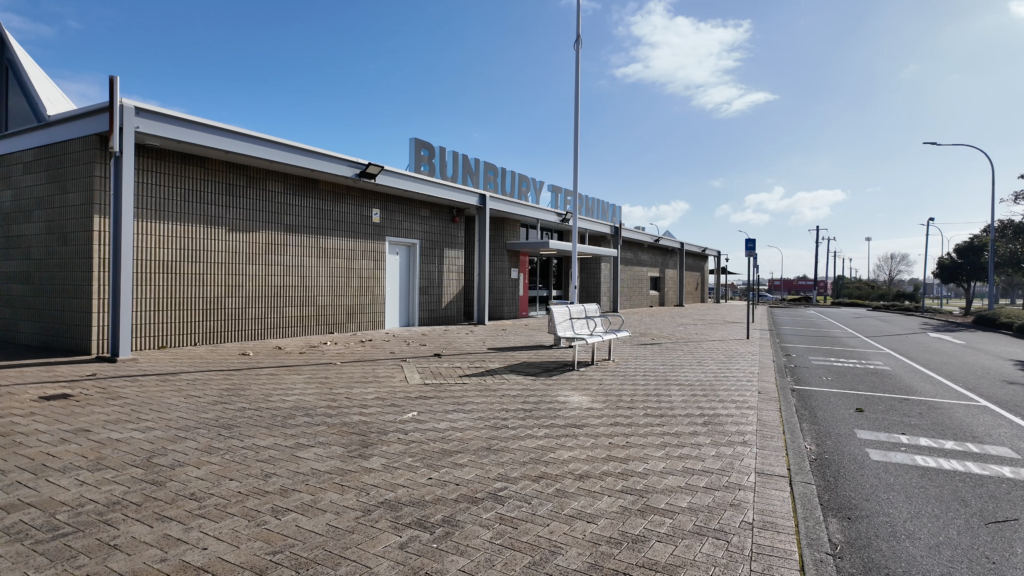
Despite the service often being associated with Bunbury Railway Station in the city centre, the Australind actually departs from Bunbury Passenger Terminal at East Bunbury, approximately four kilometres from the CBD.
This distinction caught me out.
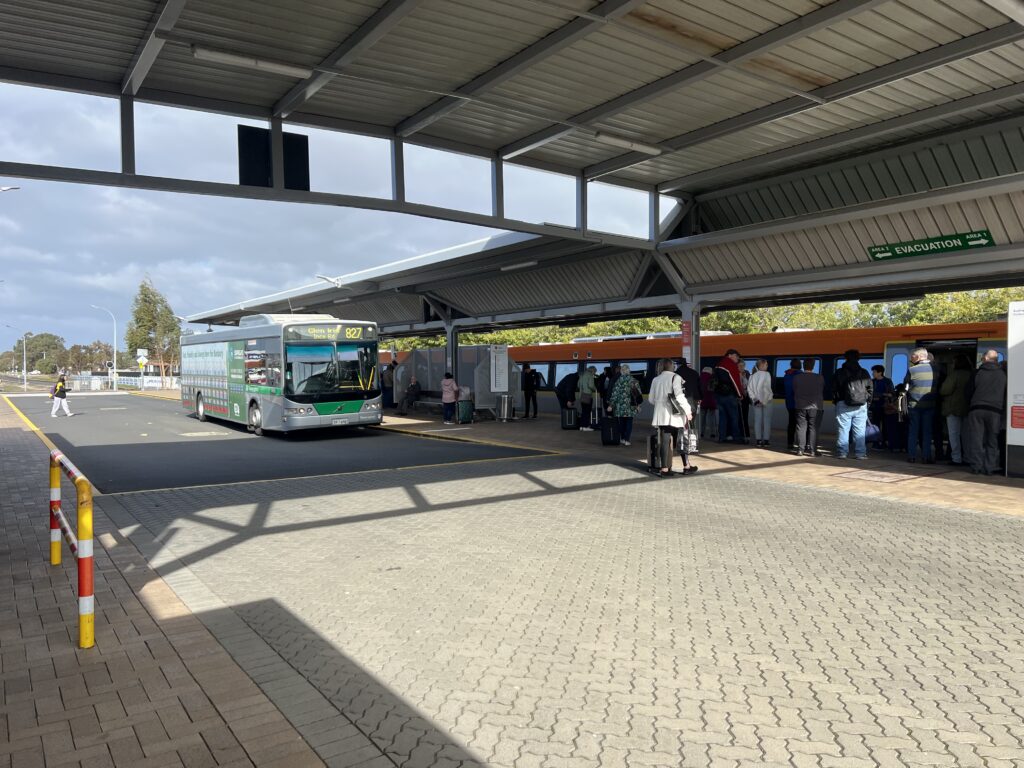
Earlier in the day I had travelled to Bunbury aboard a Southwest Coach Lines service, which terminated at the historic Bunbury Railway Station. Realising I had less than an hour before the Australind departed, I quickly ordered an Uber to East Bunbury at a cost of around $13. TransBunbury do operate scheduled bus routes 86 and 827 that do connect with the station however unfortunately they were not timed right for my needs.
Fortunately, I still arrived with plenty of time before departure, but it served as a useful reminder that travellers unfamiliar with Bunbury should carefully check which station their service departs from.
Once at the passenger terminal, however, everything became wonderfully straightforward.
Unlike airports, there are no lengthy security queues, baggage screening or formal check-in procedures for passengers travelling with hand luggage. Within moments of arriving, I was simply able to walk onto the platform and prepare to board.
It’s one of rail travel’s greatest advantages.
The experience feels relaxed, uncomplicated and refreshingly stress-free.
A Brief History of the Australind
Before boarding, it’s worth appreciating just how significant the Australind is within Western Australia’s transport history.
The service first commenced in 1947, becoming Australia’s fastest narrow-gauge passenger train of its era. Originally hauled by steam locomotives before later transitioning to diesel power, it quickly established itself as the premier rail connection between Perth and Bunbury.
Over the decades, the service evolved alongside changing railway technology. Faster diesel locomotives and railcars reduced journey times considerably, while continual infrastructure improvements helped maintain the route’s importance despite growing competition from private vehicles and improved highways.
More recently, the service underwent one of the biggest transformations in its history.
During the extensive closure of Perth’s Armadale Line for major upgrades, the Australind was suspended for several years. This pause also marked the retirement of the previous generation of railcars, paving the way for an entirely new fleet manufactured by Alstom in Western Australia.
For many rail enthusiasts, the return of the Australind represents far more than simply introducing new trains—it marks the beginning of an entirely new chapter for regional rail travel in Western Australia.
Boarding the Brand-New Train
Soon enough, it was finally time to board.
Stepping inside, the first impression was immediately positive.
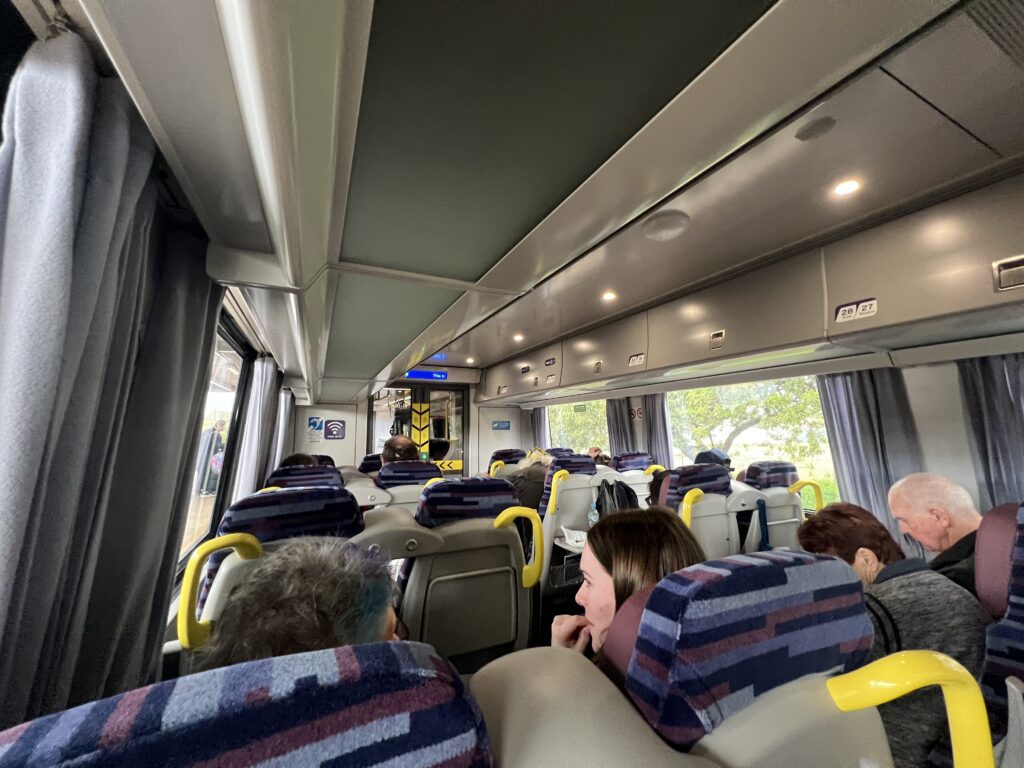
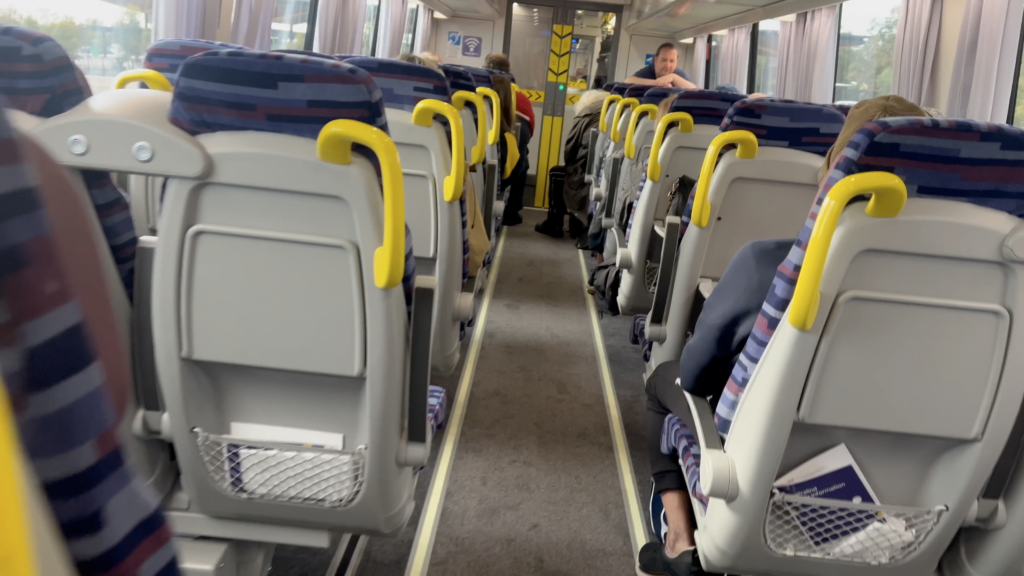
The interior feels bright, modern and spacious, with a design language clearly inspired by Perth’s newest suburban trains. Wide aisles, clean finishes and generous overhead luggage lockers create a welcoming atmosphere, while large windows promise excellent views throughout the journey north.
Today’s service would operate with 132 passenger seats together with dedicated wheelchair spaces, ensuring the train is capable of accommodating a wide variety of travellers.
At my seat, several thoughtful modern features quickly became apparent.
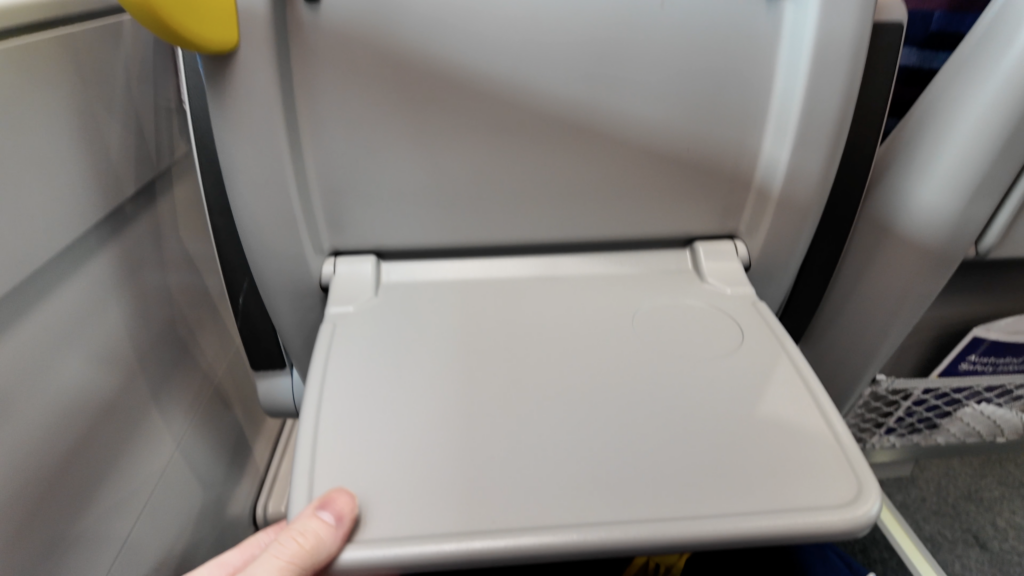
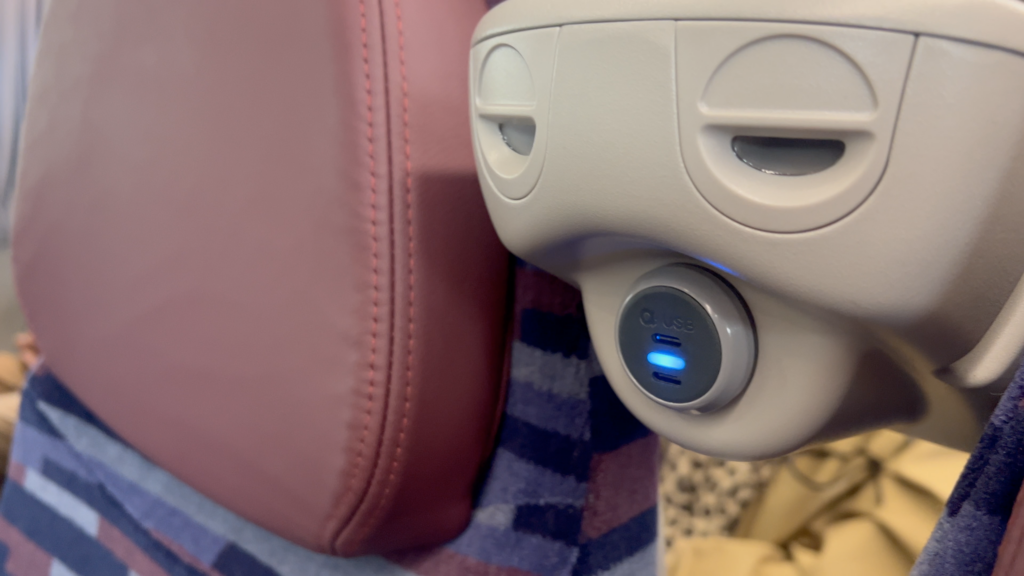
Each passenger benefits from an individual USB-C charging port, personal LED reading light and sturdy fold-down tray table. These are welcome additions that recognise how modern travellers increasingly rely upon smartphones, tablets and laptops during their journeys.
One omission I did notice, however, was the absence of an integrated device holder within the tray table.
While hardly a dealbreaker, it would certainly have made watching downloaded movies or working on a laptop slightly more convenient during the two-and-a-half-hour trip.
Overall, however, first impressions were overwhelmingly positive.
The train certainly looks every bit like the modern regional railway TransWA has promised for many years.
As the train eased out of Bunbury Passenger Terminal and began its journey towards Perth, I finally had the opportunity to properly explore what TransWA’s new flagship regional train has to offer.
From the outset, it was obvious these trains represent a significant leap forward in terms of technology and passenger amenities. While there are still areas where I believe improvements could be made, particularly regarding seat comfort, the overall package feels considerably more modern than the fleet it replaces.
For travellers making the two-and-a-half-hour journey between Bunbury and Perth, those improvements will undoubtedly be appreciated.
Seating: Modern Features Meet Average Comfort
The seating is perhaps the most important aspect of any regional train journey, particularly on a service lasting several hours.
Visually, the seats leave an excellent first impression.
Finished in a contemporary design that complements the rest of the interior, they immediately create a bright and modern atmosphere. Unlike the ageing railcars previously used on the Australind, these seats feel like they belong on a train built for the twenty-first century.
Each seat is equipped with several thoughtful features that modern travellers increasingly expect.
A sturdy fold-down tray table provides ample space for working on a laptop or enjoying refreshments purchased from the buffet. Individual USB-C charging ports ensure passengers can keep phones, tablets and laptops powered throughout the journey, while personal LED reading lights offer additional convenience for those travelling during darker hours.
These are exactly the kinds of practical improvements that make regional rail travel more enjoyable.
However, after spending some time in the seat, I did begin to notice a few compromises.
Although perfectly acceptable for a journey of this length, the seats themselves aren’t particularly soft or heavily padded. Compared with several other regional train services around Australia, I found both the cushioning and overall legroom to be slightly less generous than expected.
That isn’t to suggest the seats are uncomfortable.
Rather, they’re best described as adequate.
For a relatively short journey between Bunbury and Perth, they perform their role well enough. However, I probably wouldn’t want to spend significantly longer sitting in them without wishing for a little more cushioning and additional legroom.
Another small disappointment was the tray table design.
While sturdy and well constructed, it lacks an integrated device holder. Given how many passengers now stream movies or work from tablets during longer journeys, this feels like a missed opportunity that could easily have improved the overall passenger experience.
Even so, considering this is effectively a regional commuter train rather than a luxury long-distance service, the seating remains entirely fit for purpose.
Thoughtful Amenities Throughout the Train
Beyond the seating itself, the new Australind offers a wide range of practical passenger facilities that significantly improve the overall travel experience.
One feature I particularly appreciated was the generous overhead luggage storage.
Unlike some older trains where passengers often struggle to find space for larger bags, the fully enclosed overhead lockers comfortably accommodate backpacks, small suitcases and other personal belongings without cluttering the passenger cabin.
Additional dedicated luggage storage areas are also provided for larger items, helping to keep the aisles clear throughout the journey.
Cyclists haven’t been forgotten either.
The train includes space for up to 14 bicycles, making it an attractive option for those wanting to explore Western Australia’s South West without needing to drive.
Accessibility has also clearly been a major design priority.
The new Australind features dedicated wheelchair spaces together with an accessible toilet located within Car 2, ensuring passengers with reduced mobility can travel comfortably and independently.
These are important inclusions that help make regional rail travel available to a broader range of passengers while bringing the Australind into line with modern accessibility expectations.
A Straightforward Journey to Perth
One reason the Australind continues to appeal to many travellers is the simplicity of the journey itself.
Covering approximately 167 kilometres, the train completes the trip between Bunbury and Perth in around two and a half hours.
While that’s approximately thirty minutes slower than driving under ideal traffic conditions, rail travel offers an entirely different experience.
Instead of concentrating on the road, passengers are free to relax, enjoy the scenery, read a book, catch up on work or simply watch Western Australia’s countryside roll past the window.
Along the way the Australind serves thirteen stations, connecting numerous regional communities including Brunswick Junction, Harvey, Cookernup, Yarloop, Waroona, Pinjarra, Serpentine, Mundijong, Byford and Armadale before finally arriving at Perth Railway Station.
For many of these towns, the Australind remains an important public transport connection that links residents with employment, education and services in Perth.
The train itself is capable of speeds up to 143 km/h, although normal operating speeds are limited to 130 km/h. It also continues to operate over Western Australia’s historic narrow-gauge railway network, preserving an important part of the state’s railway heritage while introducing thoroughly modern rolling stock.
A Warm Welcome from the Crew
Shortly after departure, the onboard crew delivered a comprehensive welcome announcement outlining the journey ahead.
Passengers were introduced to the train’s facilities, safety procedures and onboard buffet while also being reminded to remain in their allocated seats due to passengers joining and leaving at intermediate stations.
The announcement was professional, informative and delivered in a friendly manner that immediately created a welcoming atmosphere onboard.
Throughout the journey, the crew remained approachable and visible as they moved through the train assisting passengers and preparing the buffet for service.
While interactions were relatively limited, the professionalism displayed by the onboard staff reflected well on TransWA and contributed positively to the overall experience.
It’s often the small touches—friendly greetings, clear communication and helpful staff—that leave the strongest lasting impressions, and in that respect the Australind performed well.
Exploring the Onboard Experience
With the train now cruising north through Western Australia’s picturesque South West, it was the perfect opportunity to leave my seat and explore some of the facilities that TransWA has incorporated into its brand-new Australind fleet.
While the journey between Bunbury and Perth lasts only around two and a half hours, modern passengers increasingly expect reliable connectivity, convenient food options and clean onboard facilities. In many respects, the new Australind succeeds in delivering those expectations, although there were one or two areas where the experience didn’t quite match the promise.
Complimentary Wi-Fi: A Feature That Needs Refinement
One of the headline features of the new Australind is complimentary onboard Wi-Fi.
In theory, this is an excellent addition.
Whether passengers are travelling for business, keeping in touch with family or simply browsing social media during the journey, reliable internet access has become an increasingly important part of modern public transport.
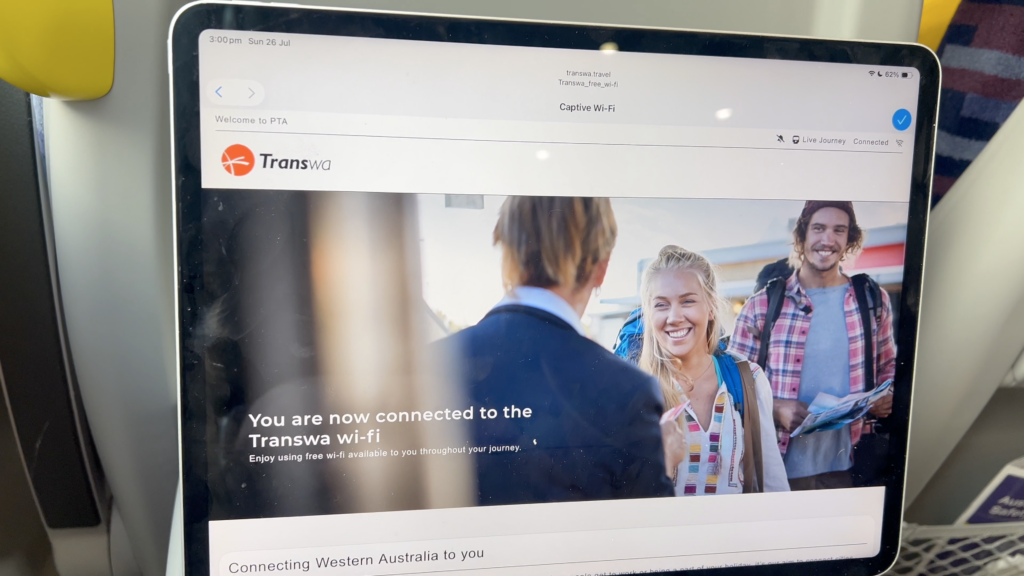
Connecting to the onboard network proved to be straightforward enough.
Within moments, my phone had successfully connected to the TransWA Wi-Fi portal without any difficulty.
Unfortunately, that was where the positive experience ended.
Despite connecting successfully to the network, I was unable to establish an actual internet connection during my journey. Web pages simply refused to load, making the service effectively unusable throughout the trip.
Adding to the disappointment, the onboard live journey tracker also failed to function correctly.
Normally, I enjoy monitoring our progress along the route, particularly on new rail services where it’s interesting to watch the train’s speed and location in real time. Sadly, that feature also appeared unavailable during my journey.
Fortunately, mobile reception provided a partial backup.
Using Telstra, I maintained usable coverage for approximately half the trip before entering more remote sections where reception naturally became less reliable.
Given that these trains had only recently entered service, it’s entirely possible the Wi-Fi system was still experiencing early operational issues. Hopefully these teething problems are resolved as the fleet becomes fully established, because reliable onboard internet would significantly enhance the passenger experience.
The Onboard Buffet
No regional train journey feels complete without visiting the onboard buffet.
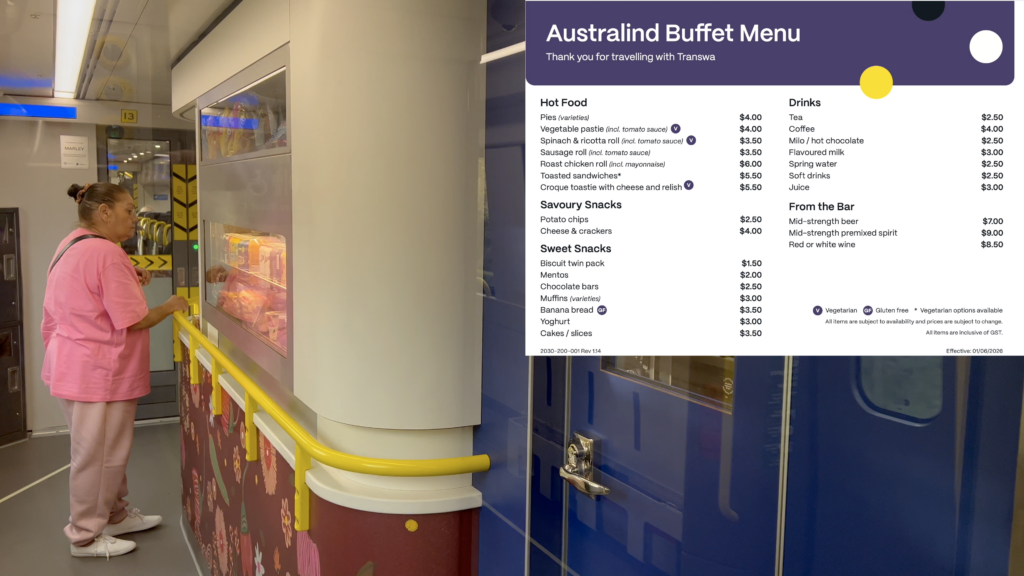
Located centrally within the train, the compact buffet provides passengers with a surprisingly respectable selection of refreshments throughout the journey.
The menu includes a mixture of hot meals, savoury snacks, sweet treats, soft drinks and a limited range of alcoholic beverages.
Although I ultimately decided not to purchase anything during this particular trip, I took some time to browse the menu and was pleasantly surprised by both the variety available and the pricing.
In today’s travel environment—where food prices at airports, service stations and transport hubs can often feel excessive—the buffet appeared refreshingly reasonable.
Rather than feeling like passengers were paying a premium simply because they were onboard, the pricing struck me as fair and accessible.
For travellers departing after work or returning home later in the day, having the option to purchase a snack or light meal undoubtedly adds to the convenience of the service.
It may not be a gourmet dining experience, but that’s never really the objective.
Instead, the buffet succeeds in providing practical refreshments at sensible prices, exactly as most regional travellers would expect.
Clean and Spacious Facilities
Another area where the new Australind impressed was the standard of its onboard amenities.
The accessible toilet located within Car 2 was exceptionally spacious and thoughtfully designed.
Cleanliness throughout the journey was excellent, while practical facilities such as a baby changing table make the train well suited to families travelling with young children.
These are often the kinds of features passengers only truly appreciate when they need them, but they contribute significantly towards creating a comfortable and inclusive travel experience.
Combined with the train’s dedicated wheelchair spaces and generous luggage storage, it’s clear accessibility and practicality were key priorities during the design process.
For a regional train expected to serve Western Australians for many decades to come, those decisions are certainly welcome.
Watching the South West Roll By
One of the greatest pleasures of travelling by train is having the freedom to simply sit back and enjoy the scenery.
Unlike driving, where your attention must remain fixed firmly on the road ahead, rail travel allows passengers to fully appreciate the changing landscape outside the window.
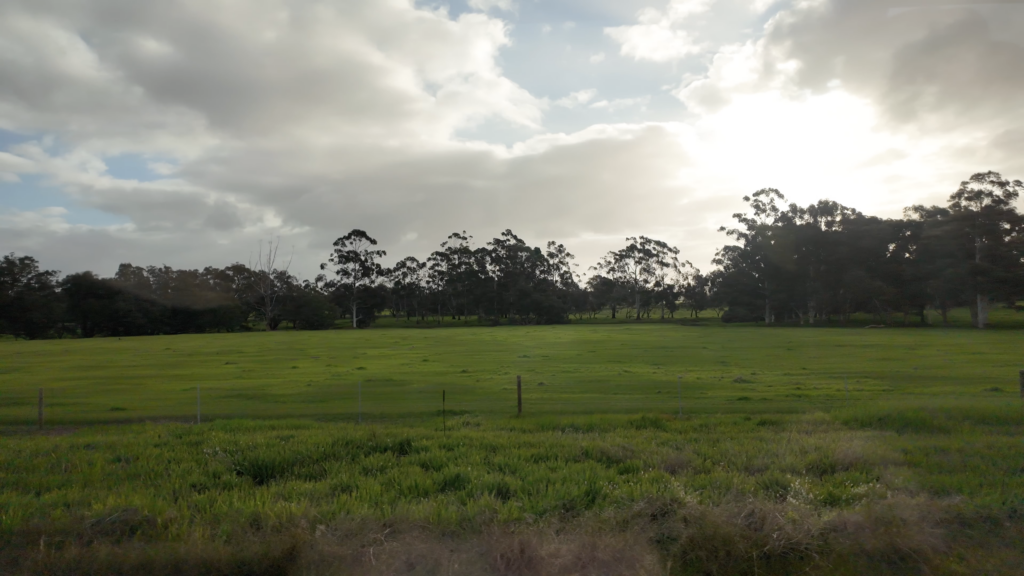
Leaving Bunbury behind, the train passed through productive farmland, native bushland and several of the South West’s charming regional towns before gradually making its way towards Perth.
Communities such as Brunswick Junction, Harvey, Waroona, Pinjarra and Byford each provide a glimpse into regional Western Australia, with the railway continuing to play an important role in connecting these towns to the state capital.
Although much of the scenery consists of agricultural land rather than dramatic mountain ranges or coastlines, there is nevertheless something deeply relaxing about watching the countryside slowly unfold beyond the large panoramic windows.
The exceptionally smooth ride only enhances that experience.
Throughout the journey, the train remained remarkably quiet and stable, making it easy to relax, read, work or simply enjoy the passing landscape.
Combined with the modern interior, the overall atmosphere onboard felt calm and comfortable—a welcome contrast to the often stressful experience of driving along the busy Forrest Highway.
Punctuality Matters
Perhaps one of the most impressive aspects of the journey was how smoothly everything operated.
The Australind departed Bunbury exactly on time before making its scheduled station stops throughout the journey north.
Despite the numerous intermediate stops, we ultimately arrived into Perth Railway Station only a few minutes behind schedule.
In practical terms, that level of punctuality is excellent.
Regional rail services inevitably face operational challenges, particularly when sharing infrastructure with freight traffic and operating across long distances. Arriving only marginally behind schedule demonstrated that the new Australind is already delivering the reliability passengers expect from modern public transport.
For commuters, students and visitors alike, dependable timetables remain every bit as important as comfortable trains.
On this occasion, TransWA certainly delivered.
Final Verdict: Is TransWA’s ALL-NEW Australind Train Worth It?
As the new Australind glided into Perth Railway Station, bringing my journey from Bunbury to an end, I stepped onto the platform feeling optimistic about the future of regional rail travel in Western Australia.
Introducing an entirely new fleet of trains is never a straightforward undertaking. It requires years of planning, design, manufacturing, testing and staff training before the first fare-paying passenger even steps onboard. In the case of the Australind, expectations had only grown throughout the project’s lengthy delays, with many Western Australians eagerly awaiting the replacement of a fleet that had faithfully served the state for decades.
After experiencing one of the first weeks of passenger operations, I believe TransWA has delivered a train that represents a significant step forward. While the new Australind is not without its shortcomings, it offers a cleaner, quieter, more accessible and technologically advanced travel experience than its predecessor, providing a solid foundation for regional rail travel well into the future.
A Relaxing Alternative to Driving
One of the Australind’s greatest strengths isn’t necessarily found in any single onboard feature, but rather in the overall experience that rail travel offers.
Driving between Bunbury and Perth via Forrest Highway generally takes around two hours under favourable traffic conditions, making it the quicker option. However, driving also requires constant concentration, navigating heavy traffic around Mandurah and Perth, and coping with fatigue after a long day.
Travelling by train removes those pressures entirely.
Once onboard, passengers are free to use their time however they wish. Whether that’s working on a laptop, reading a book, watching downloaded entertainment, enjoying a coffee from the buffet or simply admiring the South West countryside through the large panoramic windows, the journey becomes part of the experience rather than simply a means of reaching the destination.
For visitors exploring Western Australia, families travelling together or commuters wanting a more relaxed journey, the Australind offers a compelling alternative to sitting behind the wheel.
A Modern Train for a New Era
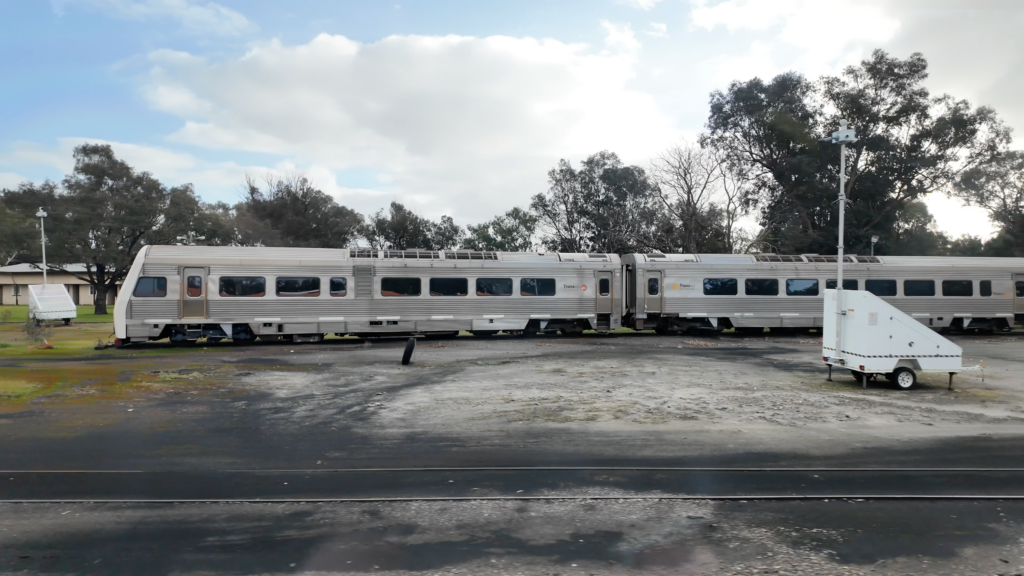
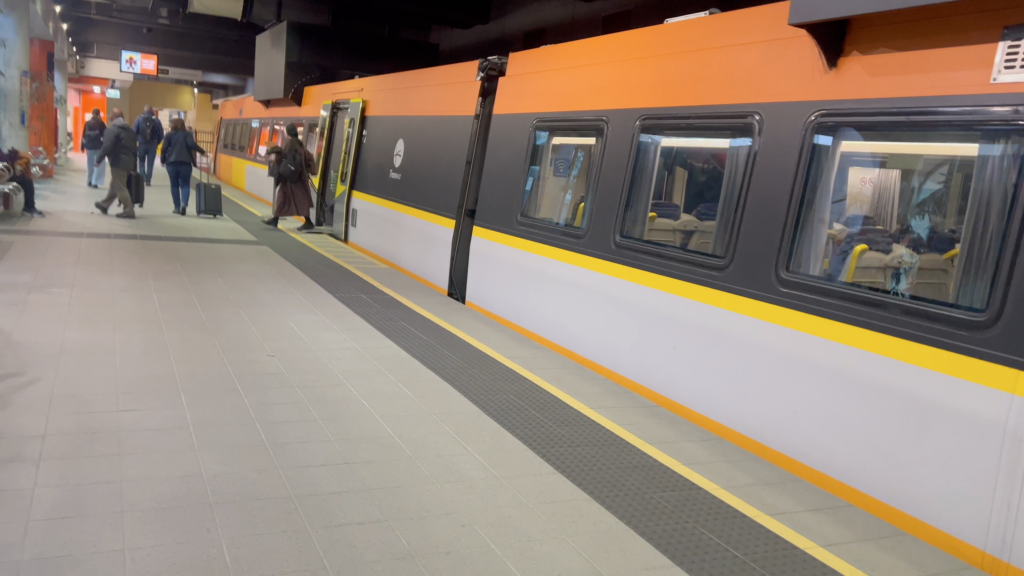
From a visual perspective, the new Australind is a tremendous success.
The exterior presents a modern identity for TransWA, while the interior feels bright, spacious and thoughtfully designed. Wide aisles, generous luggage storage, USB-C charging ports, LED reading lights, accessible toilets, wheelchair spaces and bicycle storage all reflect the expectations of modern travellers.
Compared with the ageing Australind railcars they replace, the difference is immediately obvious.
The ride quality is exceptionally smooth, noise levels are noticeably lower and the overall environment feels contemporary and welcoming.
It is also encouraging to see passenger rolling stock once again being assembled in Western Australia. Final assembly of the Australind fleet took place at Alstom’s Bellevue facility in Perth’s eastern suburbs, supporting local manufacturing capability while delivering trains specifically adapted for Western Australia’s regional railway network.
In many respects, the Australind finally provides the state with a regional train that looks every bit as modern as the rest of Perth’s expanding public transport network.
The C Series Legacy: A Divisive Design Philosophy
Despite those positives, the train’s design has generated considerable discussion among rail enthusiasts and regular passengers.
Rather than being developed as a completely bespoke regional train, the Australind is derived from Alstom’s C Series platform, the same family of trains introduced on Perth’s suburban rail network through METRONET. While TransWA’s version incorporates several important regional adaptations—including an onboard buffet, overhead luggage racks, bicycle storage, accessible facilities and fewer passenger doors—the foundations remain unmistakably suburban.
For some observers, this has been one of the project’s biggest criticisms.
Many had hoped Western Australia would receive a purpose-built intercity train designed specifically for journeys of two to three hours, rather than a modified suburban commuter train. Critics have argued that the C Series platform prioritises operational efficiency, accessibility and passenger capacity over the long-distance comfort expected of a regional railway.
Some of these concerns become understandable once onboard.
The seating, while modern in appearance, is noticeably firmer than many traditional regional trains. Legroom is adequate rather than generous, while the relatively high seat backs reduce sightlines through the carriage, making the cabin feel slightly more enclosed than older designs.
Personally, I didn’t find the seats uncomfortable during the two-and-a-half-hour journey to Perth, but I can certainly appreciate why some passengers have questioned whether a commuter-based platform was the ideal starting point for Western Australia’s flagship regional train.
Had the Australind been intended for significantly longer journeys, I suspect these criticisms would carry considerably more weight.
Manufacturing Debate and Project Delays
The new fleet has also attracted discussion regarding its manufacturing origins.
TransWA has rightly highlighted that the trains were assembled in Western Australia, creating skilled local jobs and helping re-establish passenger train manufacturing in the state.
However, some commentators have pointed out that the Australind is not an entirely Western Australian design.
Like many modern trains around the world, it utilises an internationally developed platform. Major systems including traction equipment, bogies, electrical components and much of the engineering originate from Alstom’s global supply chain before final assembly, testing and commissioning occur locally at Bellevue.
For most passengers, this distinction will make little practical difference.
Nevertheless, it has prompted debate among some members of the public over what truly constitutes a “locally built” train.
The project also endured a much longer delivery timeline than originally anticipated.
The trains were expected to enter passenger service several years earlier, but manufacturing challenges, infrastructure upgrades, testing requirements and delays associated with the wider METRONET program meant Western Australians waited considerably longer than expected.
During that time, the ageing Australind fleet remained in operation well beyond its intended replacement date, naturally increasing public expectations once the new trains finally entered service.
While those delays were undoubtedly frustrating, they should be viewed separately from the quality of the finished product itself.
Areas That Still Need Refinement
Although I was impressed overall, there remain several areas where I believe the passenger experience could be improved further.
The seats are perhaps the most obvious example.
They look attractive, are fitted with practical features such as USB-C charging and tray tables, and are perfectly acceptable for this journey length. However, they are noticeably firmer than I expected, with only moderate legroom compared with several other regional rail services around Australia.
Likewise, the onboard technology still appears to be maturing.
During my journey, I successfully connected to the complimentary Wi-Fi network but was unable to access the internet, while the onboard live journey tracker also failed to function correctly. Given how new these trains are, I suspect these are simply early software issues that will be addressed over time rather than long-term shortcomings.
Encouragingly, none of these criticisms significantly detracted from what remained a thoroughly enjoyable trip.
Outstanding Value for Money
One aspect that particularly impressed me was the overall value offered by the Australind.
My journey cost just $18.40 thanks to TransWA’s introductory promotional fares, representing exceptional value for a modern regional rail service. Even once standard fares apply, I believe the Australind remains competitively priced considering the quality of the rolling stock, onboard facilities and relaxed travel experience.
When compared with the cost of fuel, parking, vehicle maintenance and general wear associated with driving between Bunbury and Perth, the train presents an attractive alternative—particularly for regular travellers and those eligible for concession fares.
It also offers environmental benefits by encouraging greater use of public transport and reducing reliance on private vehicles along one of Western Australia’s busiest regional corridors.
Who Should Ride the Australind?
Following my first journey aboard the new fleet, I believe the Australind will appeal to a broad range of travellers.
Tourists visiting Western Australia can enjoy a relaxed introduction to the South West without hiring a car. Day-trippers from Perth gain convenient access to Bunbury and surrounding attractions, while commuters and regional residents benefit from a far more modern and accessible service than the one it replaces.
Naturally, rail enthusiasts will also want to experience one of Australia’s newest passenger trains and form their own opinions on its much-discussed design.
Final Thoughts
Overall, my first experience aboard TransWA’s ALL-NEW Australind left me genuinely impressed.
Yes, there are legitimate criticisms surrounding the C Series design philosophy, the relatively firm seating, the project’s lengthy delivery timeline and the early teething issues with onboard technology. Those discussions are valid and deserve acknowledgement.
However, it’s equally important not to lose sight of the bigger picture.
The new Australind represents the most significant investment in regional passenger rail in Western Australia for decades. It replaces an ageing fleet with trains that are cleaner, quieter, more accessible, better equipped and far more appealing to modern travellers.
Rather than asking whether the Australind is perfect, perhaps the more appropriate question is whether it is a significant improvement.
In my view, the answer is unquestionably yes.
While there is certainly room for refinement as the fleet matures, the new Australind provides a comfortable, dependable and thoroughly enjoyable way to travel between Bunbury and Perth.
For Western Australia, it marks the beginning of an exciting new chapter in regional rail travel.
Overall Rating: 8/10
The new TransWA Australind successfully modernises one of Australia’s most historic rail services. Although the commuter-derived design, firmer seating and early operational teething issues prevent it from being a truly outstanding regional train, the overall package represents a substantial improvement over its predecessor. With continued refinement, particularly to onboard technology and passenger comfort, the Australind has every opportunity to become one of Australia’s best regional rail experiences.
Disclaimer: This article has been repurposed from the original transcript of my own flight review on the Aussie JetSetter Youtube channel with the assistance of AI technologies. Please be advised whilst I have taken the utmost care to review and revise this article where necessary to reflect the upmost of accuracy at time of publication please be advised my reviews whether written or in video form are for entertainment and general information purposes only. They reflect the objective views in good faith of the person only whom is presenting them unless otherwise noted. Any decisions you make resulting from consuming my content must take into consideration your own circumstances, research and responsibility as I can not be hold responsible for any inaccuracies or future changes effecting the relativity of such reviews. All Rights Reserved by Aussie JetSetter from 2022 >


