





Introduction: A Journey Between Two Icons
Traveling along Australia’s east coast is a rite of passage for many. From vibrant cities to laid-back surf towns, this stretch offers a blend of urban sophistication and natural beauty that’s hard to match. One of the most popular routes connects Brisbane, the sunny capital of Queensland, with Byron Bay, a coastal haven known for its beaches, backpacker culture, and relaxed lifestyle.
This review explores a real-world coach journey between these two destinations using FlixBus, a major international bus operator that has only recently entered the Australian market. While FlixBus has built a strong reputation across Europe and North America, its early operations in Australia present a more nuanced experience—one that blends affordability with some notable growing pains.
Over the course of this in-depth review, we’ll examine every aspect of the journey: from departure at Brisbane’s main transport hub to arrival in Byron Bay, including onboard comfort, punctuality, value for money, and how FlixBus compares to established Australian coach operators.
Departure Point: Roma Street Transport Hub
The journey begins in central Brisbane, at the city’s primary long-distance transport interchange: Roma Street Railway Station.
A Major Gateway
Roma Street is more than just a train station—it’s a critical hub connecting Queensland’s rail and coach networks. Long-distance services depart from here to destinations across the state and beyond, including routes operated by Queensland Rail and interstate connections via NSW TrainLink.
Adjacent to the station lies the Brisbane Coach Terminal, a relatively modern facility that replaced the older transit center in 2019. It serves a variety of coach companies, including Greyhound Australia and Murrays Coaches, alongside the newer entrant FlixBus.
First Impressions: Modern but Flawed
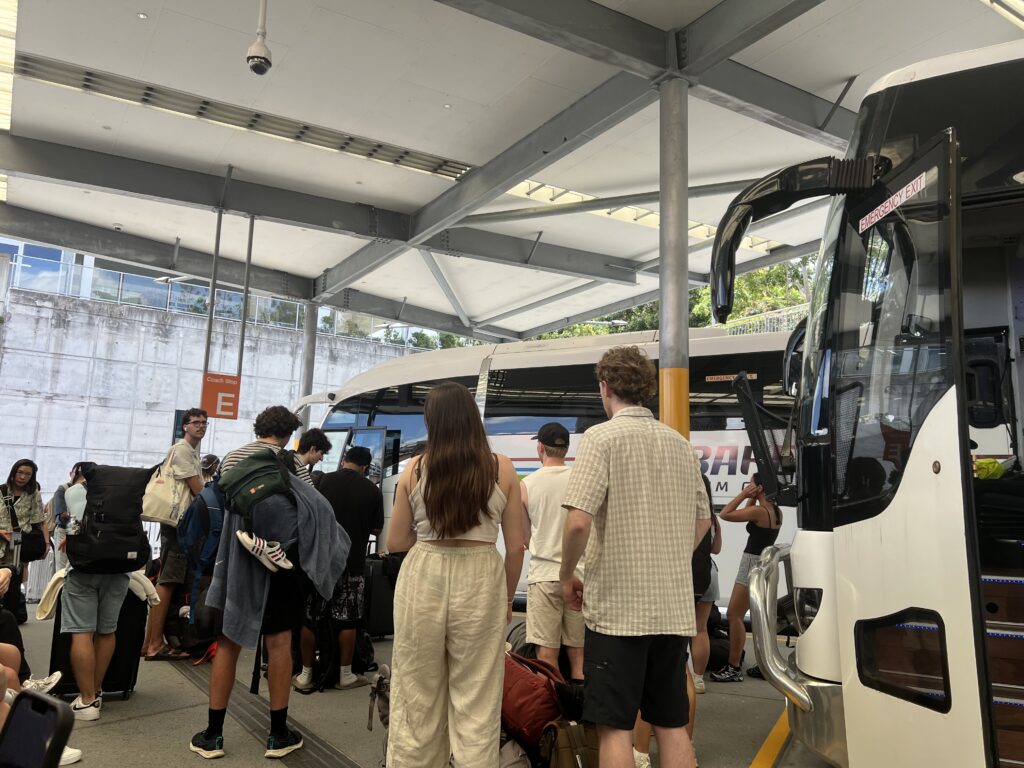
While the terminal is clean and contemporary, it leaves something to be desired in terms of passenger comfort. Its open-air design—arguably intended to suit Brisbane’s subtropical climate—can quickly become uncomfortable in the city’s heat, humidity, or sudden storms.
Amenities are minimal. Aside from basic restroom facilities and a handful of ticket counters, there’s little to occupy passengers during long waits. For a major transport hub handling millions of यात्रers annually, the lack of seating, food options, and shelter feels like a missed opportunity.
Booking and Pricing: A Strong Start
One area where FlixBus excels is pricing.
The journey from Brisbane to Byron Bay cost just under $30 AUD, including a small seat selection fee. This positions FlixBus as one of the most affordable options on the route, undercutting many competitors.
For budget-conscious travelers—particularly backpackers or students—this is a major advantage. Even when factoring in potential drawbacks, the low fare creates a compelling value proposition.
The Waiting Game: Delays and Communication Issues
Unfortunately, the positive momentum from booking quickly fades at the terminal.
Late Arrival, No Updates
The coach arrived approximately 30–40 minutes behind schedule. While delays themselves are not unusual in long-distance travel, the real issue was the complete lack of communication.
Passengers were left waiting with:
- No announcements
- No updated departure boards
- No staff assistance
- A non-functional live tracking feature
This created unnecessary frustration. One of the most basic expectations in modern travel is real-time information—especially when plans change.
Without updates, passengers are left in limbo, unsure whether to wait, leave, or make alternative arrangements. This is an area where FlixBus must improve significantly to compete with more established operators.
Boarding Experience: Not Quite What Was Promised
When the bus finally arrived, another issue became immediately apparent.
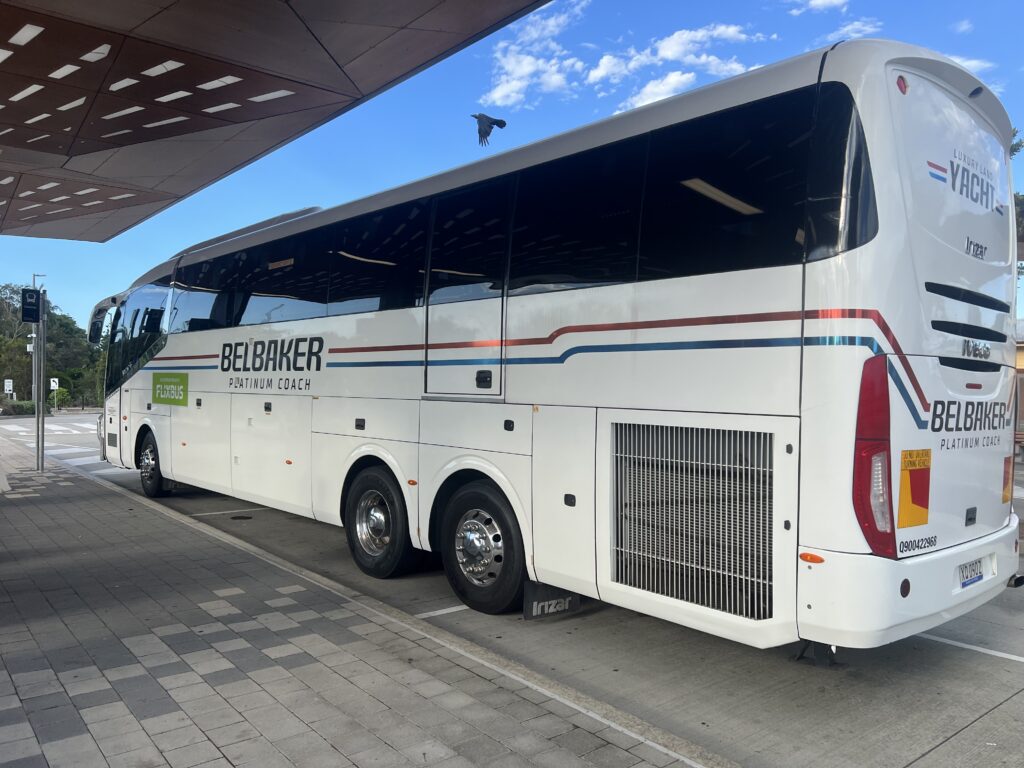
A Contracted Coach, Not a FlixBus
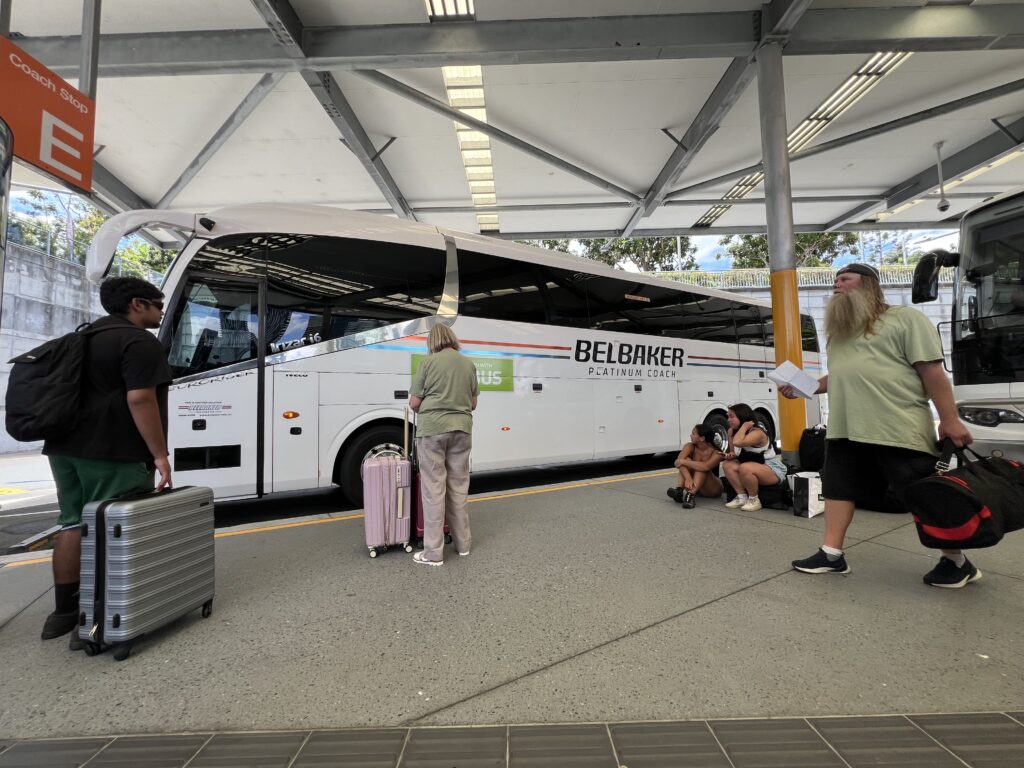
Instead of the signature bright green FlixBus vehicle, the service was operated by a third-party contractor.
This distinction matters more than it might seem. FlixBus markets a consistent global standard—modern coaches equipped with Wi-Fi, power outlets, spacious seating, and onboard amenities. However, contracted vehicles often fall short of these expectations.
Onboard Experience: Comfort Falls Short
Seating and Space
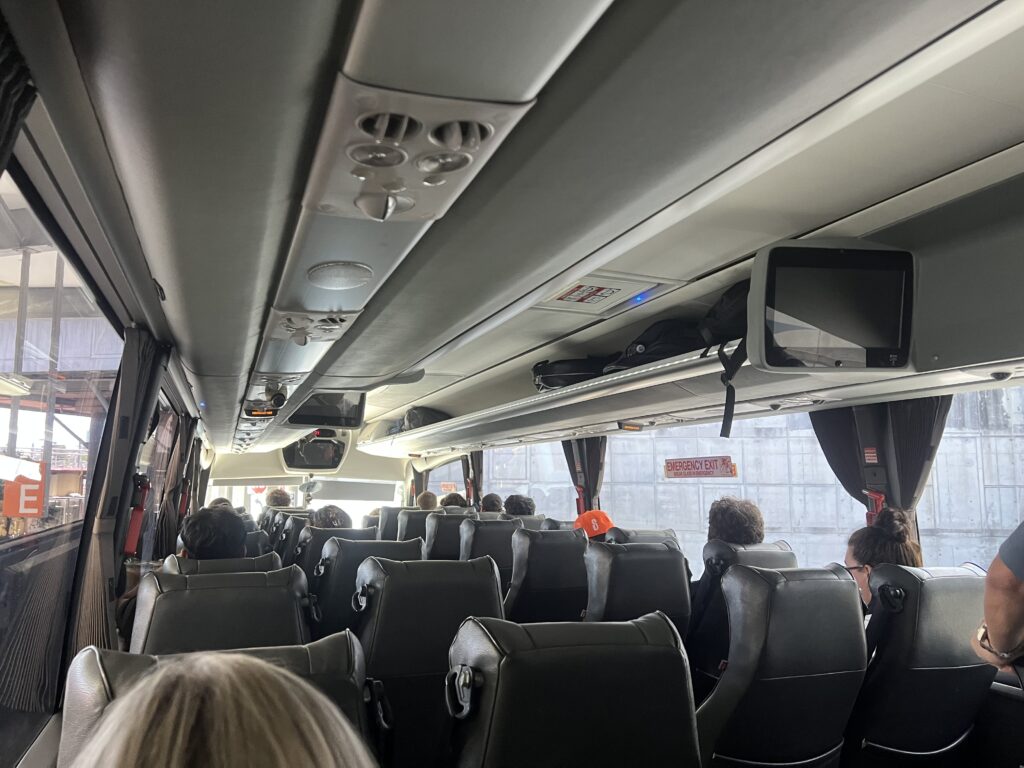
The coach featured black leather seats with basic reclining capability and footrests. At first glance, this seems acceptable—but the reality quickly becomes less comfortable.
Legroom was extremely limited—among the tightest experienced on any coach service. For a short journey, this is tolerable. For longer trips (this service continues to Sydney, taking over 16 hours), it would be a serious issue.
Missing Amenities
Key features commonly associated with FlixBus were absent:
- No Wi-Fi
- No charging ports
- No tray tables
- Limited personal space
These omissions significantly impact the travel experience, especially for passengers expecting to work, relax, or use devices during the journey.
Comparison to Competitors
In comparison, operators like Greyhound Australia and Murrays Coaches typically offer more consistent onboard standards. Even if their prices are slightly higher, the added comfort and reliability can justify the cost—particularly for longer trips.

The Journey: Scenic but Slow
Once underway, the route itself offers plenty to enjoy.
Southbound from Brisbane
The journey heads south along the Pacific Motorway, passing through the urban sprawl of Brisbane before entering the Gold Coast region, including Gold Coast—a stretch known for its high-rise skyline and surf beaches.
From there, the route continues toward the New South Wales border, passing near Gold Coast Airport before entering the lush Northern Rivers region.
Natural Beauty
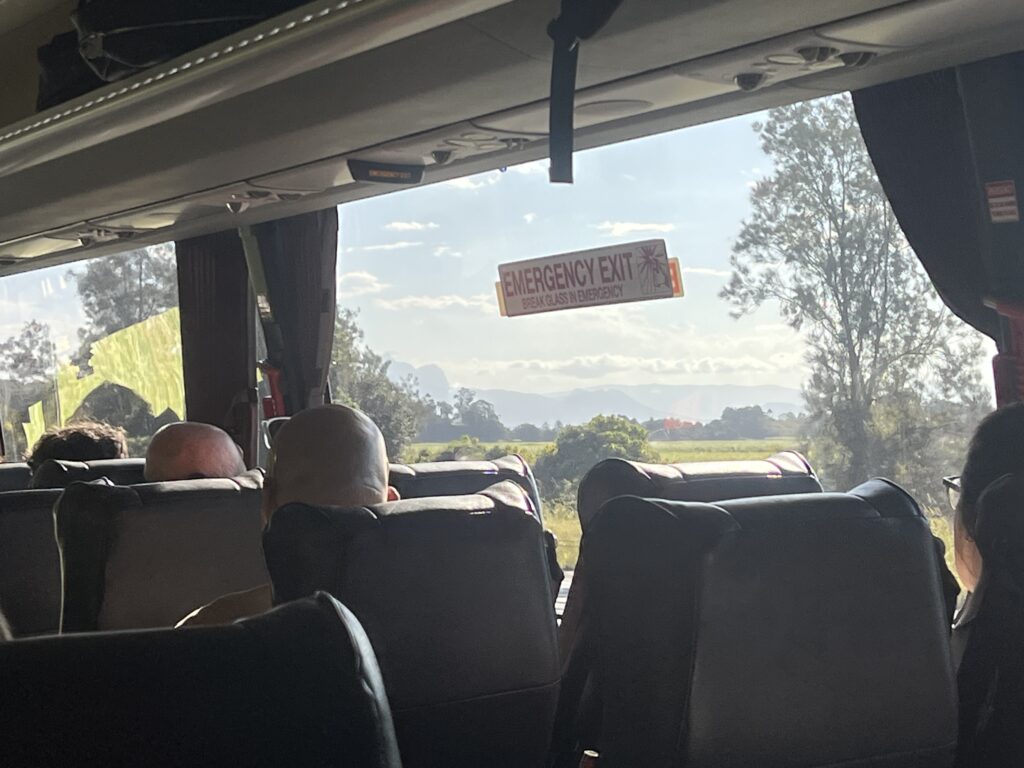
As the scenery transitions from city to countryside, passengers are treated to:
- Rolling green hills
- Subtropical forests
- Coastal views
This part of the journey is genuinely enjoyable and highlights the appeal of overland travel.
Traffic Challenges
However, the trip was significantly slowed by heavy traffic, particularly between Brisbane and the Gold Coast. What is typically a 3-hour journey stretched closer to 4.5 hours.
While this wasn’t the operator’s fault, it underscores the importance of building buffer time into travel plans—especially during peak periods or long weekends.
Arrival: Byron Bay
Eventually, the coach arrives in Byron Bay, one of Australia’s most iconic destinations.
Known for its beaches, surf culture, and relaxed atmosphere, Byron Bay attracts visitors from around the world. Nearby Cape Byron marks the easternmost point of mainland Australia, adding to the town’s appeal.
Despite the delays and onboard shortcomings, arriving in Byron Bay still feels rewarding—thanks largely to the destination itself.
Final Verdict: A Mixed First Impression
The Positives
- Excellent pricing: Among the cheapest options available
- Extensive network potential: Promising routes across Australia
- Scenic journey: Beautiful coastal and hinterland views
The Negatives
- Poor communication during delays
- Inconsistent onboard experience due to contracted buses
- Lack of amenities compared to advertised standards
- Tight seating and limited comfort
Should You Travel with FlixBus in Australia?
The answer depends on your priorities.
Good Choice If:
- You’re traveling on a budget
- The journey is relatively short (under 4 hours)
- You’re flexible and tolerant of minor inconveniences
Consider Alternatives If:
- You’re taking a long-distance or overnight trip
- Comfort and reliability are important
- You expect consistent onboard amenities
Looking Ahead: Growth Potential
It’s important to remember that FlixBus is still in its early stages in Australia. Many of the issues observed—particularly the reliance on contracted coaches—are likely temporary.
As the company expands its fleet and infrastructure, there’s strong potential for improvement. Globally, FlixBus has demonstrated its ability to deliver high-quality, affordable travel. If it can replicate that model locally, it could become a major player in the Australian transport market.
Conclusion
This Brisbane to Byron Bay journey highlights both the promise and the challenges of FlixBus’s Australian operations.
On one hand, the low fares and ambitious network are exciting developments for travelers. On the other, inconsistent service delivery and communication issues currently hold the experience back.
For now, FlixBus is best suited to short, budget-friendly trips—while more established operators remain the safer choice for longer journeys.
Still, with time and investment, FlixBus could reshape coach travel in Australia. And if that happens, routes like Brisbane to Byron Bay may become not just affordable—but genuinely enjoyable from start to finish.
Disclaimer: This article has been repurposed from the original transcript of my own flight review on the Aussie JetSetter Youtube channel with the assistance of AI technologies. Please be advised whilst I have taken the utmost care to review and revise this article where necessary to reflect the upmost of accuracy at time of publication please be advised my reviews whether written or in video form are for entertainment and general information purposes only. They reflect the objective views in good faith of the person only whom is presenting them unless otherwise noted. Any decisions you make resulting from consuming my content must take into consideration your own circumstances, research and responsibility as I can not be hold responsible for any inaccuracies or future changes effecting the relativity of such reviews. All Rights Reserved by Aussie JetSetter from 2022 >


