




For many Australians, few travel experiences feel as iconic as boarding the Spirit of Tasmania and crossing Bass Strait toward the island state of Tasmania. More than simply a ferry service, the Spirit of Tasmania represents adventure, freedom, and one of the most unique transport experiences in the country. Connecting mainland Australia with Tasmania, this legendary overnight and daytime passenger ferry has become an essential gateway for tourists, locals, caravan travellers, road trippers, and freight operators alike.
After years of hearing about the experience, it was finally time to board the Spirit of Tasmania for a full review sailing between Geelong in Victoria and Devonport in Tasmania. What followed was an unexpectedly enjoyable 10.5-hour voyage packed with surprisingly comfortable cabins, scenic ocean views, live entertainment, decent food, and a relaxing atmosphere that felt more like a mini cruise than simply a transport connection.
This comprehensive review covers every aspect of the Spirit of Tasmania experience, including check-in, terminal facilities, boarding, cabin quality, onboard dining, entertainment, pricing, comfort levels, and overall value for money.
What Is the Spirit of Tasmania?
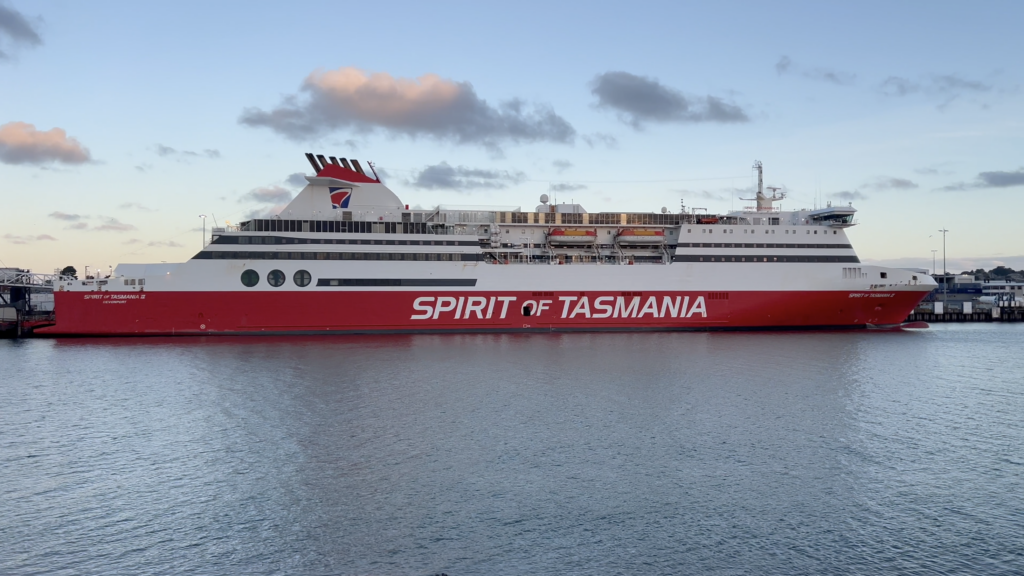
The Spirit of Tasmania is Australia’s only true long-distance passenger ferry service. Operated by TT-Line, the route connects Geelong in Victoria with Devonport on Tasmania’s northern coastline across the often unpredictable waters of Bass Strait.
The crossing covers approximately 448 kilometres and generally takes between 9 and 11 hours depending on weather conditions and sea state. The service carries passengers, vehicles, trucks, caravans, motorhomes, motorcycles, and freight, making it one of Australia’s most important transport links.
Unlike shorter ferry services elsewhere in Australia, the Spirit of Tasmania feels much more substantial. With multiple passenger decks, cabins, restaurants, lounges, bars, entertainment spaces, cinemas, and onboard shopping, the experience resembles a small cruise ship more than a simple ferry.
Most sailings operate overnight, although select daytime crossings are available during peak travel periods and summer months.
Departing From Geelong
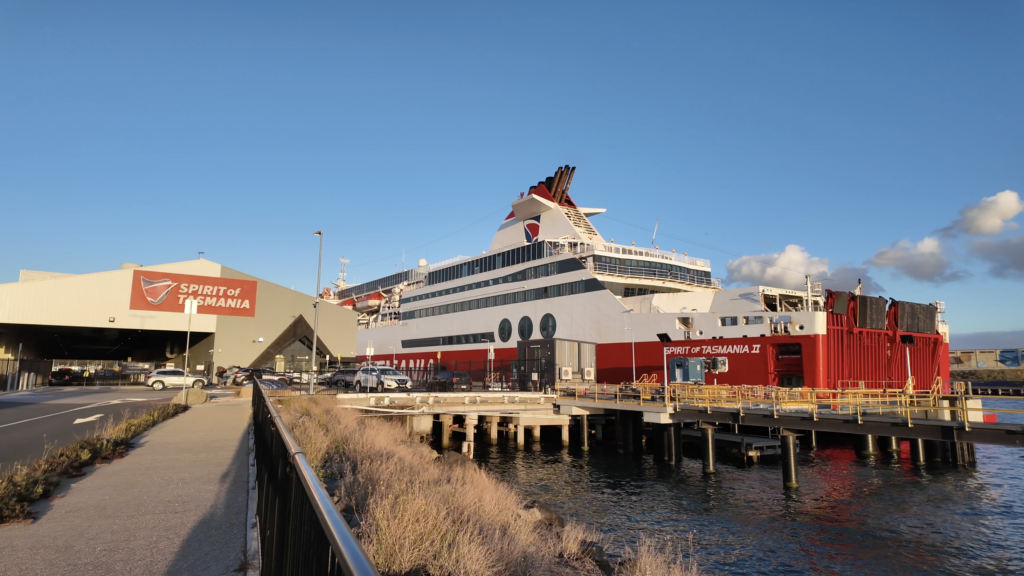
The journey begins in the major Victorian port city of Geelong, located approximately 75 kilometres southwest of Melbourne. Geelong itself is Victoria’s second-largest city and home to one of Australia’s busiest regional ports.
The Spirit of Tasmania now operates from a purpose-built terminal facility at Corio Quay in Geelong following its relocation from Port Melbourne in 2022. The modern terminal was specifically designed to improve efficiency, passenger flow, and vehicle operations while supporting future growth in Tasmania tourism.
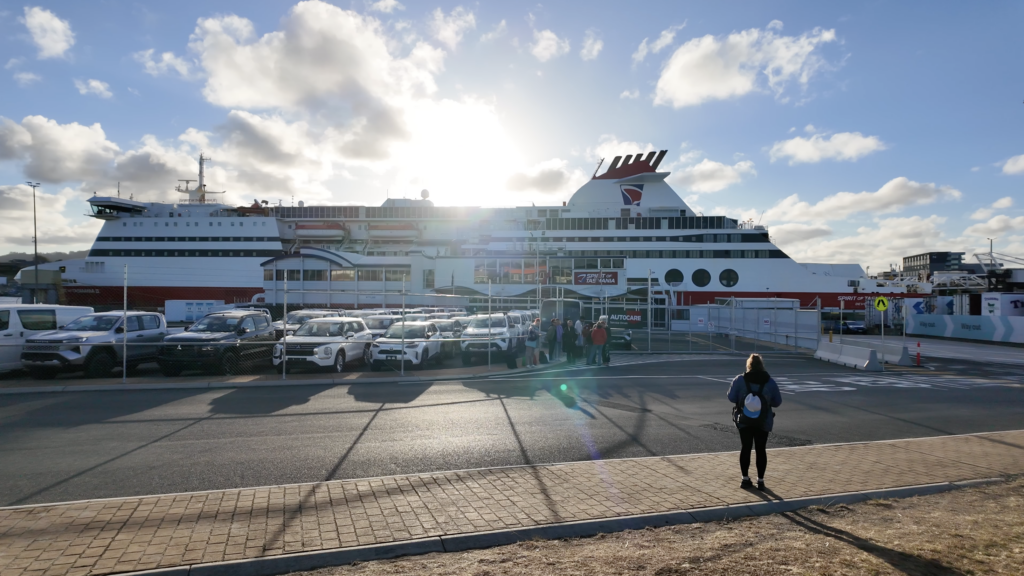
Arriving at the terminal early in the morning immediately creates a sense of anticipation. Even before boarding, the sheer size of the Spirit of Tasmania dominates the skyline. Seeing the enormous vessel docked beside the industrial port environment highlights just how significant this ferry service is for both passengers and freight movement between Tasmania and mainland Australia.
The morning of departure was unusually cold for summer, with temperatures sitting around 9 degrees Celsius. Despite the chilly conditions, excitement quickly outweighed any discomfort.
Spirit of Tasmania Ticket Prices and Value
One of the most surprising aspects of the trip was the excellent value offered by the daytime sailing fare.
Originally, the plan had been to travel on an overnight crossing, which would have cost close to AUD $500 including cabin accommodation. However, a special daytime sailing fare became available for just AUD $50.
Even more impressive was the heavily discounted cabin pricing. A private twin porthole cabin cost an additional AUD $100, bringing the total journey cost to only AUD $150.
Considering the length of the voyage, onboard facilities, private ensuite cabin, and overall experience, this represented outstanding value for money.
For travellers who can secure these daytime specials, the Spirit of Tasmania becomes one of Australia’s best-value travel experiences.
Spirit of Tasmania Terminal Review
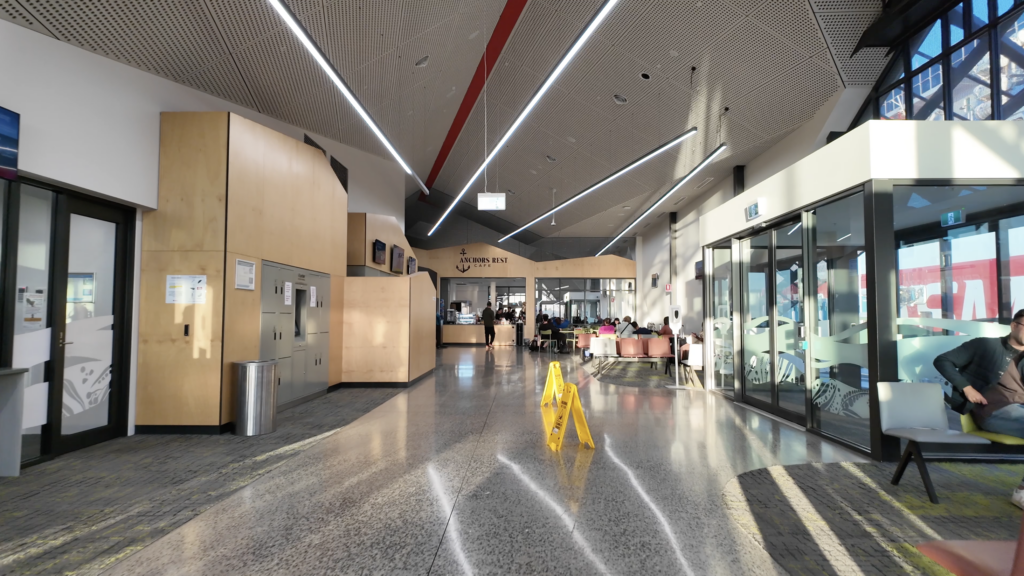
The Geelong passenger terminal itself is modern, compact, and functional. Check-in for foot passengers remains refreshingly traditional, with friendly staff handling the process manually rather than relying entirely on self-service kiosks.
Passengers simply present their booking confirmation and identification before proceeding through security screening.
Inside the terminal, facilities include comfortable waiting areas, a café, luggage lockers, seating areas, and a small children’s play zone. Model ships displayed inside the terminal also add a nice maritime touch to the atmosphere.
Security and biosecurity screening are notably thorough, particularly because Tasmania maintains strict controls designed to protect the island’s agricultural industries and environment.
Passengers travelling with vehicles should expect comprehensive inspections for prohibited items, including fruits, vegetables, plant materials, and soil contamination. Even foot passengers experience significant screening procedures.
In this case, carry-on luggage was manually inspected in considerable detail, making it one of the most comprehensive ferry security experiences encountered in Australia.
Although time-consuming, the strict procedures reflect Tasmania’s strong commitment to preserving its unique ecosystem.
Boarding the Spirit of Tasmania
Boarding begins approximately one hour before departure and involves a surprisingly long walk through the ferry access bridge before reaching the ship itself.
Once onboard, passengers ascend several escalators leading to Deck 7, which serves as the primary passenger deck. First impressions are immediately positive.
The vessel feels spacious, clean, and modern, with wide corridors and a relaxed atmosphere throughout the public areas.
Several key facilities are located directly on Deck 7, including:
- The Tourism Hub
- Concierge reception
- Pantry convenience store
- Main dining spaces
- Bar areas
- Cabin corridors
Passenger boarding cards also function as cabin keycards, simplifying access throughout the journey.
Twin Porthole Cabin Review
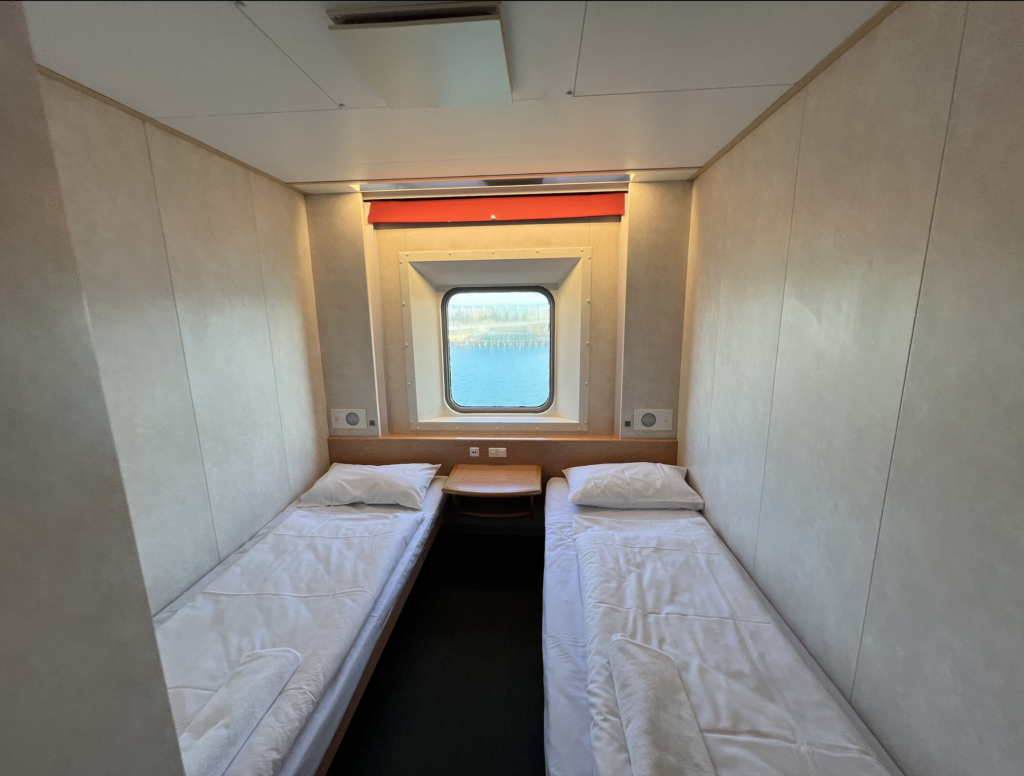
The highlight of the voyage was undoubtedly the private twin porthole cabin.
Located on Deck 7, the cabin exceeded expectations in nearly every area. Unlike many promotional photos that exaggerate cabin size, this room actually felt larger in person.
The cabin included:
- Two single beds
- Private ensuite bathroom
- Desk and chair
- Mirror
- Storage hooks
- Heating and air conditioning controls
- Bedside lighting
- Power outlets
- Porthole window
- Privacy blinds
Most importantly, the cabin provided genuine privacy and a quiet retreat from the public areas of the ship.
The ensuite bathroom was basic but surprisingly functional. It featured a toilet, sink, mirror, shower, toiletries, and enough space to comfortably prepare for the remainder of the journey.
For a ferry cabin in the middle of Bass Strait, the overall quality was genuinely impressive.
The shower pressure was understandably moderate due to the vessel environment, but still perfectly acceptable. Even during rougher sections of the crossing, the bathroom remained usable and safe.
The beds initially appeared somewhat thin and basic, yet they proved more comfortable than expected. Combined with the blackout blinds and quiet environment, getting several hours of rest during the daytime crossing became entirely possible.
For travellers arriving tired after an early morning departure or lengthy drive, booking a cabin is highly recommended even on daytime sailings.
Sailing Across Bass Strait
One of the most fascinating aspects of the voyage is experiencing the gradual transition from Port Phillip Bay into Bass Strait itself.
The first few hours remain relatively calm while navigating out of Victoria’s protected waters. Mobile phone reception also remains surprisingly strong for quite some time after departure.
Eventually, however, the vessel enters Bass Strait proper.
Bass Strait is widely regarded as one of the roughest stretches of water in the world due to its unique geography and rapidly changing weather conditions. Even on a relatively calm summer day, noticeable movement becomes constant throughout the ship.
The Spirit of Tasmania handled the conditions extremely well overall. While occasional rolling and vibration were certainly noticeable, the vessel always felt stable and secure.
Passengers prone to seasickness should still consider taking precautions, particularly during winter sailings or stormier conditions.
On this particular crossing, conditions remained relatively smooth by Bass Strait standards.
Food and Dining Review
Dining onboard the Spirit of Tasmania is considerably better than many travellers might expect.
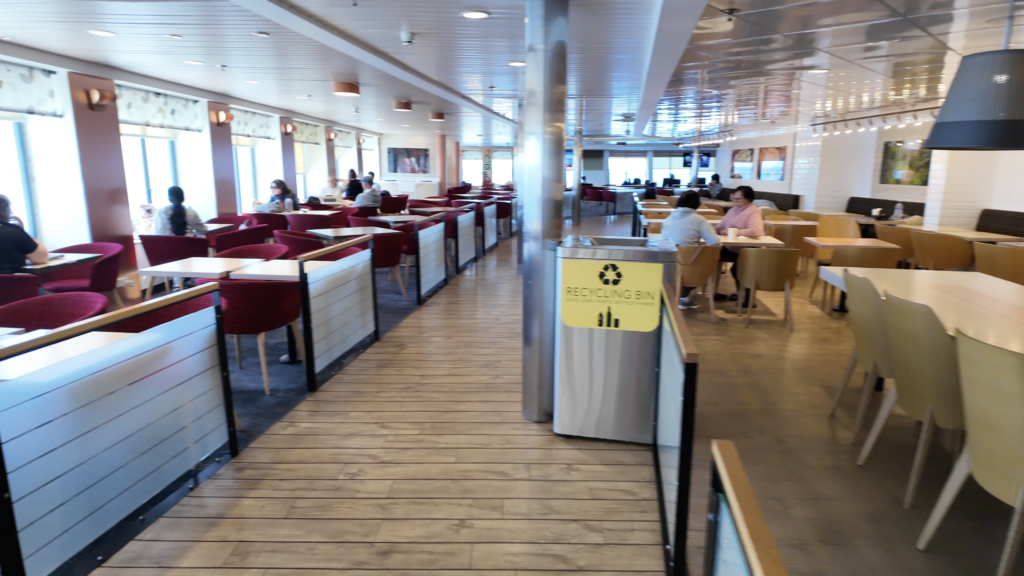
The ship offers multiple food outlets spread across various decks, ranging from buffet-style dining to bars and snack counters.
Breakfast options during the morning departure were somewhat limited, consisting mainly of croissants, toasted sandwiches, pastries, pies, and grab-and-go items.
Lunch and afternoon offerings proved much stronger.
The main dining venue onboard is Tasmania Market Kitchen, commonly referred to as TMK. This self-service dining area acts as the ferry’s primary restaurant space and includes extensive seating areas suitable for individuals, families, and larger groups.
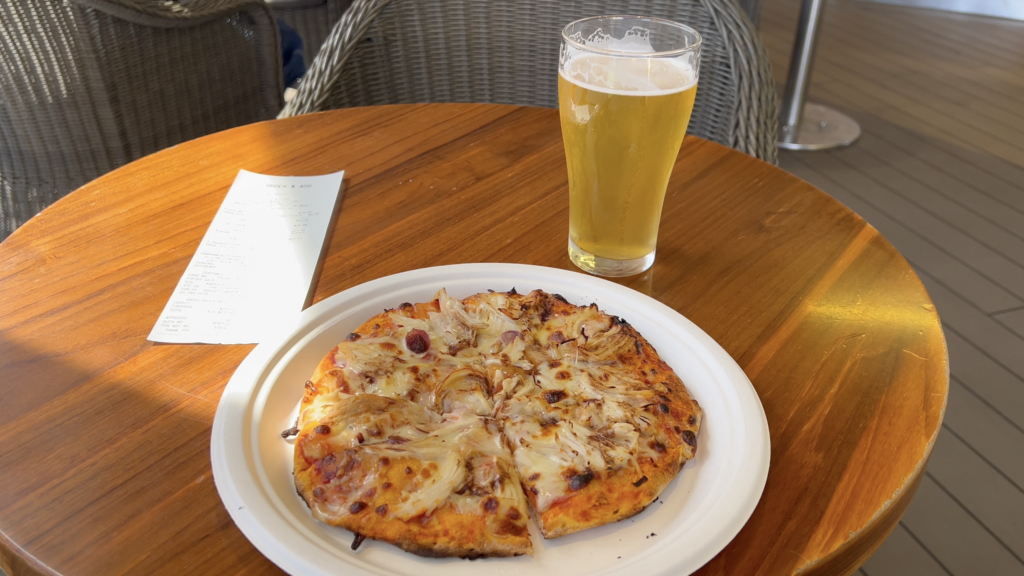
Later in the voyage, a barbecue chicken pizza was ordered from the Top Deck Lounge for AUD $14 alongside a Tasmanian beer priced at AUD $9.50.
Given Australia’s current cost-of-living environment, these prices felt surprisingly reasonable.
The pizza itself was tasty, filling, and perfectly adequate for ferry dining standards. While it likely originated from frozen preparation, the quality exceeded expectations.
The Tasmanian beer selection was another highlight. Sampling local Tasmanian beverages while crossing Bass Strait adds authenticity to the overall travel experience.
Bars and Atmosphere
The onboard atmosphere evolves throughout the day as passengers settle into the voyage.
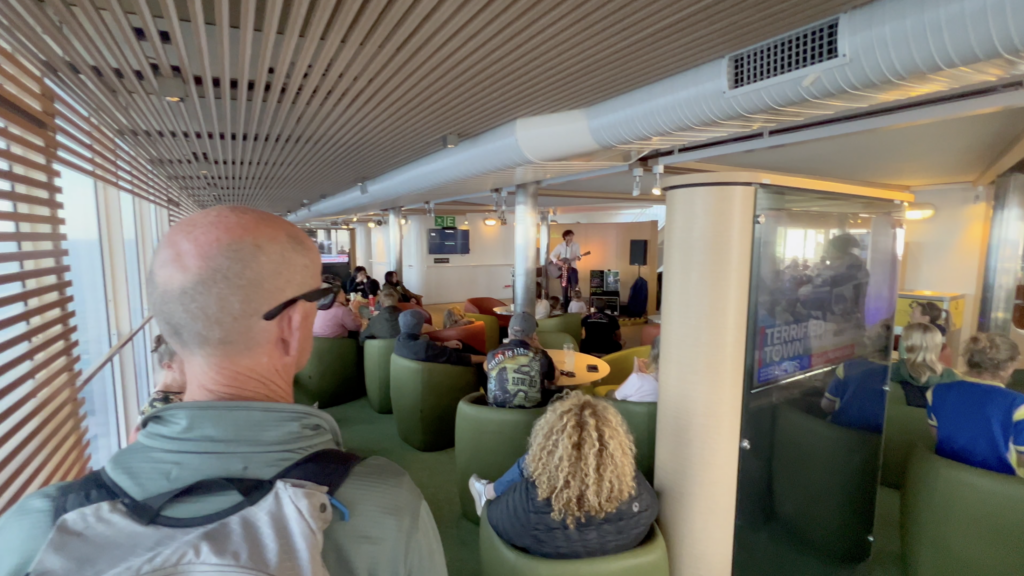
Deck 7’s Bar 7 provides a comfortable lounge-style setting ideal for socialising or relaxing with a drink. Deck 9’s Terrace Lounge offers a more lively environment featuring live music performances and ocean views.
As the afternoon progressed, the atmosphere became increasingly enjoyable. Passengers relaxed with drinks, watched television coverage of sporting events, and enjoyed the social atmosphere that naturally develops during long sea crossings.
Unlike airports or cramped public transport experiences, the Spirit of Tasmania encourages passengers to slow down and actually enjoy the journey itself.
Entertainment Onboard
Entertainment options onboard the Spirit of Tasmania are surprisingly extensive.
Public areas throughout the ship feature televisions broadcasting Australian free-to-air channels, sports coverage, and news programming.
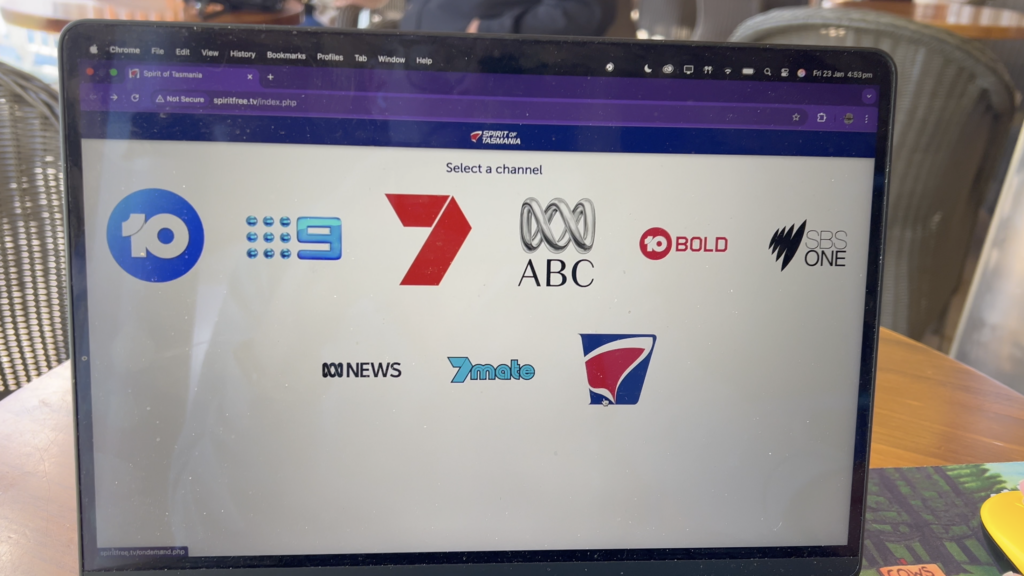
Passengers can also access the Spirit of Tasmania entertainment streaming platform through onboard Wi-Fi in public areas. This system allows travellers to stream selected entertainment content and live television directly to personal devices.
The service worked reasonably well throughout the crossing, particularly considering the vessel’s remote offshore location.
The Australian Open tennis coverage proved especially popular during this voyage.
In addition to digital entertainment, the ferry includes:
- Two onboard cinemas
- Gaming arcades
- Children’s play areas
- Live music performances
- Observation lounges
- Outdoor viewing decks
The live music sessions onboard were arguably the strongest entertainment feature of the entire crossing.
Performed during the late afternoon and early evening, the live band created an energetic and enjoyable atmosphere that significantly enhanced the experience. Watching Tasmania gradually appear on the horizon while live music played nearby genuinely felt memorable.
Exploring the Passenger Decks
The Spirit of Tasmania contains 10 total decks, although passengers primarily access Decks 7 through 10.
Deck 7 serves as the operational heart of the passenger experience, containing cabins, bars, dining spaces, reception, tourism services, and retail facilities.
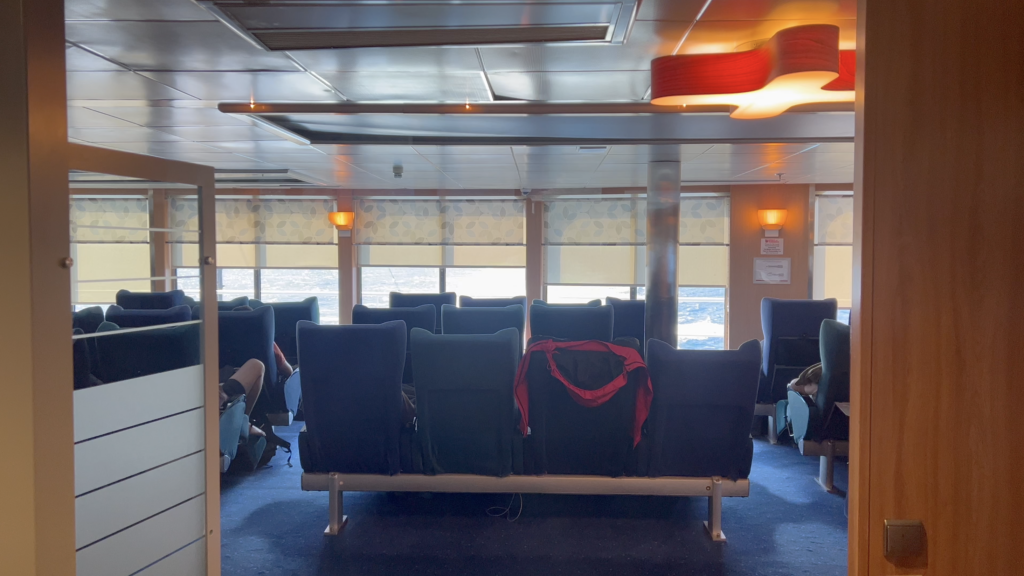
Deck 8 contains additional cabins and the recliner lounge. Recliner seating is available for passengers who prefer a quieter resting space without booking a full cabin.
Deck 9 focuses more heavily on relaxation and entertainment. This area contains the Terrace Lounge, gaming areas, live entertainment spaces, and outdoor viewing decks.
Deck 10 offers some of the best panoramic ocean views onboard along with additional lounge spaces, snack counters, children’s entertainment areas, and open observation spaces.
Walking throughout the ship reveals just how large the vessel truly is. The ferry feels spacious enough that passengers rarely experience overcrowding, even during busy sailings.
Wi-Fi and Connectivity
Internet connectivity onboard remains one of the more mixed aspects of the experience.
The Spirit of Tasmania provides Wi-Fi and onboard streaming services, but access is generally restricted to public areas rather than cabins.
While understandable given offshore technical limitations, cabin connectivity would certainly improve the passenger experience in future upgrades.
That said, mobile reception surprisingly remains available for several hours after departure from Geelong before eventually disappearing deeper into Bass Strait.
For many travellers, however, losing mobile connectivity actually enhances the experience by encouraging relaxation and disconnection from everyday routines.
Arrival Into Devonport
After approximately 10.5 hours at sea, the coastline of Tasmania finally appears on the horizon.
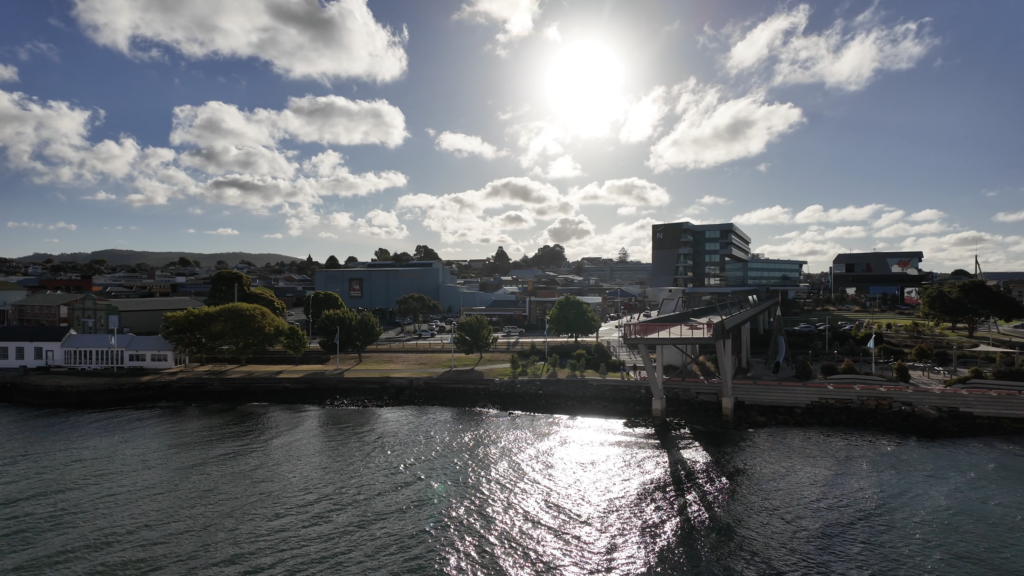
The approach into Devonport during the evening light creates a genuinely exciting moment, particularly for first-time visitors to Tasmania.
Devonport serves as Tasmania’s primary maritime gateway and welcomes more than 450,000 ferry passengers annually. Located on Tasmania’s northwestern coast at the mouth of the Mersey River, the city acts as the main entry point for travellers arriving from mainland Australia.
As the ferry docks, passengers gather along the viewing decks to watch arrival procedures unfold before eventually disembarking.
Foot passengers generally remain onboard slightly longer while vehicle traffic exits first.
Despite the long journey, arrival procedures proved organised and efficient.
Is the Spirit of Tasmania Worth It?
After completing the full crossing experience, the answer is unquestionably yes.
The Spirit of Tasmania delivers far more than simple transportation between Victoria and Tasmania. Instead, it offers a genuinely memorable travel experience that transforms the journey itself into part of the adventure.
Key strengths include:
- Excellent value for money
- Comfortable private cabins
- Scenic ocean views
- Relaxed atmosphere
- Good onboard facilities
- Reasonably priced food and drinks
- Live entertainment
- Smooth boarding procedures
- Friendly environment
Even the rougher sections of Bass Strait contribute to the authenticity of the experience rather than detracting from it.
For road trippers, caravan travellers, families, aviation enthusiasts, transport fans, or anyone seeking a unique Australian travel experience, the Spirit of Tasmania is absolutely worth considering.
Final Verdict: Spirit of Tasmania Review
The Spirit of Tasmania successfully combines practicality with enjoyment in a way few transport experiences achieve.
Rather than simply enduring a long journey, passengers are encouraged to relax, explore, socialise, eat well, enjoy entertainment, and appreciate the transition between mainland Australia and Tasmania.
The daytime sailing proved especially enjoyable thanks to excellent weather conditions, discounted pricing, and the flexibility to fully explore the vessel during daylight hours.
The twin porthole cabin represented exceptional value and significantly improved overall comfort levels throughout the crossing.
Although reaching the Geelong terminal via public transport proved somewhat challenging due to train disruptions, once onboard the experience became smooth, enjoyable, and highly memorable.
For travellers considering whether to fly or sail to Tasmania, the Spirit of Tasmania offers something flights simply cannot replicate: the experience of the journey itself.
From the first glimpse of the massive vessel in Geelong to the final arrival into Devonport after sunset, the Spirit of Tasmania delivers one of Australia’s most iconic travel adventures.
Disclaimer: This article has been repurposed from the original transcript of my own flight review on the Aussie JetSetter Youtube channel with the assistance of AI technologies. Please be advised whilst I have taken the utmost care to review and revise this article where necessary to reflect the upmost of accuracy at time of publication please be advised my reviews whether written or in video form are for entertainment and general information purposes only. They reflect the objective views in good faith of the person only whom is presenting them unless otherwise noted. Any decisions you make resulting from consuming my content must take into consideration your own circumstances, research and responsibility as I can not be hold responsible for any inaccuracies or future changes effecting the relativity of such reviews. All Rights Reserved by Aussie JetSetter from 2022 >