





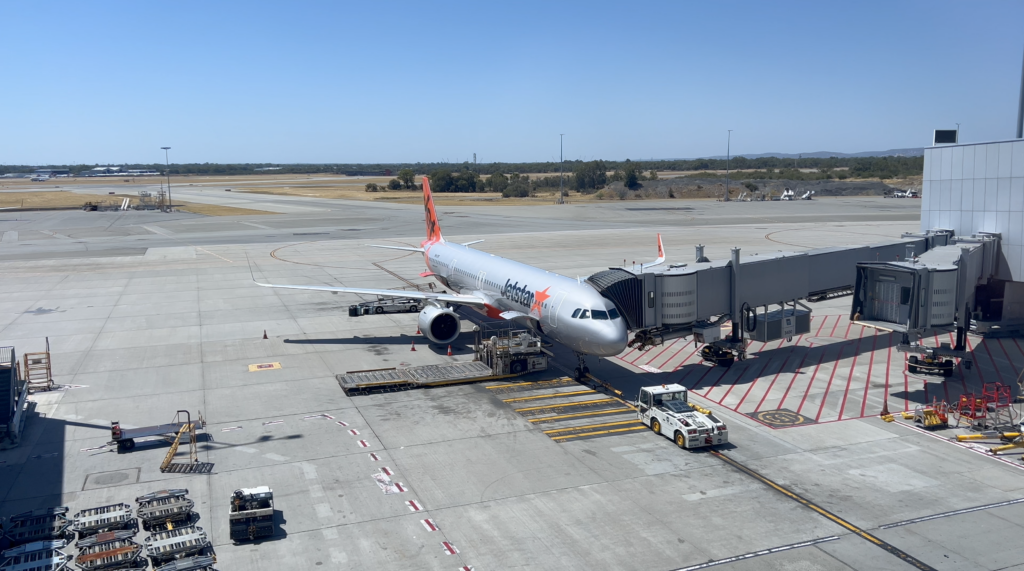
There are flight reviews, and then there are aviation curiosities that blur the lines between domestic and international travel. Jetstar’s JQ111 service from Denpasar to Adelaide via Perth sits firmly in the latter category. On paper, it is a straightforward three-times-weekly international rotation linking Bali with South Australia. In practice, however, it presents one of the most unusual booking opportunities in Australian aviation: the ability to board an “international” flight halfway through its journey and fly purely domestically between Perth and Adelaide — all while departing from an international terminal.
This is the story of gatecrashing Jetstar’s Bali–Adelaide service from Perth, navigating immigration for a domestic flight, and assessing whether this unique routing is merely an operational loophole or genuinely good value travel across Australia.
Understanding the Strategy Behind Bali–Adelaide via Perth
At first glance, a routing from Bali to Adelaide via Perth might seem inefficient. After all, both Bali–Adelaide and Perth–Adelaide are well-established routes in their own right. Why combine them?
The answer lies in aviation economics and international flight caps. Airlines frequently operate indirect tag services not because they expect heavy demand for the entire end-to-end journey, but because the routing allows them to strategically increase frequency on a high-demand sector. In this case, Bali is the prize.
Perth–Bali is one of Australia’s most popular short-haul international corridors. By operating Denpasar to Adelaide via Perth, Jetstar can effectively add another Bali–Perth frequency under the umbrella of a longer international service. The Adelaide extension becomes both a continuation and a compliance tool within regulatory frameworks governing airport capacity and bilateral agreements.
As an Australian airline owned by the Qantas Group, Jetstar has the right to sell domestic sectors on international services within Australia. That means the Perth–Adelaide leg of JQ111 can be booked independently, even though the aircraft originates in Indonesia and departs from Perth’s international terminal.
It is this operational nuance that makes the flight so intriguing.
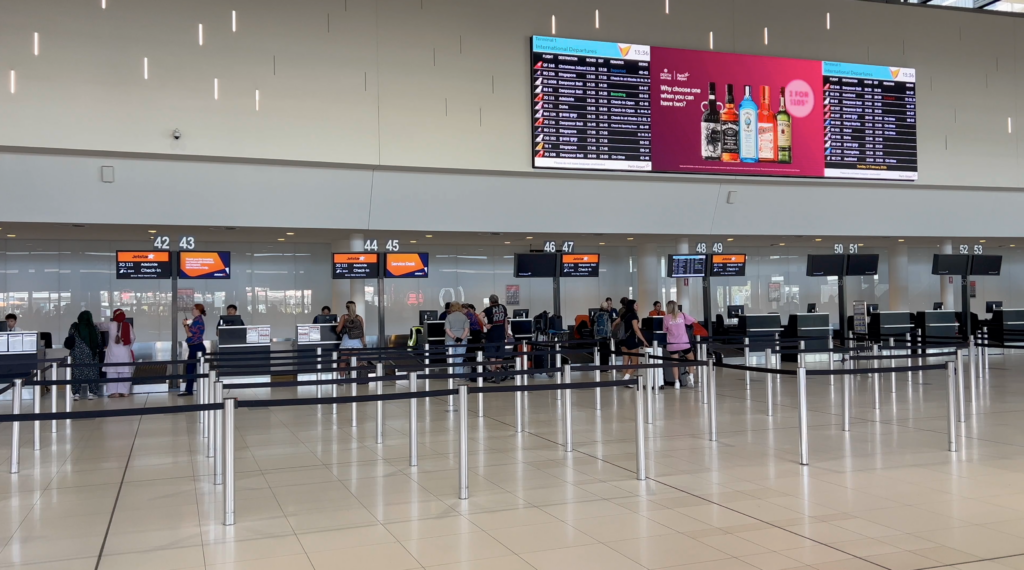
Departing from Perth International — For a Domestic Flight
The journey begins not in Bali, but at Airport Central railway station at Perth Airport. Specifically, Terminal 1 International — the departure point for almost all international flights from Western Australia.
Perth Airport is Australia’s fourth busiest international gateway, serving nearly 18 million passengers annually. The airport is divided across four terminals. Terminals 3 and 4 handle Qantas operations. Terminal 1 Domestic is home to Virgin Australia. Terminal 2 focuses on regional and FIFO services. Terminal 1 International handles the bulk of overseas departures — and, in this case, a domestic flight disguised as one.
Because JQ111 originates in Denpasar, passengers joining in Perth must check in at international counters. Online check-in is not available. Self-service kiosks cannot issue boarding passes. Instead, you present valid identification — a passport is not required, but a driver’s licence is acceptable — and receive a boarding pass marked to indicate domestic clearance.
From there, you proceed through immigration.
Yes, immigration — for a domestic flight.
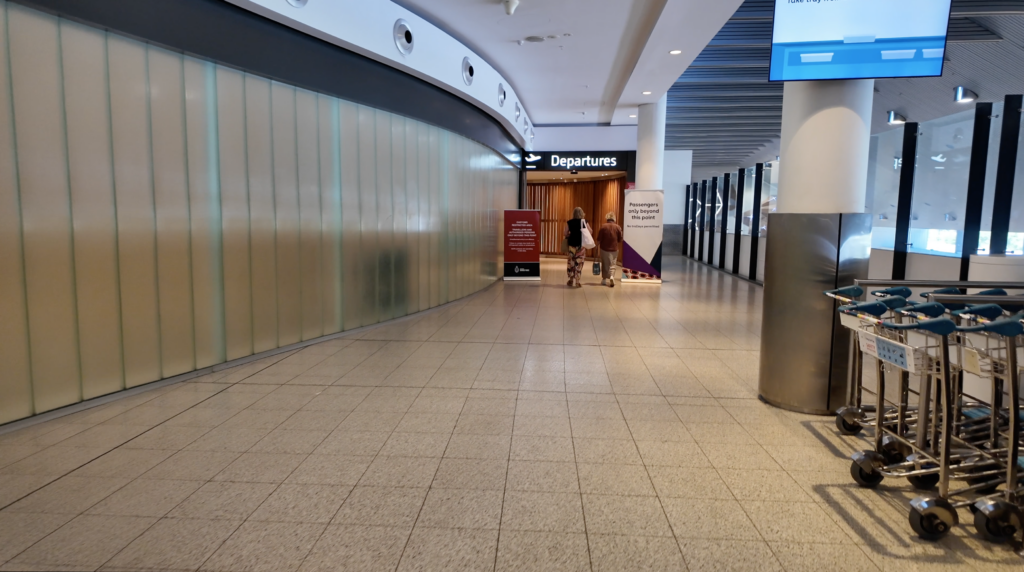
Passengers are manually processed through outbound passport control. Instead of receiving an exit stamp, domestic joiners are marked accordingly and waved through. The experience adds only a minute or two compared to standard e-gate processing but provides the surreal sensation of “departing Australia” without actually leaving it.
International security follows, complete with liquid restrictions exceeding 100ml. Only then do you enter Perth’s international departures hall.
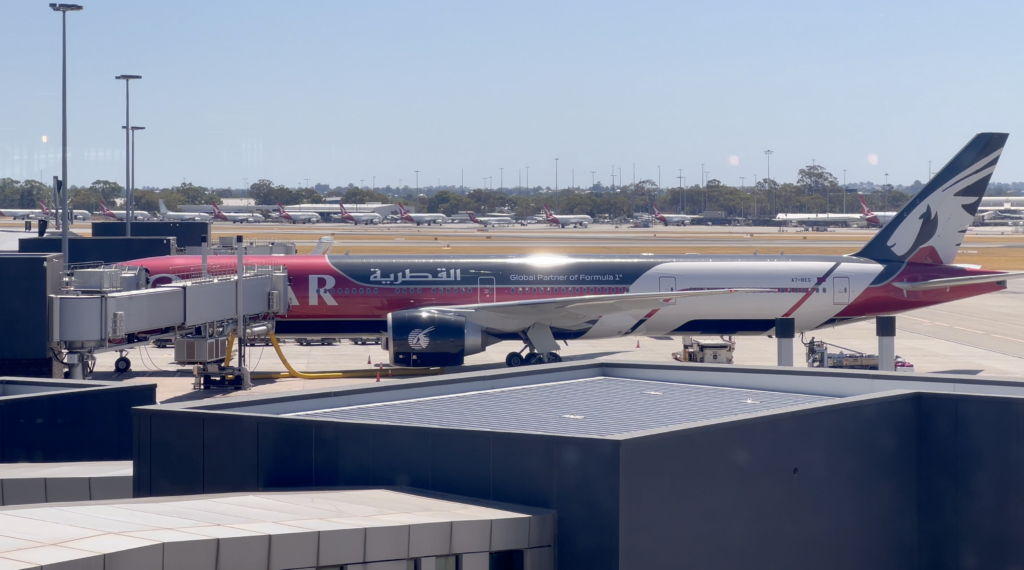
Inside Terminal 1 International
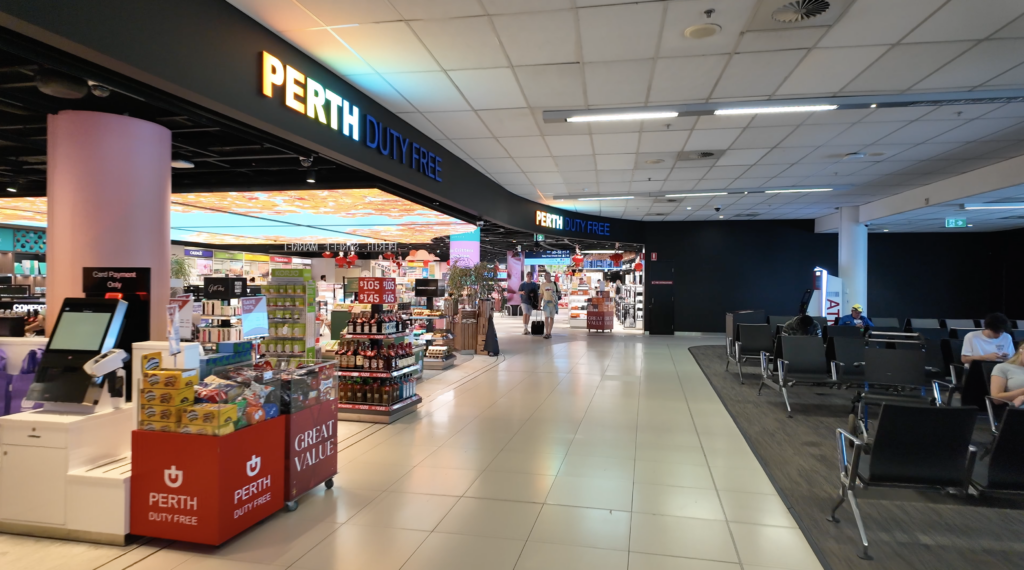
Perth’s international terminal has undergone notable upgrades in recent years. The retail footprint has expanded, seating areas have been modernised, and the duty-free complex continues to grow. Ironically, domestic passengers cannot purchase duty-free items without proof of international departure, reinforcing the unusual duality of this flight.
Gate 53 serves as the departure point for JQ111’s Perth–Adelaide sector. Boarding is conducted as a standard domestic process, with no additional ID checks at the gate.
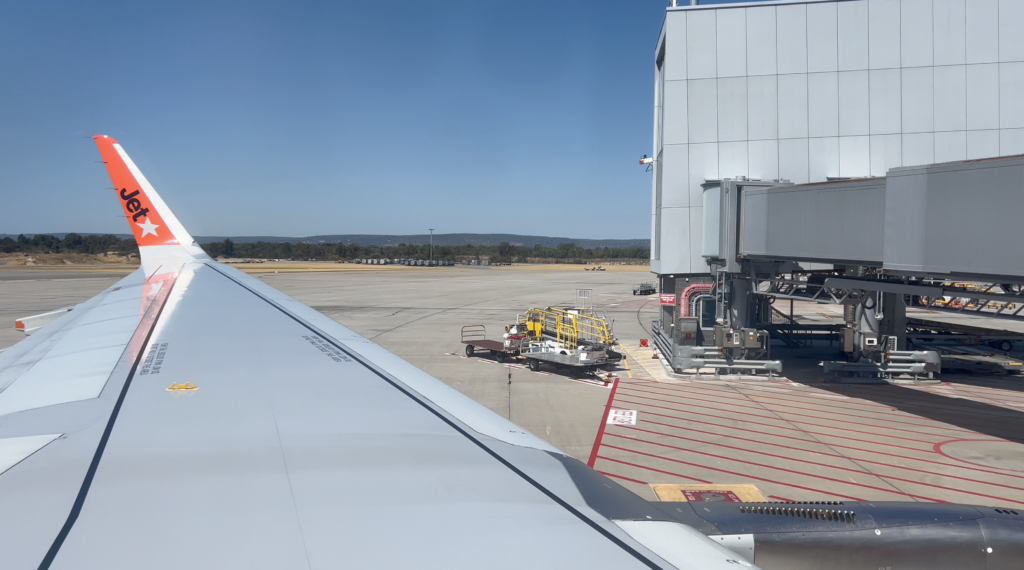
What differs, however, is the physical environment. Unlike Jetstar’s domestic operations at Terminal 2, passengers board via a traditional aerobridge connected to the international concourse — a small but noticeable upgrade in experience.
The Aircraft: Jetstar Airbus A321neo
Operating this sector is Jetstar’s Airbus A321neo LR, registration VH-OYF — a relatively young aircraft delivered in mid-2024. The A321neo forms the backbone of Jetstar’s expanding narrowbody fleet, offering improved fuel efficiency and range compared to older A320 variants.
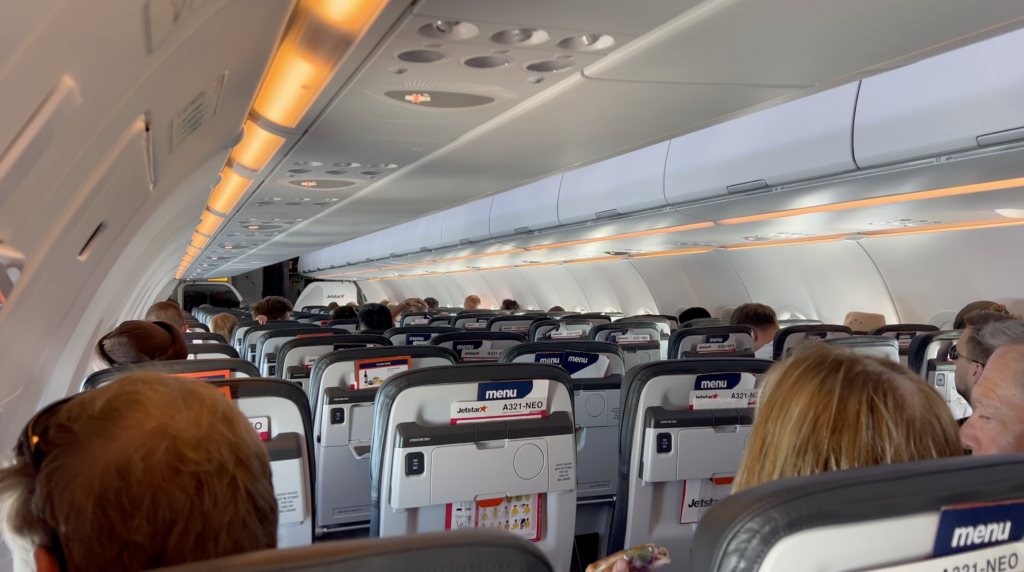
Configured in a high-density 3-3 layout, the aircraft carries 232 passengers in all-economy seating. Seat pitch averages 29 inches, typical for a low-cost carrier, though slimline Recaro seats incorporate thoughtful design touches. Each seat includes USB-A charging, a device holder for personal entertainment streaming, and a dedicated cup holder.
Exit rows offer significant additional legroom, and thanks to Jetstar’s fare bundling system, these seats are accessible without exorbitant premiums when bundled correctly.
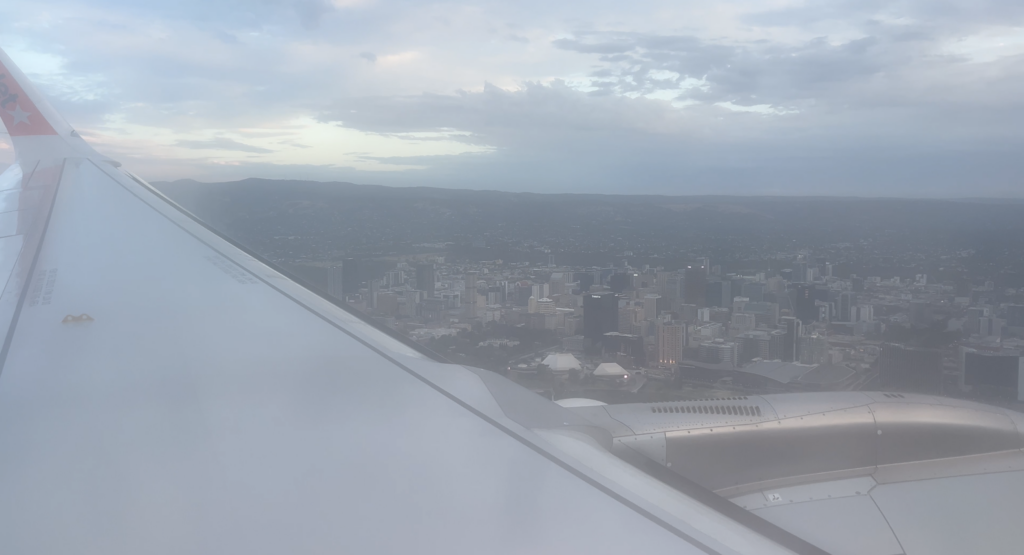
Pushback from Perth’s international apron is accompanied by a flight time of approximately two hours and twenty minutes to Adelaide, cruising at 37,000 feet over Western Australia’s Wheatbelt before crossing the Great Australian Bight.
Buy On Board: Jetstar’s Flex Plus Advantage
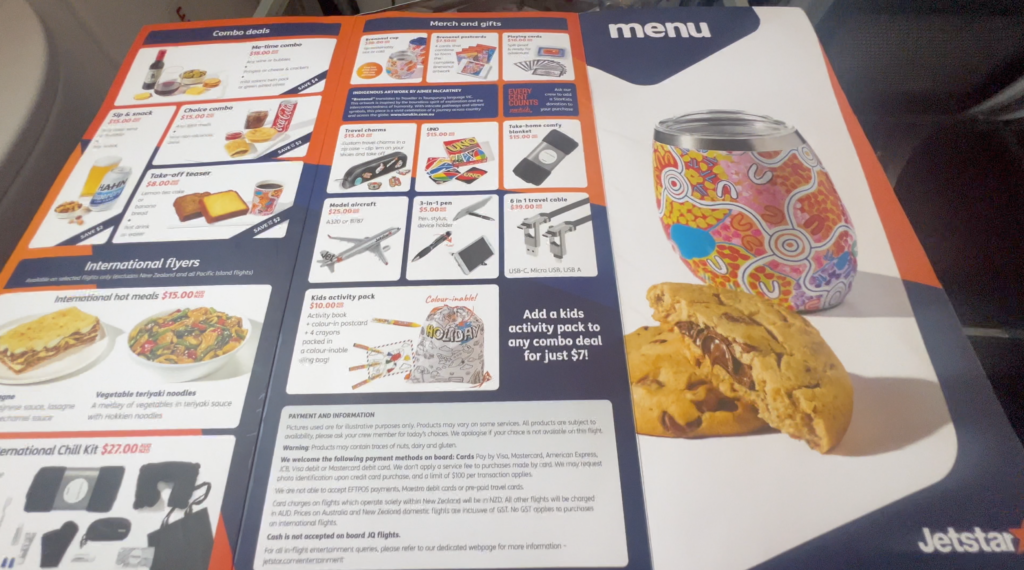
Jetstar’s buy-on-board model remains consistent across domestic and short-haul international routes. The menu includes snacks, light meals, alcoholic beverages, and merchandise. While pricing is not inexpensive, it remains broadly competitive within Australia’s low-cost market.
The key to unlocking value lies in the Flex Plus bundle.
Purchased alongside the base fare, Flex Plus includes a 20kg checked baggage allowance, any available seat selection including exit rows, a $15 onboard voucher, Qantas Frequent Flyer points, status credits, and most importantly, flexible change and cancellation conditions.
On this particular booking, the base fare was approximately $175. Adding Flex Plus brought the total to around $245. For that price, the value proposition becomes compelling. The exit row seat alone significantly improves comfort. The $15 voucher effectively covers a snack-and-drink combination. The included baggage removes additional fees. And the flexibility offers peace of mind rarely associated with low-cost carriers.
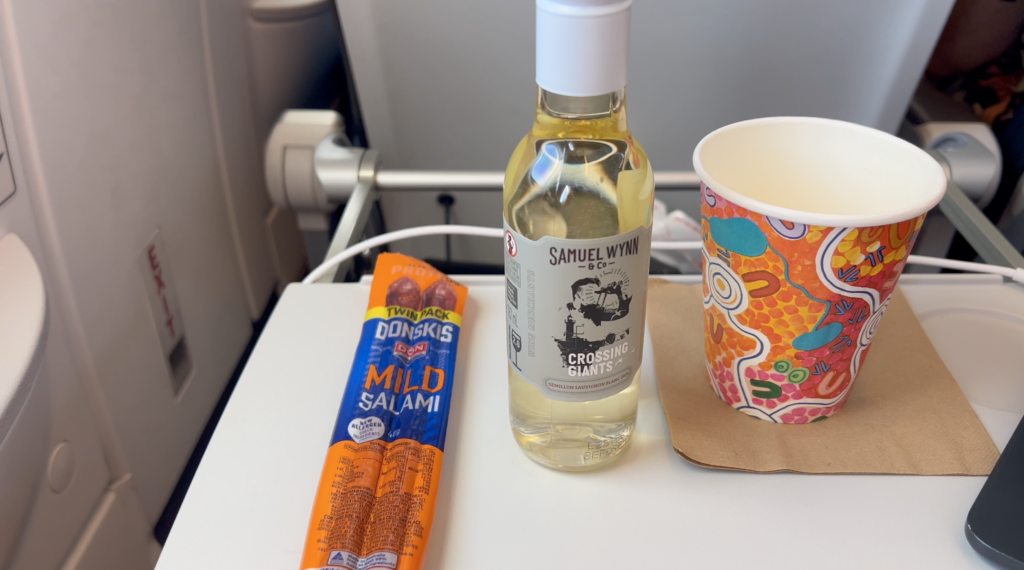
During the flight, the voucher was redeemed for a snack and wine combination — a practical use of the credit that enhanced the onboard experience.
Cabin Experience and Service
The crew operating the Bali–Perth–Adelaide service appeared to be internationally based, likely Indonesian or Singaporean. Service was warm, efficient, and attentive. Boarding was punctual, and the flight departed on time, arriving in Adelaide approximately twenty minutes ahead of schedule.
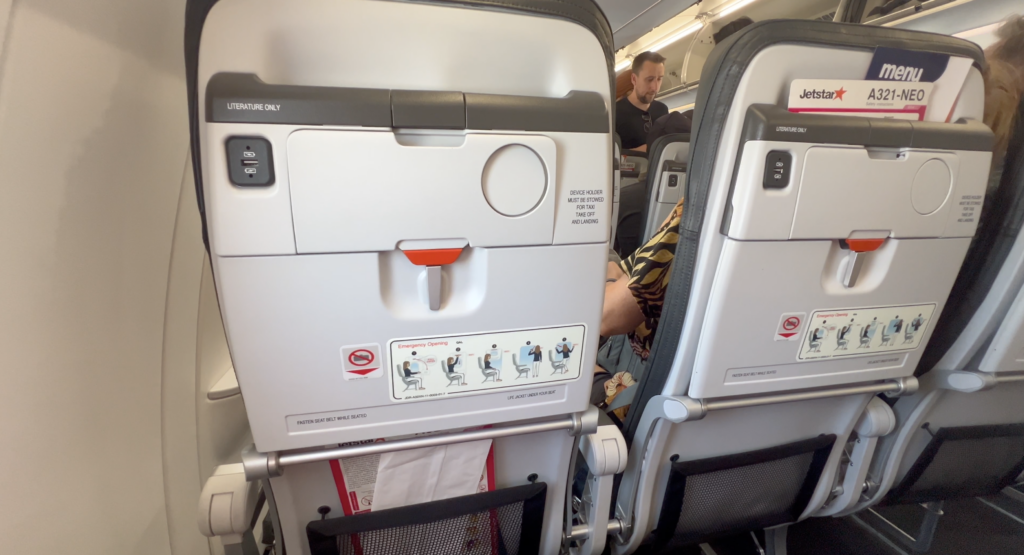
Jetstar’s streaming entertainment platform was reportedly unavailable on this sector, though personal device streaming filled the gap. The cabin atmosphere remained calm throughout the flight, with smooth conditions across the Bight.
Lavatories, one forward and two aft, were clean and well maintained for a mid-evening arrival.
For a narrowbody low-cost operation, the onboard experience was consistent, professional, and entirely satisfactory.
Arrival in Adelaide: Domestic Through International
If departure from Perth was unusual, arrival into Adelaide was even more so.
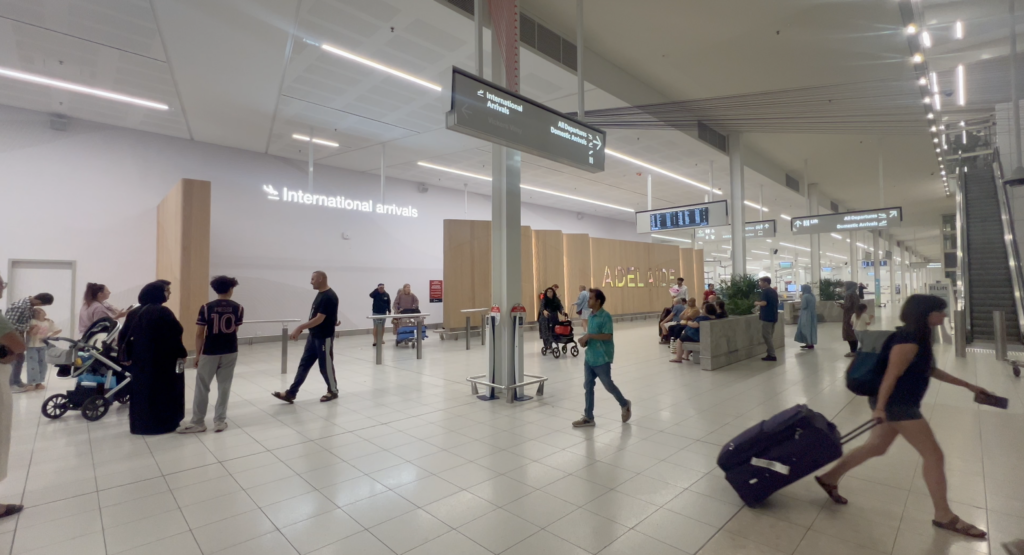
Because some passengers had originated in Bali and had not yet cleared Australian immigration, the aircraft parks at an international gate. Disembarkation funnels all passengers into the international arrivals corridor.
Here, domestic passengers present their boarding pass — marked to indicate domestic origin — and are waved past immigration and customs. International arrivals proceed to passport control in the usual manner.
The entire process is surprisingly seamless. Domestic passengers experience minimal delay, though the psychological novelty of clearing border control for a domestic journey remains entertaining.
Within minutes, passengers exit into Adelaide’s arrivals hall, having technically arrived on an international flight without ever leaving Australia.
Value Analysis: Is It Worth It?
For travellers prioritising pure efficiency, a standard Perth–Adelaide domestic flight may shave a few minutes off the journey. It avoids immigration formalities and simplifies baggage processes.
However, the Jetstar JQ111 experience offers something different: novelty, value, and strategic bundling advantages.
At $245 including baggage, exit row seating, food credit, points, and flexibility, the flight represents strong value for a transcontinental sector exceeding two hours. Comparable full-service fares with similar inclusions would likely exceed this price point.
The added time required for international processing was minimal — perhaps ten extra minutes in Perth and five in Adelaide. For aviation enthusiasts or travellers seeking something unique, the experience is well worth it.
Operational Curiosity Meets Practical Travel
Jetstar’s Bali–Adelaide via Perth service exemplifies the complexity of modern airline route planning. What appears to be an odd detour is in fact a strategic frequency expansion mechanism. And for domestic travellers, it opens a rare opportunity to experience international terminal procedures without crossing a border.
The flight itself is straightforward. The aircraft modern and efficient. The service reliable. The value proposition strong when bundled correctly.
Yet it is the novelty — the act of boarding an international service midway, passing through immigration for a domestic hop, and arriving internationally into Adelaide — that elevates JQ111 beyond an ordinary transcontinental journey.
For those intrigued by aviation quirks, regulatory workarounds, and route strategy, this is one of Australia’s most fascinating flights.
And for the rest of us? It is simply a very affordable way to travel from Perth to Adelaide — with a story attached.
Disclaimer: This article has been repurposed from the original transcript of my own flight review on the Aussie JetSetter Youtube channel with the assistance of AI technologies. Please be advised whilst I have taken the utmost care to review and revise this article where necessary to reflect the upmost of accuracy at time of publication please be advised my reviews whether written or in video form are for entertainment and general information purposes only. They reflect the objective views in good faith of the person only whom is presenting them unless otherwise noted. Any decisions you make resulting from consuming my content must take into consideration your own circumstances, research and responsibility as I can not be hold responsible for any inaccuracies or future changes effecting the relativity of such reviews. All Rights Reserved by Aussie JetSetter from 2022 >


