Introduction: A Rare Aviation Gem in Paradise
There are aviation adventures — and then there are aviation dreams. Few flights combine both nostalgia and natural beauty quite like hopping across the Hawaiian Islands aboard the McDonnell Douglas era Boeing 717-200. Once common across regional skies in Australia and the U.S., the 717 is now a rare species, with fewer than 100 left flying worldwide.
This review takes you onboard Hawaiian Airlines flight HA261, journeying from Hilo on the Big Island back to the bustling Hawaiian capital of Honolulu on Oʻahu. At just 200 miles apart, this short inter-island hop may seem ordinary at first glance. But when you add in sweeping Pacific Ocean views, glimpses of volcanic islands, and the chance to fly on a historic aircraft with Australian roots, it becomes an experience that blends both aviation heritage and tropical wonder.
Join me as I break down every part of the journey — from Hilo town exploration and airport quirks to the inflight service, seat comfort, and practical costs of using air travel for Hawaiian day trips. If you’re a traveler, plane spotter, or aviation enthusiast, this is one Hawaiian Airlines flight review you won’t want to miss.
The Boeing 717: An Aircraft with an Australian Twist
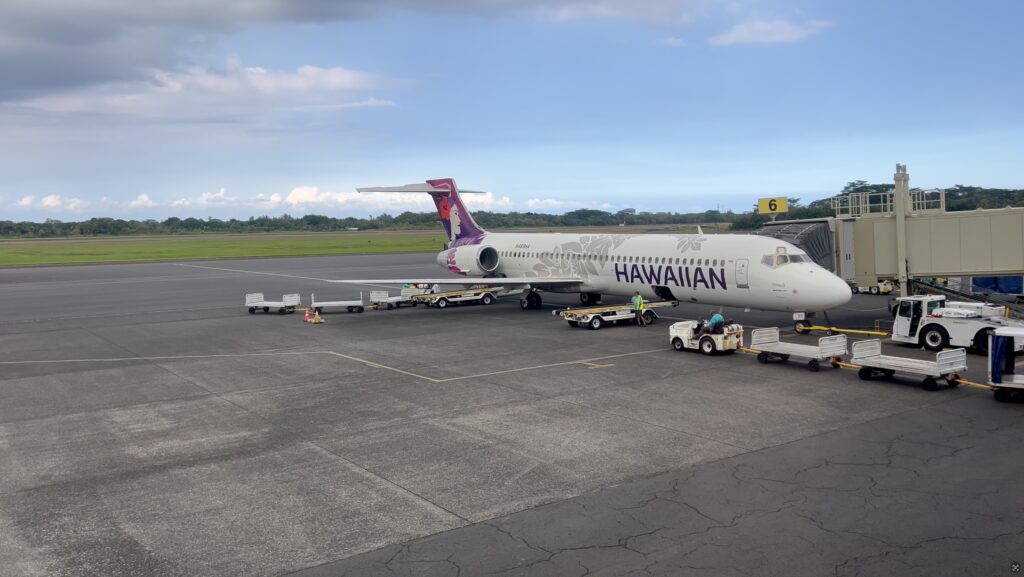
Before we even get to the flight, let’s talk about the Boeing 717. For aviation enthusiasts, this aircraft carries a special place in history. Born out of the McDonnell Douglas MD-95 program, it was rebranded as the Boeing 717 after the Boeing–McDonnell Douglas merger in the late 1990s.
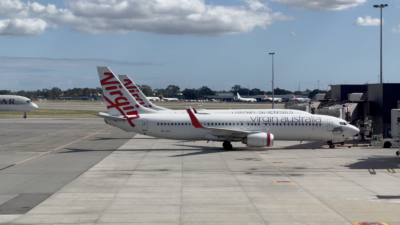
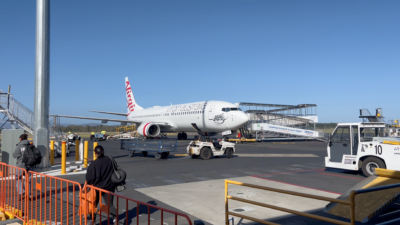
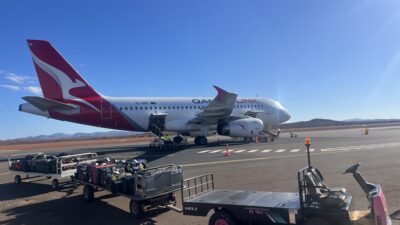
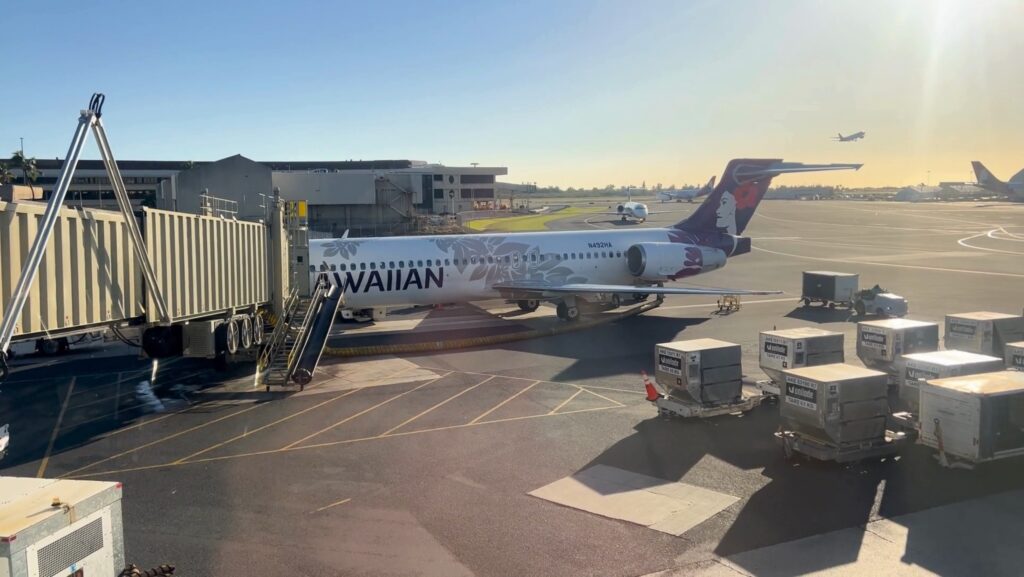
What makes this particular aircraft fascinating is its Australian aviation heritage. The very Boeing 717 that operated my flight, registered as N489HA, has lived quite the career:
- 2000: Delivered to Impulse Airlines in Australia
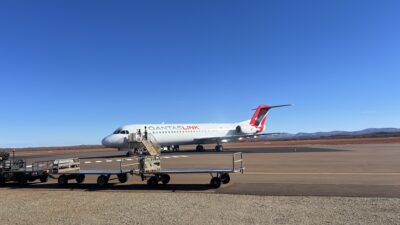
- 2001: Taken over by QantasLink
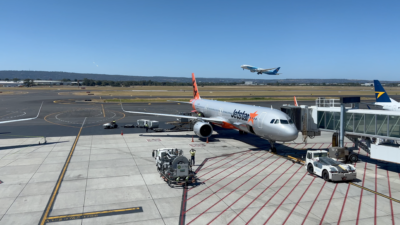
- 2004: Operated briefly by Jetstar Airways during its early years
- 2005: Returned to QantasLink, under National Jet Systems
- 2008: Acquired by Hawaiian Airlines, where it remains in service today
So in many ways, stepping onto this 717 in Hawaii was like taking a nostalgic journey back in time to the early 2000s skies of regional Australia. The engines, cabin layout, and flight deck represent an era that’s quickly vanishing. For aviation fans, that’s worth celebrating.
Exploring Hilo: Hawaii’s Big Island Gateway
Our adventure begins not in the air but on the ground in Hilo, a laid-back city located on the lush windward side of Hawaii’s Big Island. Hilo is known for its rainforest climate, waterfalls, and volcanic landscapes — and it offers a completely different vibe to the urban energy of Honolulu.
I had spent about five hours exploring Hilo earlier in the day after flying in from Honolulu. Highlights included:
- Beachfront walks with black sand shores unique to the Big Island
- Museums and cultural stops, including local history centers
- A chance to soak in the slower pace of life compared to Honolulu
One of the most surprising parts of Hilo wasn’t its scenery but its public transport system. Unlike many parts of the U.S. where buses are costly and infrequent, the county of Hawaii operates a free bus system across the entire island. Yes, free — even to destinations as far-flung as Volcanoes National Park and Kona on the island’s western side.
For a region where accommodation and car rental can skyrocket past $1,000 per night, this is an invaluable option for budget-conscious travelers. The Hilo bus terminal, just three miles from the airport, became my gateway back to Hilo International Airport for the return flight.
Hilo International Airport: A Throwback to Simpler Times
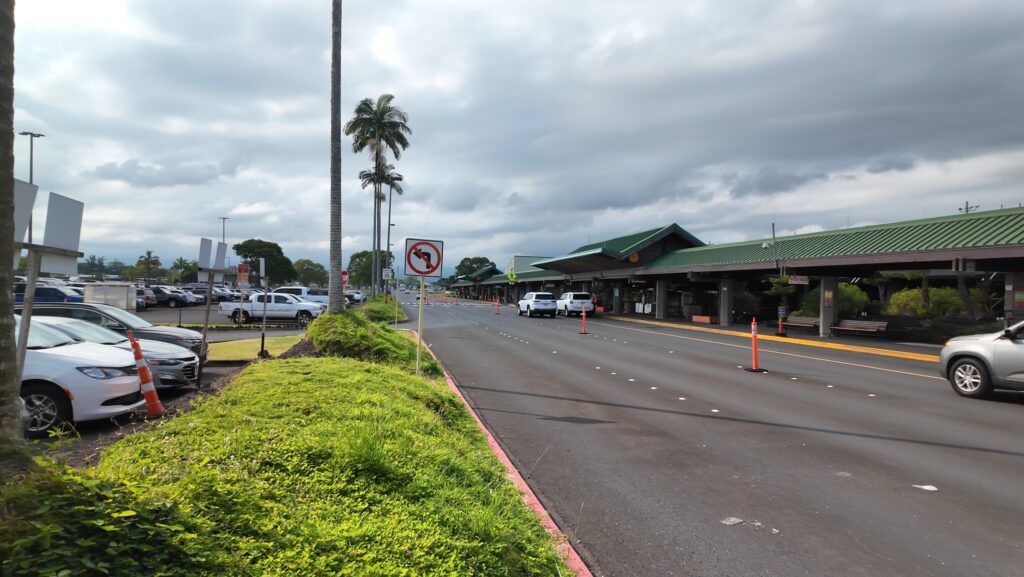
Stepping into Hilo International Airport (ITO) feels like a time warp compared to the mega-airports of the U.S. mainland. Serving under 1.5 million passengers annually, it’s small, relaxed, and semi-open air — very much in line with Hawaii’s casual atmosphere.
But don’t be fooled by its size. Despite being called “International,” Hilo has no mainland U.S. flights as of 2023. Today, its regular services are limited to:
- Hawaiian Airlines: Honolulu (multiple daily flights), Kahului/Maui
- Southwest Airlines: Honolulu (frequent daily service)
The terminal setup is simple but functional:
- Check-in counters sit in an open-air hall, with Hawaiian and Southwest side by side.
- Security (TSA) begins outside the main terminal, meaning you’ll queue before you even step inside.
- Inside, gates are just steps away — making the airport very efficient for quick commuter hops.
For this flight, I traveled light with just a backpack, bypassing Hawaiian Airlines’ checked baggage fees. If you’re doing a similar day trip by air, I recommend packing light to avoid extra charges and to move quickly through the terminal.
Hawaiian Airlines Flight HA261: Hilo ✈ Honolulu
Flight Details:
- Route: Hilo (ITO) → Honolulu (HNL)
- Aircraft: Boeing 717-200 (N489HA)
- Flight Time: 38 minutes (scheduled 56 minutes)
- Cruising Altitude: 24,000 feet
- Distance: 348 km / 216 miles
Boarding was called on time and handled efficiently. Inter-island flights in Hawaii have the feel of a commuter service— many passengers are business travelers, locals visiting family, or day trippers. Unlike mainland U.S. flights plagued with baggage wars and slow boarding, Hawaiian Airlines’ island hops are smooth and stress-free.
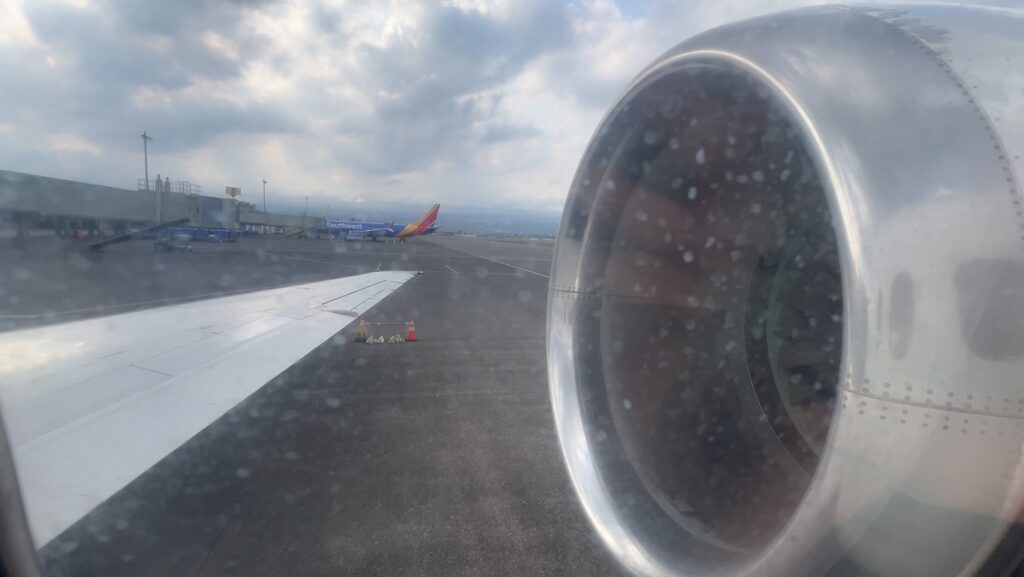
The Cabin Experience
The Boeing 717 cabin is compact, with 123–128 seats in a 2-3 configuration:
- Business Class: Two rows in a 2-2 layout, offering wider seats and extra recline
- Economy/Main Cabin: Seat pitch of 29–31 inches, with either standard recline or a pre-recline setup
The seats are fairly tight but perfectly adequate for a 40-minute flight. Each seat comes with:
- Safety card & inflight magazine
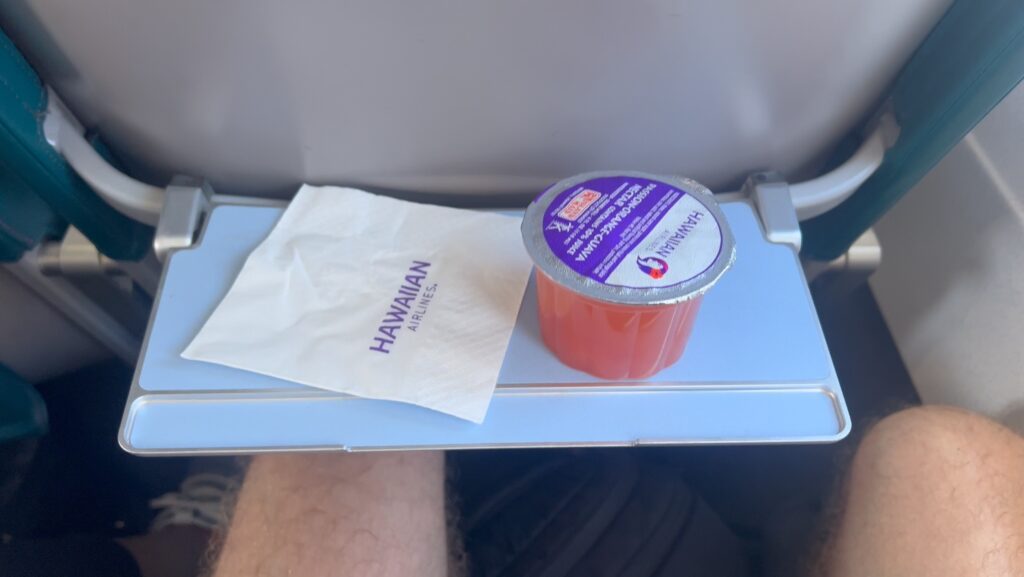
- Small fold-out tray table (not ideal for laptops)
There are no seatback screens or Wi-Fi, but honestly, you won’t miss them. The real entertainment lies just outside your window.

Takeoff from Hilo: A Scenic Masterpiece
The highlight of flying in Hawaii is the takeoff and climb out. From Hilo, the Boeing 717 powers down the runway before lifting over lush rainforests, volcanic ridges, and the sparkling Pacific Ocean.
At just 24,000 feet cruising altitude, the views are uninterrupted. On a clear day, you can spot:
- Maui to the northwest
- Molokaʻi and Lānaʻi further along the chain
- The rugged coastline of the Big Island fading into the distance
For aviation photographers and casual travelers alike, this is pure magic.
Onboard Service: Simple but Appreciated
Despite the short duration, Hawaiian Airlines offers a small inflight service. The options are limited but refreshing:
- Coffee or tea
- Passion Orange Guava (POG) juice — a Hawaiian specialty
I opted for the POG, which tasted slightly artificial but was still refreshing after a day of exploring. Don’t expect snacks, Wi-Fi, or a buy-on-board menu — but that’s not the point of this flight. The scenery outside more than compensates.
Entertainment: The Window is King
If you’re thinking of working or binge-watching shows, forget it. The 717’s tray tables are too small for laptops, and there’s no Wi-Fi or screens.
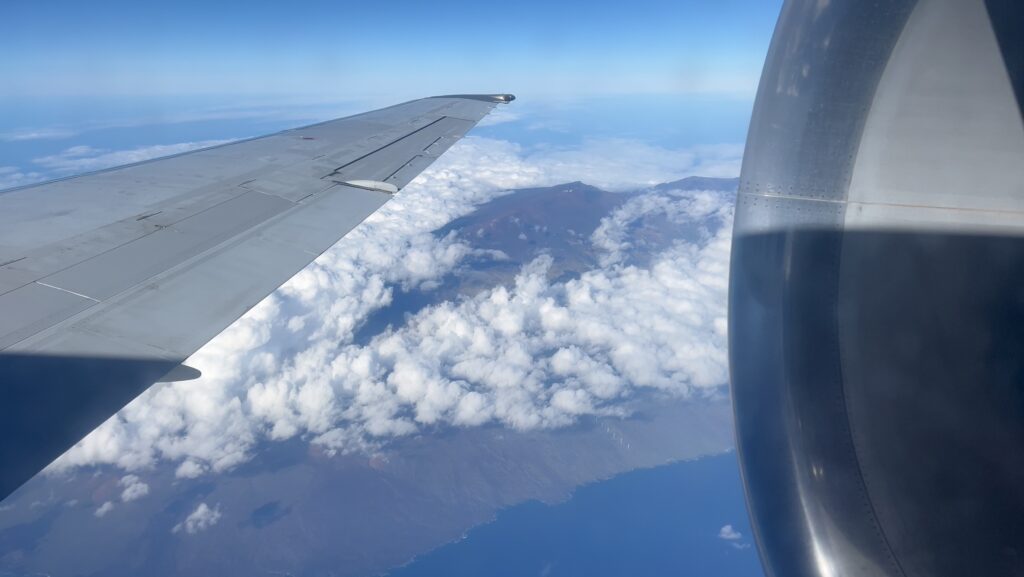
Instead, the real entertainment is out the window. Flying over Hawaii’s islands is an experience like no other, with dramatic coastlines, volcanic craters, and emerald-green ridges rising from the Pacific.
Pro tip: Book a window seat when flying inter-island. These sell out quickly, and without one, you’ll miss the very reason these flights are so spectacular.
Weather and Timing: Picking the Best Flight
Hawaiian weather can change quickly, with clouds often rolling in during the afternoon. On my return to Honolulu, cloud cover was heavier compared to the sunny outbound flight earlier in the day.
If your goal is sightseeing, I recommend:
- Booking flights closer to departure, once you see a favorable forecast
- Flying in the morning, when skies tend to be clearer
- Always checking seat maps early to secure a window seat
Yes, it might cost a little more to book last minute, but the payoff in scenery is worth it.
Descent into Honolulu: Over Waikīkī
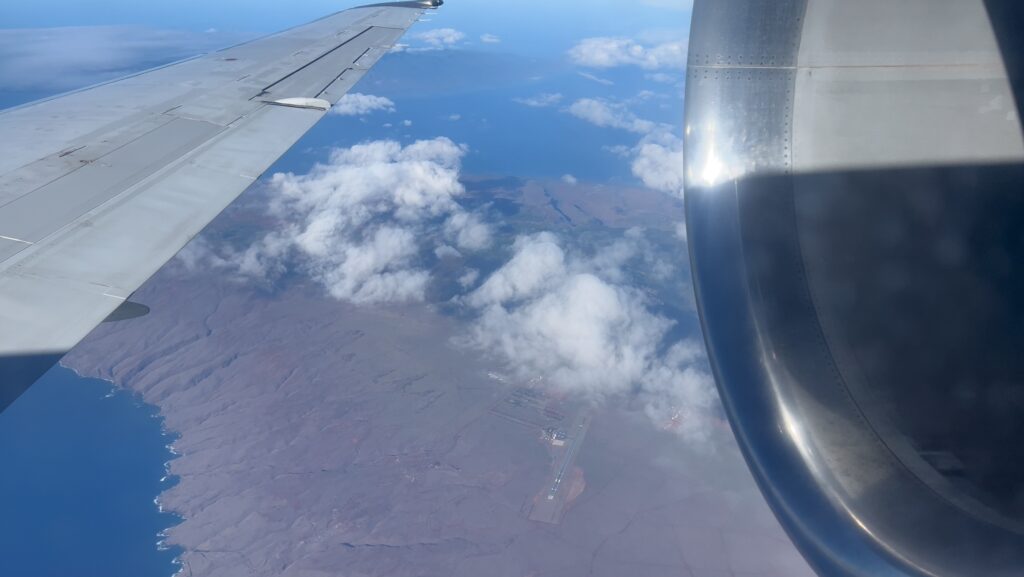
The finale of this short flight is nothing short of breathtaking. As we descended into Honolulu, the aircraft passed over the world-famous Waikīkī Beach, with Diamond Head crater standing proudly in the distance.
The turquoise waters, golden sand, and urban skyline of Honolulu provided the perfect conclusion to a day of inter-island aviation. For a first-timer, it’s one of those unforgettable arrivals that blend aviation with sheer natural beauty.
Cost of a Hawaiian Inter-Island Day Trip
Many travelers wonder if doing a day trip by air is practical in Hawaii. My experience says yes — and here’s why.
- Airfare: Around $70 USD each way ($140 return / $230 AUD)
- Time: Less than an hour each way
- Convenience: Return to Honolulu the same night, avoiding expensive accommodation
Staying overnight on other islands often means:
- Paying $500–$1,000+ per night in limited, high-end resorts
- Renting a car to explore properly
- Spending more time and money on logistics
For those short on time or budget, day trips by air are an excellent alternative. You get to experience another island without the financial strain of overnight stays.
Final Thoughts: Hawaiian Airlines Boeing 717 Experience
Flying on the Boeing 717 in Hawaii is more than just transportation — it’s a mix of aviation nostalgia and tropical wonder.
- Aircraft: Rare, historic, with ties to Australian aviation
- Service: Simple but efficient
- Views: Some of the most spectacular in the world
- Practicality: A smart way to see more of Hawaii without breaking the bank
If you’re planning a trip to Hawaii, I highly recommend adding an inter-island flight to your itinerary. And if you’re an aviation enthusiast, don’t miss the chance to fly the 717 while it’s still in service.
Disclaimer: This article has been repurposed from the original transcript of my own flight review with the assistance of AI technologies. Please be advised whilst I have taken the utmost care to review and revise this article where necessary to reflect the upmost of accuracy at time of publication please be advised my reviews whether written or in video form are for entertainment and general information purposes only. They reflect the objective views in good faith of the person only whom is presenting them unless otherwise noted. Any decisions you make resulting from consuming my content must take into consideration your own circumstances, research and responsibility as I can not be hold responsible for any inaccuracies or future changes effecting the relativity of such reviews. All Rights Reserved by Aussie JetSetter from 2022 >